
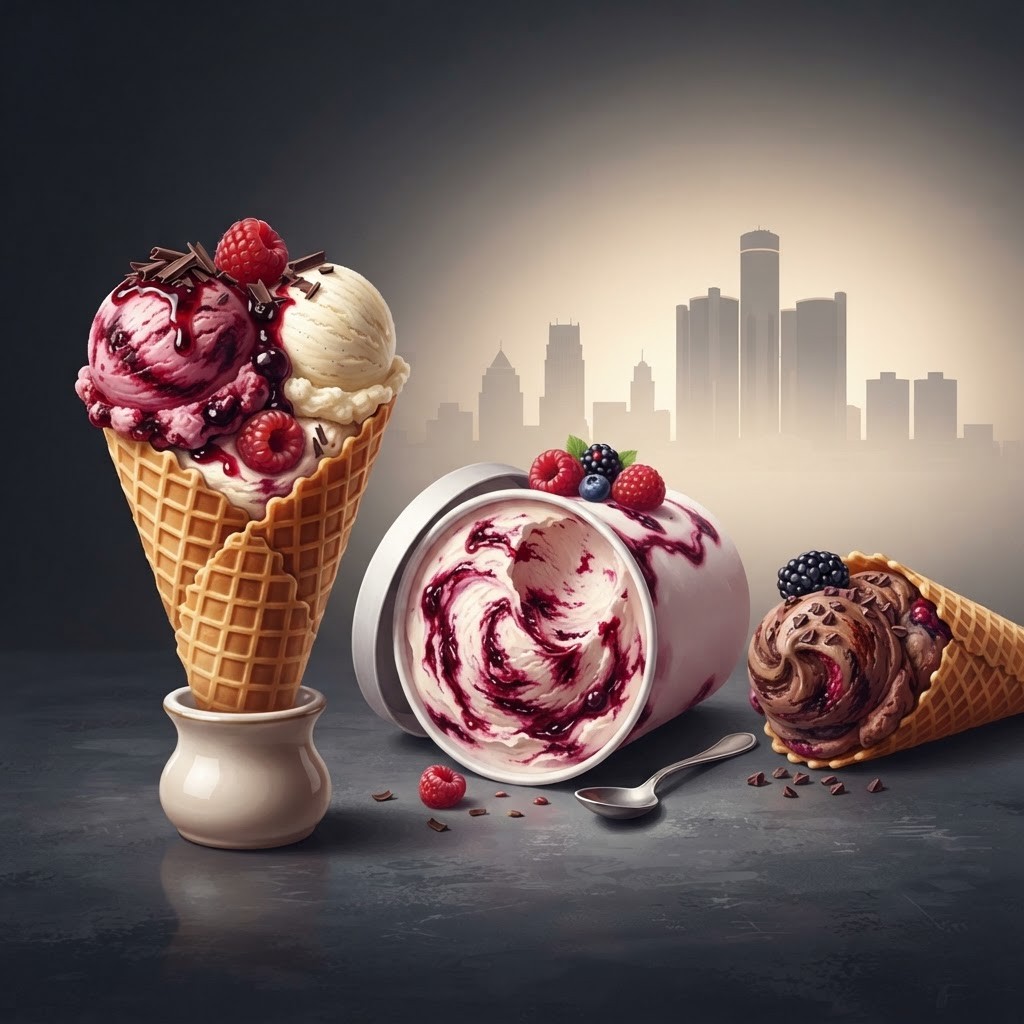
Detroit's Frozen Dessert Heritage
Detroit holds a genuine place in American ice cream history. The Boston cooler, a blend of vanilla ice cream and Vernors ginger ale, originated in the city and remains a local signature that visitors rarely encounter elsewhere. Beyond that landmark, the region developed a strong dairy culture through Michigan's substantial milk production, giving local makers access to fresh cream that shows clearly in finished product quality.
Today the market spans several tiers. Legacy regional brands sell through grocery stores across the Midwest. Independent scoop shops produce small batches daily with rotating seasonal flavors. Gelato and sorbet specialists apply Italian technique with lower fat and more intense flavor concentration. And a growing set of plant-based makers has moved well past early attempts, producing coconut, oat, and cashew bases with satisfying texture.
What Separates Excellent Ice Cream
Texture reveals craft. Lower overrun, meaning less air whipped into the base, produces a denser and richer spoonful, which is why premium pints feel heavier than budget half-gallons of the same volume. Ice crystal size indicates how well a maker controls freezing and storage temperature, and a slightly chewy, smooth body signals proper handling. Flavor should come from real ingredients: vanilla bean specks, actual fruit purees, roasted nuts, and chocolate with identifiable origin rather than generic sweetness.
Ingredient lists tell an honest story. Short lists built on cream, milk, sugar, egg yolks, and flavoring typically outperform long lists heavy with gums and stabilizers, though small amounts of stabilizer are legitimate tools for shops that must hold product in a dipping cabinet. Seasonal menus are another good sign, because they indicate a maker buying fruit at peak rather than relying entirely on year-round concentrates.
The Top 10 Ice Cream Brands in Detroit
1. Stroh's Ice Cream carries one of the most recognizable Detroit names in frozen dessert. Its dense, traditional-style flavors and long local history make it a nostalgic favorite that still holds up on quality.
2. Guernsey Farms Dairy produces ice cream from a working dairy heritage, and its wide flavor lineup and creamy body have made it a metro Detroit institution for family outings.
3. Ray's Ice Cream has built decades of reputation on generous scoops, hand-dipped presentation, and an expansive flavor board that includes seasonal rotations and classic sundae builds.
4. Treat Dreams is known for adventurous flavor development, frequently collaborating with local businesses and pushing into savory-adjacent and dessert-mashup territory that keeps regulars curious.
5. Cook's Dairy Farm emphasizes farm-to-cone freshness, with rich butterfat content and straightforward flavors that appeal to purists who judge a shop by its vanilla.
6. Detroit Water Ice Factory specializes in Italian water ice and custard blends, offering a lighter and brighter alternative to dense ice cream while directing proceeds toward community hunger relief.
7. Yoshi's Frozen Custard focuses on frozen custard, which uses egg yolks and low overrun to create a notably silky texture that distinguishes it from standard ice cream.
8. Cannelle Detroit brings pastry precision to gelato and sorbet, producing intense fruit flavors and refined dairy bases that pair naturally with its baked goods.
9. Detroit Vegan Soul offers plant-based frozen desserts that demonstrate how far non-dairy formulation has advanced, with satisfying body and clear flavor definition.
10. Melted Moments rounds out the list with small-batch production and creative mix-ins, representing the newer wave of Detroit makers focused on craft over scale.
Trends in the Detroit Ice Cream Market
Plant-based options have moved from novelty to expectation, and the best versions now use oat or cashew bases that carry flavor without the coconut aftertaste that limited earlier attempts. Many shops keep at least two non-dairy flavors available year-round.
Local collaboration is another visible trend. Shops partner with regional bakeries, coffee roasters, breweries, and candy makers to build flavors that could not exist elsewhere, such as scoops built around local ginger ale, Michigan cherries, or neighborhood bakery cookies. These partnerships generate marketing energy for both businesses and strengthen the local food economy.
Portion and format innovation continues as well. Pint sales for home consumption remain strong, ice cream cakes have grown as a celebration option, and hand-packed quarts give shops higher margins than single scoops. Seasonal soft-serve windows and mobile carts extend reach into festivals and events across the warmer months.
How to Choose and Store Ice Cream
Taste the vanilla before judging a shop. It exposes base quality without the cover of mix-ins. Ask what was churned most recently, since freshly made ice cream has noticeably better texture than product that has sat through temperature cycling. If a display case shows frost buildup or icy surfaces, quality has likely degraded.
At home, store pints at the back of the freezer rather than the door, where temperature fluctuates most. Press plastic wrap directly onto the surface after opening to prevent crystal formation, and let premium ice cream temper for five minutes before serving so flavors express fully. For transport, ask for a bag with dry ice on longer trips, which many Detroit shops offer.
Final Thoughts
Detroit's ice cream scene balances heritage brands with ambitious small producers, and the Boston cooler tradition gives the city a claim no other market can copy. The ten brands above span legacy dairies, frozen custard, gelato, water ice, and plant-based options, offering something genuinely worthwhile in every category.
