
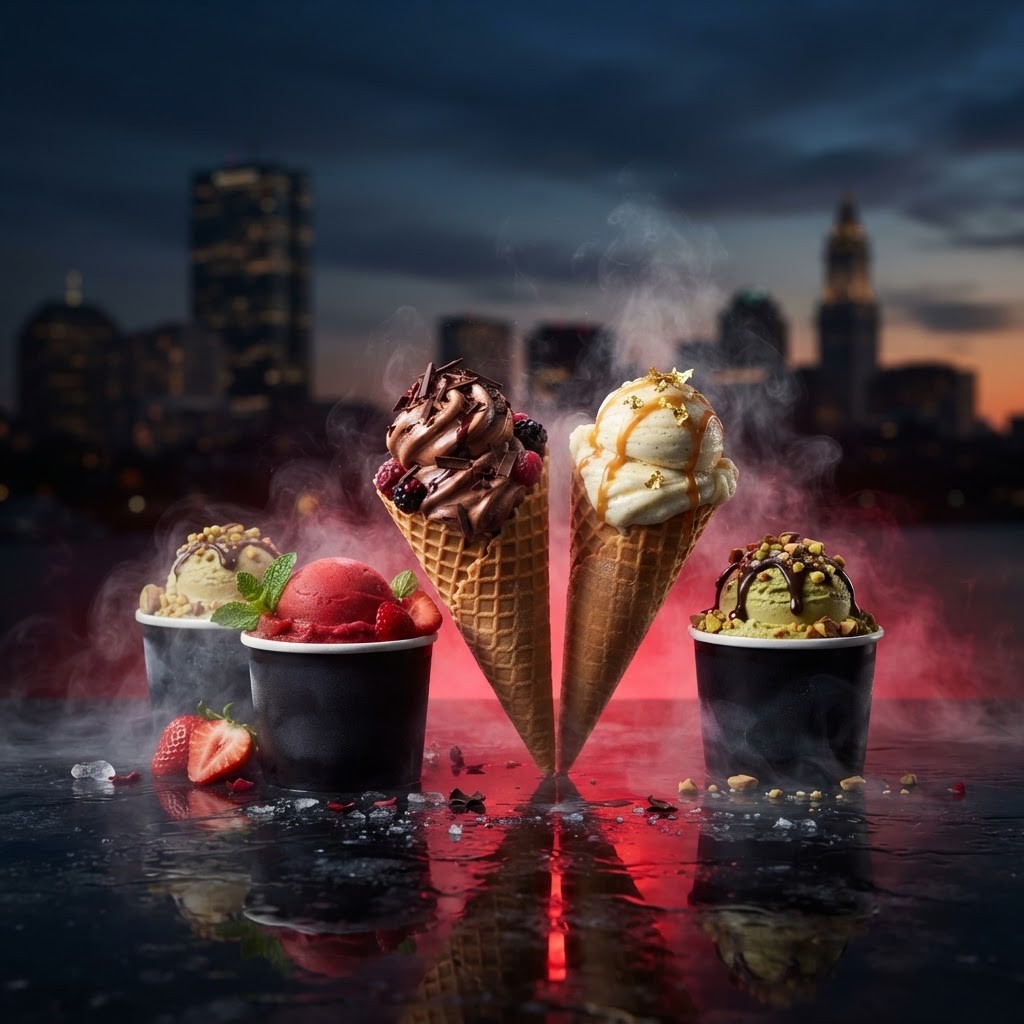
Why New England Takes Ice Cream Seriously
New England's ice cream consumption is a genuine cultural quirk. Residents eat frozen desserts year-round, including in February, and the region's dairy history gave rise to distinctive local conventions: dense texture, high butterfat, generous portions, and the ubiquitous frappe. Boston sits at the center of that tradition, and its scoop shops face an unusually educated customer base as a result.
That pressure has produced a competitive market where craft matters. Many of the city's best-known brands still make their base in small batches, source dairy from New England farms, and rotate flavors according to what is actually in season rather than what is easy to stock.
The Ten Best Ice Cream Brands in Boston
1. Toscanini's
A Cambridge institution with a fiercely loyal following, Toscanini's is known for dense, intensely flavored ice cream and inventive combinations. Burnt caramel is the signature achievement, balancing bitterness against sweetness in a way few shops attempt. The brand's willingness to explore spices, herbs, and unusual dairy ratios keeps its rotating board interesting for regulars.
2. J.P. Licks
Founded in Jamaica Plain and now present across many Boston neighborhoods, J.P. Licks pairs consistent quality with an approachable range that includes hard ice cream, frozen yogurt, and its own coffee roasting operation. It is the most reliable option when a group has mixed preferences. Seasonal flavors and clearly labeled dairy-free options broaden its appeal further.
3. Christina's Homemade Ice Cream
Located in Inman Square, Christina's built its reputation on an unusually large flavor library and a spice shop next door that informs it. Cardamom, adzuki bean, fresh mint, and rose water sit comfortably alongside traditional options. For adventurous eaters, this is the deepest catalog in the city.
4. Emack & Bolio's
Born from Boston's music scene, Emack & Bolio's leans into playful branding, elaborate cone treatments, and dense mix-in heavy flavors. Its long history in the market and multiple locations make it a familiar stop for families. The brand's marshmallow-and-candy-coated cones are a signature that children reliably remember.
5. FoMu
FoMu made a serious case that plant-based frozen dessert can compete on texture rather than apologize for itself. Built on coconut cream, its flavors achieve real richness, and options like avocado, salted caramel, and seasonal fruit sorbets satisfy dairy eaters too. It remains the reference point for vegan ice cream in the city.
6. Honeycomb Creamery
This Cambridge shop makes its base from scratch with local dairy and eggs, producing a custard-style texture with clean flavor. Cones are made in house, and flavors change frequently with New England produce. It is a strong choice for anyone who prioritizes ingredient sourcing and technique over novelty.
7. Gracie's Ice Cream
Somerville's Gracie's earned attention for creative flavor development and a modern approach to classic New England formats, including excellent sundaes and shakes. Its rotating menu rewards repeat visits, and its vegan offerings are handled with the same care as the dairy line. Lines in summer are long for good reason.
8. Ron's Gourmet Ice Cream
Combining an old-school candlepin bowling alley with a serious ice cream counter, Ron's in Hyde Park is a genuine local institution. The ice cream itself is rich and traditional, with strong chocolate and coffee flavors that suit New England tastes. It is a rare place where the experience and the product are equally memorable.
9. Batch Ice Cream
Batch focuses on small production runs and clean flavor definition, offering a tighter menu executed carefully rather than an overwhelming board. Its cookies and cream and seasonal fruit flavors are frequent standouts. The shop's approach appeals to customers who prefer precision over spectacle.
10. Richardson's Ice Cream
Made on a working dairy farm north of the city, Richardson's is a regional benchmark for dense, high-butterfat ice cream sold in generous portions. Its products appear in shops and restaurants around Greater Boston, and the farm stand itself is a summer destination for many Boston families. Longevity and consistency define the brand.
How to Judge Ice Cream Quality
Three technical factors explain most of the difference between mediocre and excellent ice cream. Butterfat content drives richness and mouthfeel, with premium products typically sitting well above the legal minimum. Overrun, the amount of air whipped into the base, determines density; New England shops traditionally favor low overrun, which is why a modest scoop here can feel substantial.
Ice crystal size is the third factor and the easiest to detect. Well-made ice cream that has been stored properly tastes smooth, while temperature fluctuation during transport or display produces a grainy texture. If a shop's product tastes icy, the issue is usually handling rather than the recipe.
Flavor Trends Worth Watching
Several directions are shaping local menus. Plant-based bases have advanced well beyond early attempts, with oat, coconut, and cashew formulations now competitive on texture. Reduced-sugar and lower-sweetness profiles are gaining ground, allowing dairy and fruit flavors to register more clearly. Savory and herbal accents such as olive oil, basil, black sesame, and miso caramel appear regularly on rotating boards.
Local collaboration has also become common, with shops partnering with Boston coffee roasters, bakeries, and breweries to build limited-run flavors. These partnerships give customers a reason to return frequently and give small producers additional visibility.
Planning an Ice Cream Route
Cambridge and Somerville offer the highest density of top-tier shops within walking distance, making them ideal for tasting several in one outing. Jamaica Plain and Brookline provide a quieter experience with strong options. Expect meaningful lines on warm evenings and after school lets out, and note that many shops extend hours in summer and shorten them sharply in winter.
Final Thoughts
Boston's ice cream scene rewards curiosity. The city supports both decades-old institutions with unchanged recipes and newer shops experimenting with sourcing and technique. Whether you want burnt caramel from a Cambridge counter, a coconut-based scoop that happens to be vegan, or farm-made ice cream in a bowling alley, the ten brands above represent the strongest expressions of a genuinely regional tradition.
