
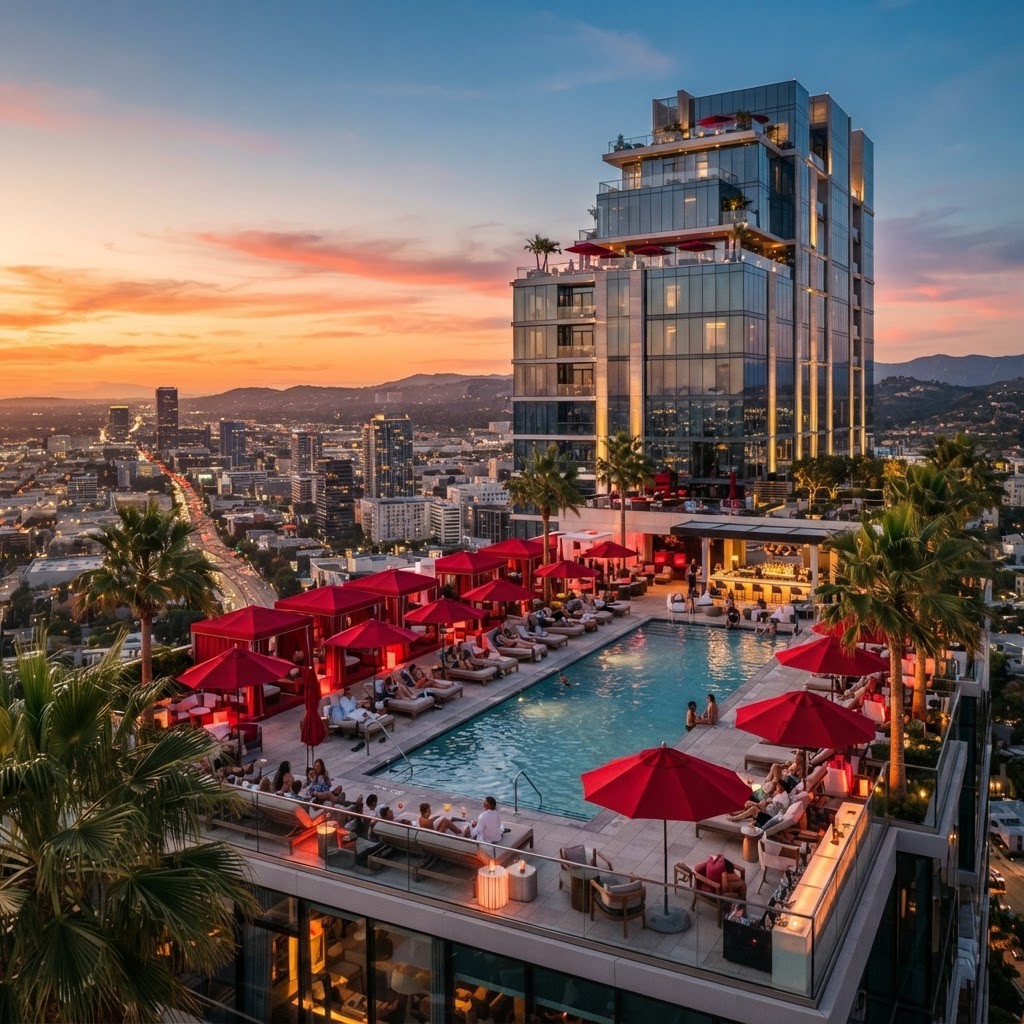
Where to Stay in Los Angeles
Choosing a Los Angeles hotel is partly a decision about neighborhood. A glamorous Beverly Hills property, a design hotel on the Sunset Strip, a downtown landmark, and a beach retreat can create entirely different trips. Because distances are large and traffic is unpredictable, staying near the activities that matter most can save hours.
The best hotels in Los Angeles combine service, setting, comfort, and a clear sense of place. The following properties represent established icons and contemporary favorites. Rates, amenities, and renovation schedules change, so guests should confirm current details and consider total costs such as parking, destination fees, and breakfast.
1. The Beverly Hills Hotel
The Beverly Hills Hotel is a Los Angeles legend known for its pink-and-green aesthetic, secluded bungalows, palm-lined grounds, and long entertainment-industry history. Its appeal lies in privacy, attentive service, and a resort atmosphere despite its urban location. Guests seeking classic Hollywood character may find the experience difficult to replicate elsewhere.
2. Hotel Bel-Air
Hotel Bel-Air occupies a tranquil canyon setting filled with gardens, pathways, and elegant low-rise buildings. The atmosphere is discreet and residential, making it well suited to restorative stays and travelers prioritizing privacy. Its distance from lively commercial districts is part of the charm, though guests should plan for car travel.
3. The Peninsula Beverly Hills
The Peninsula Beverly Hills is recognized for highly personalized luxury service and a polished residential style. Spacious accommodations, a rooftop pool, dining, and spa facilities support both business and leisure stays. Its location near the Golden Triangle provides access to shopping while remaining relatively calm.
4. Waldorf Astoria Beverly Hills
Waldorf Astoria Beverly Hills offers contemporary luxury with expansive views and a prominent rooftop. Modern rooms, abundant natural light, and comprehensive amenities distinguish it from the area’s historic hotels. It is a compelling option for guests who prefer a newer aesthetic and proximity to Beverly Hills attractions.
5. Chateau Marmont
Chateau Marmont is inseparable from Sunset Strip mythology. The castle-like property offers rooms, suites, cottages, and bungalows with a private, bohemian mood. Travelers select it for atmosphere and cultural history rather than standardized modernity. Those sensitive to nightlife energy should discuss room placement before arrival.
6. Sunset Tower Hotel
Sunset Tower Hotel is an Art Deco landmark with a sophisticated, intimate personality. Its terrace, pool, and celebrated social spaces overlook the city. The hotel appeals to design-conscious guests who want old-Hollywood architecture paired with contemporary service and a central West Hollywood location.
7. The West Hollywood EDITION
The West Hollywood EDITION delivers a sleek, energetic experience with modern interiors, dining, wellness facilities, and a rooftop pool. It suits travelers who value nightlife and a fashionable social atmosphere. The Sunset Boulevard setting is convenient for West Hollywood, Beverly Hills, and Hollywood meetings.
8. Shutters on the Beach
Shutters on the Beach brings refined coastal style directly to Santa Monica. Ocean views, beach access, fireplaces, and comfortable public rooms create a relaxed alternative to central Los Angeles hotels. It is ideal for guests whose plans emphasize the coast, although cross-city journeys can take significant time.
9. Conrad Los Angeles
Conrad Los Angeles is a contemporary downtown hotel near major arts and cultural institutions. Its architecture, modern rooms, restaurants, spa, and elevated pool deck suit travelers attending performances, conventions, or downtown meetings. The property offers a polished base for exploring the evolving Grand Avenue corridor.
10. The Hoxton, Downtown LA
The Hoxton, Downtown LA combines an accessible lifestyle-hotel atmosphere with historic architecture, compact smartly designed rooms, social dining, and a rooftop pool. It attracts creative travelers who enjoy active public spaces. The location is useful for downtown venues, while room size should be considered by guests carrying substantial luggage.
Matching the Hotel to the Itinerary
Visitors focused on luxury shopping and dining may favor Beverly Hills. West Hollywood works well for nightlife, design, and central access to several districts. Downtown offers cultural institutions, sporting events, and architectural history, while Santa Monica provides walkability, ocean air, and a slower pace. Families visiting theme parks may prefer a completely different base closer to those attractions.
Review room dimensions, bed configurations, noise reports, and accessibility—not just lobby photography. Resort or destination fees can include amenities a guest may not use, and valet parking can materially increase the nightly total. Travelers without a car should map likely rides and consider proximity to rail or frequent bus corridors.
What Defines a Great Los Angeles Hotel
Local hotels increasingly emphasize wellness, rooftop spaces, chef-led dining, and neighborhood programming. Historic properties are updating technology while protecting architectural identity, and newer hotels are pursuing sustainability through efficient systems and reduced waste. Service remains the decisive factor: thoughtful staff can adapt recommendations, solve transportation issues, and make a large city feel manageable.
No single property is best for every traveler. The strongest choice balances location, atmosphere, sleep quality, service, and total value. By building a daily itinerary before booking, visitors can select a hotel that supports their trip instead of spending precious time crossing Los Angeles traffic.
