
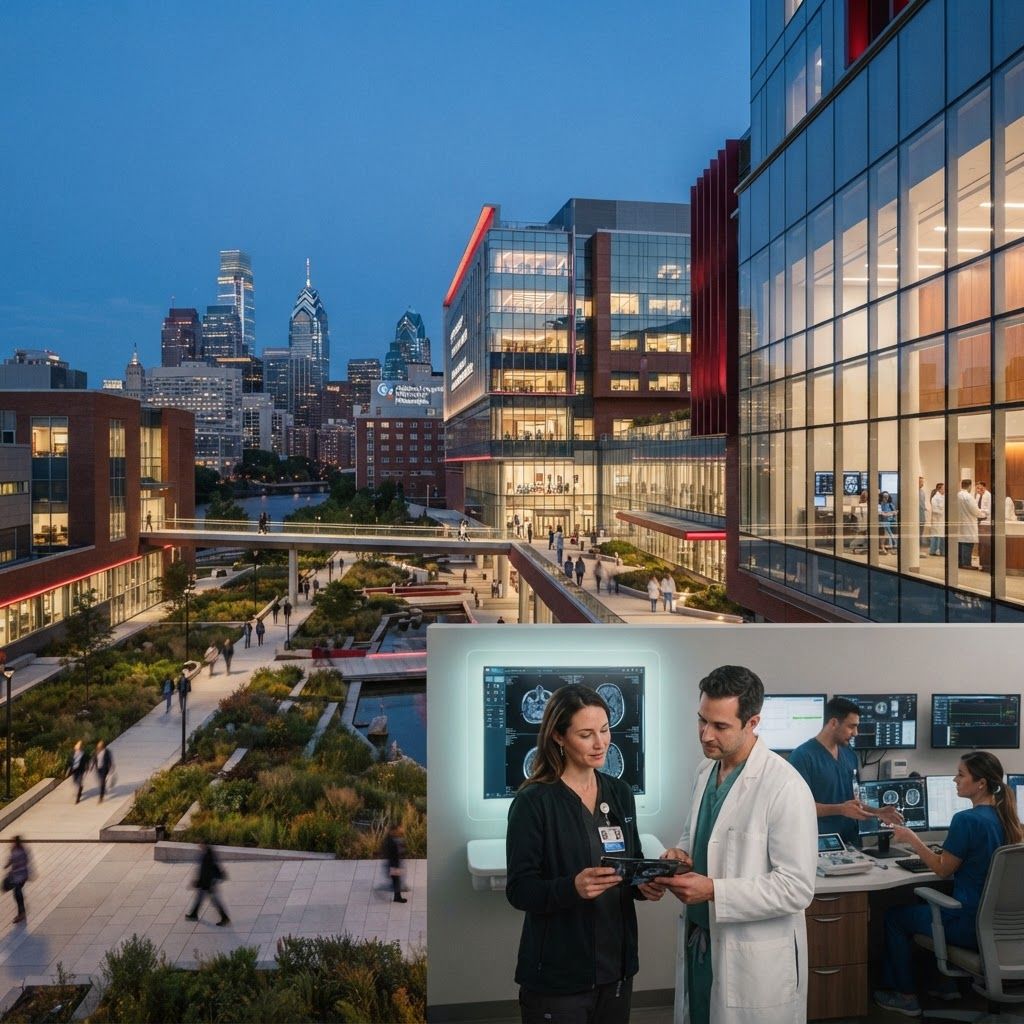
Philadelphia as a Medical Center
Philadelphia is one of the nation’s most important healthcare cities, with academic medical centers, specialty hospitals, research programs, and community institutions serving patients from the region and beyond. A hospital’s reputation is only one factor in choosing care. The right choice depends on diagnosis, physician expertise, insurance participation, location, urgency, and continuity with existing medical records. This guide describes notable strengths but does not replace individualized medical advice. In an emergency, patients should seek immediate assistance rather than comparing rankings.
1. Hospital of the University of Pennsylvania
The Hospital of the University of Pennsylvania is a major academic center within Penn Medicine. It is known for complex care, advanced surgery, transplantation, cardiology, neuroscience, cancer treatment, and research-driven medicine. Close ties to the Perelman School of Medicine support clinical trials and multidisciplinary collaboration. Patients with uncommon or complicated conditions may benefit from access to teams across multiple specialties. As at any large referral hospital, confirming the specific physician, program, and insurance arrangements is important.
2. Children’s Hospital of Philadelphia
Children’s Hospital of Philadelphia is internationally recognized for pediatric care and research. Its specialists address conditions from routine childhood illness to rare genetic disorders, congenital heart disease, pediatric cancer, fetal diagnoses, and complex surgery. Facilities and services are designed specifically for children and families, which can make a major difference in communication and emotional support. CHOP also works with community pediatric practices and regional care locations, allowing some follow-up services to occur closer to home.
3. Thomas Jefferson University Hospital
Thomas Jefferson University Hospital is a central academic institution with broad medical and surgical services. It is particularly associated with neuroscience, orthopedics, ophthalmology, rehabilitation, cancer care, and emergency medicine. Its Center City location makes it accessible to many residents, workers, and regional transit users. Jefferson’s network can support referrals between community and specialist settings. Patients should evaluate the expertise of the relevant clinical team rather than relying on the hospital’s overall reputation alone.
4. Pennsylvania Hospital
Pennsylvania Hospital, part of Penn Medicine, has a uniquely significant history as the nation’s first hospital. Today it provides modern care in areas including maternity, women’s health, orthopedics, surgery, and behavioral health. The institution combines a historic Society Hill setting with access to a larger academic health system. Some patients appreciate its scale and atmosphere compared with a massive medical campus. Its role within Penn Medicine can facilitate escalation or referral when highly specialized services are required.
5. Temple University Hospital
Temple University Hospital is an academic medical center serving North Philadelphia and patients referred for specialized treatment. It is known for pulmonary care, transplantation, trauma services, cardiology, surgery, and complex disease management. Temple plays a vital safety-net role while also operating advanced specialty programs. Its clinicians encounter a wide range of medical needs, and the university connection supports training and research. The hospital’s community mission is a central part of its importance to Philadelphia.
6. Fox Chase Cancer Center
Fox Chase Cancer Center specializes in cancer prevention, diagnosis, treatment, and research. As a focused cancer institution, it offers multidisciplinary teams that may include medical oncologists, surgeons, radiation oncologists, pathologists, genetic counselors, and supportive-care professionals. Patients can benefit when experts review a case collectively and align treatment options. Clinical-trial availability may be relevant for certain diagnoses. Individuals should ask about the team’s experience with their cancer subtype, expected treatment schedule, and support services.
7. Wills Eye Hospital
Wills Eye Hospital is a renowned specialty institution dedicated to ophthalmology. It treats routine and complex eye conditions, including retinal disease, glaucoma, corneal disorders, ocular tumors, and eye trauma. Concentrated specialty experience is especially valuable when a condition is rare or vision-threatening. Wills Eye also contributes to professional education and research. Patients considering care should confirm whether they need an optometrist, general ophthalmologist, or subspecialist, as those roles address different levels of eye health.
8. Einstein Medical Center Philadelphia
Einstein Medical Center Philadelphia, part of Jefferson Health, has long served communities in North Philadelphia. It provides emergency, surgical, medical, maternity, and specialty services, along with teaching programs. Its broad role makes it important both for neighborhood access and for patients requiring higher-acuity care. Integration within a larger health network may support referrals and shared resources. Accessibility, language support, follow-up planning, and connection to primary care are important considerations for patients using any major urban hospital.
9. St. Christopher’s Hospital for Children
St. Christopher’s Hospital for Children provides pediatric emergency, inpatient, surgical, and specialty care, with a particularly important role in North Philadelphia and surrounding communities. The hospital treats children with both common and complex needs and supports families who may face barriers to care. Pediatric-focused clinicians understand developmental differences and age-appropriate communication. Families should ask which services are available at the main hospital versus outpatient locations and how care will be coordinated with the child’s primary pediatrician.
10. Magee Rehabilitation Hospital
Magee Rehabilitation Hospital specializes in physical rehabilitation for people recovering from spinal cord injury, stroke, brain injury, amputation, orthopedic conditions, and other significant illnesses or trauma. Rehabilitation quality depends on coordinated work among physicians, nurses, therapists, psychologists, social workers, and families. Magee’s focused expertise and connection with Jefferson Health make it a notable regional resource. Patients should consider program intensity, outcome goals, caregiver training, equipment needs, and transition planning for home or outpatient care.
Choosing Hospital Care
For planned treatment, begin with the physician or specialty program that matches the condition. Verify insurance network status for the hospital, clinicians, imaging, pathology, and anesthesia because these may be billed separately. Ask about experience with the specific procedure, expected outcomes, infection prevention, discharge support, and access to second opinions. Consider travel and follow-up demands, not just the initial appointment. Philadelphia’s hospitals provide extraordinary depth, but informed questions and coordinated records help patients make the best use of that expertise.
