
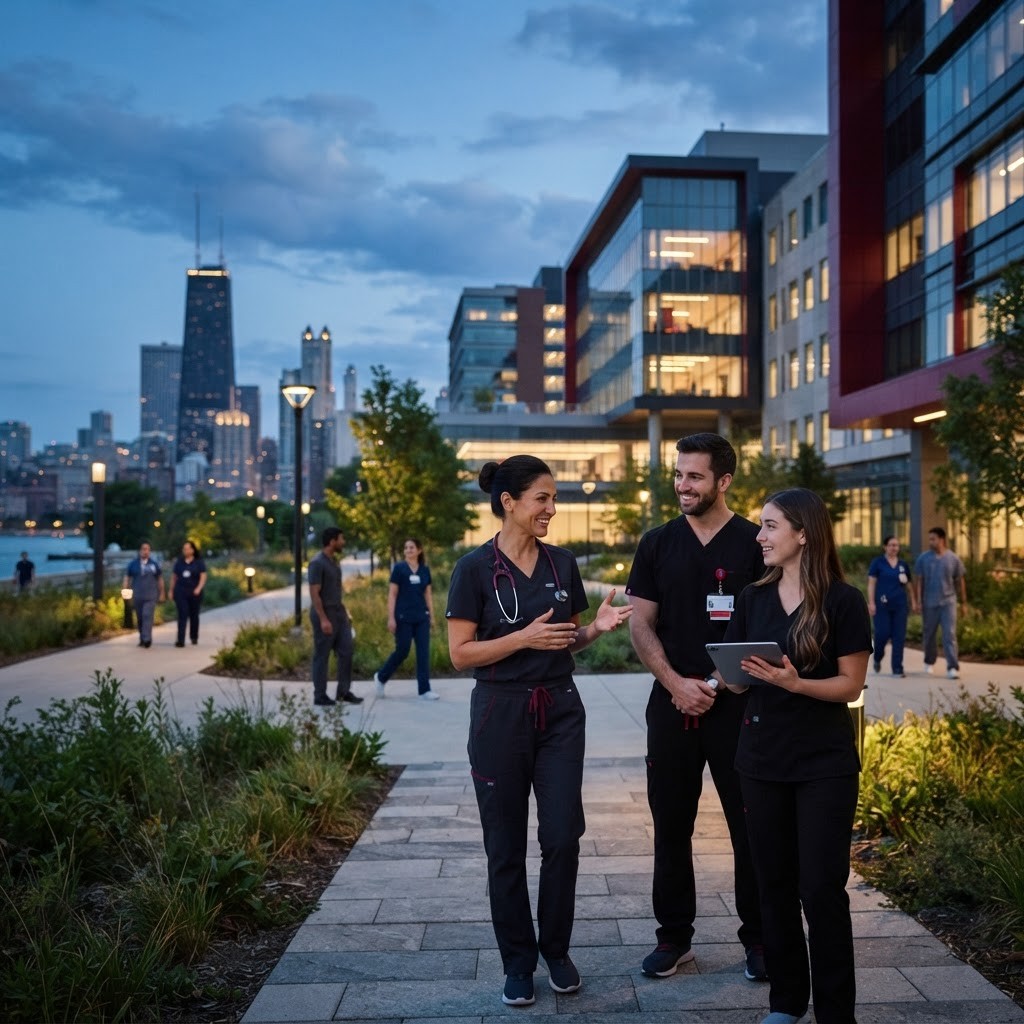
Understanding Chicago’s Hospital Landscape
Chicago offers an exceptional concentration of academic medical centers, specialty institutions, and large health systems. The best hospital for an individual is not automatically the largest or most famous; it depends on diagnosis, physician expertise, insurance coverage, location, urgency, and personal needs. Patients should use this guide as a starting point and consult qualified healthcare professionals when making medical decisions.
1. Northwestern Memorial Hospital
Northwestern Memorial is a major academic hospital in Streeterville and the principal teaching hospital associated with Northwestern University Feinberg School of Medicine. It is recognized across numerous complex specialties, including cardiology, neurology, oncology, transplantation, and orthopedics. Its downtown campus offers access to extensive subspecialty expertise, advanced diagnostics, and clinical research.
2. University of Chicago Medical Center
The University of Chicago Medical Center in Hyde Park is a leading academic institution known for complex and specialized care. Its programs span cancer, digestive diseases, transplantation, neuroscience, cardiology, and other advanced fields. Close connection to biomedical research supports clinical trials and multidisciplinary treatment for challenging conditions.
3. Rush University Medical Center
Rush is a prominent academic medical center on Chicago’s West Side. It is especially well known for orthopedics, neurology, neurosurgery, and rehabilitation, while providing a wide range of medical and surgical services. Its campus design, research programs, and integrated specialty teams support both routine and highly complex care.
4. Ann & Robert H. Lurie Children’s Hospital of Chicago
Lurie Children’s is a dedicated pediatric academic hospital serving infants, children, adolescents, and families. It provides broad pediatric subspecialty care, from cardiology and oncology to surgery and neonatology. Child-centered facilities and professionals trained specifically in pediatric medicine make it a key regional referral destination.
5. Shirley Ryan AbilityLab
Shirley Ryan AbilityLab specializes in physical medicine and rehabilitation. Its clinicians and researchers work with patients recovering from stroke, spinal cord injury, brain injury, amputation, and complex musculoskeletal or neurological conditions. The institution is distinctive for integrating research laboratories and clinical care within the rehabilitation environment.
6. Advocate Illinois Masonic Medical Center
Advocate Illinois Masonic serves Chicago’s North Side with emergency, medical, surgical, behavioral health, and specialty care. It is also known as a teaching hospital and a major community resource. Its urban location and wide service range make it important for both neighborhood care and selected specialty programs.
7. Loyola University Medical Center
Located just west of Chicago in Maywood, Loyola University Medical Center is an academic hospital serving the broader metropolitan region. It offers advanced programs in transplantation, cardiology, oncology, burn care, and surgery. Its regional referral role and university affiliation support multidisciplinary expertise.
8. UI Health
UI Health, associated with the University of Illinois Chicago, combines hospital care, specialty clinics, research, and education. It serves a highly diverse patient population and provides advanced care across many fields. Its public mission and role in training health professionals are significant parts of its contribution to Chicago.
9. John H. Stroger Jr. Hospital of Cook County
Stroger Hospital is central to Cook County’s safety-net health system and has a longstanding role in trauma, emergency, specialty, and public care. It serves patients from across the county regardless of their circumstances. Its clinical volume and public mission make it an essential institution in the region’s healthcare infrastructure.
10. Ascension Saint Joseph Chicago
Ascension Saint Joseph Chicago provides medical, surgical, emergency, cardiovascular, and other services on the city’s North Side. Its location and established clinical programs make it a convenient option for many nearby communities. As with any hospital, patients should confirm current physician participation and insurance arrangements.
How Patients Can Make an Informed Choice
For planned care, examine the experience of the specific physician and clinical team, not only the hospital’s overall reputation. Ask about procedure volume, outcomes, accreditation, care coordination, follow-up, language access, and financial counseling. Confirm insurance network status directly because coverage can differ among facilities and doctors at the same campus. In an emergency, call appropriate emergency services rather than delaying care to compare hospitals.
Chicago’s healthcare strength comes from the combined work of academic research centers, rehabilitation specialists, pediatric experts, community hospitals, and public institutions. A primary care physician or specialist can help identify which program best matches a patient’s diagnosis and circumstances.
