
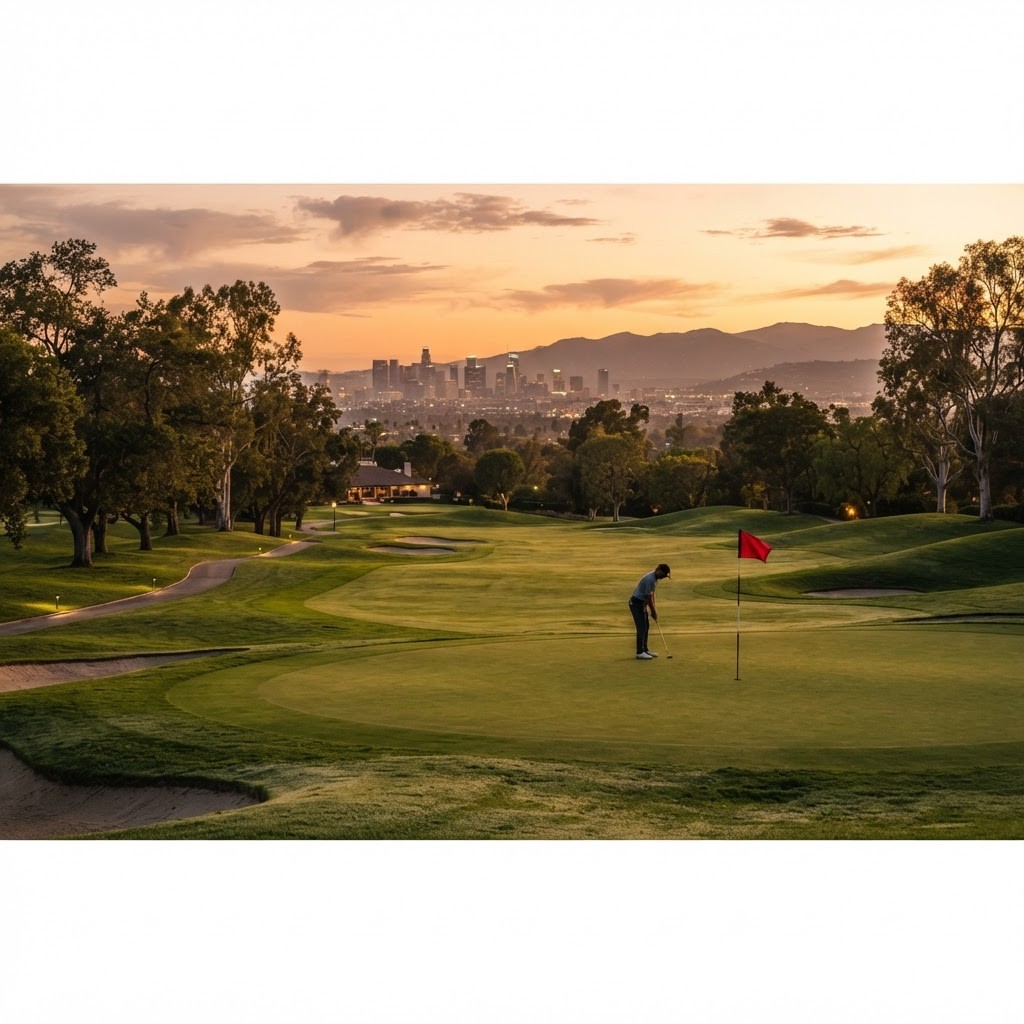
Golf Across Greater Los Angeles
Los Angeles golf is defined by variety. Players can find historic parkland layouts, canyon courses, ocean-influenced terrain, elite championship clubs, and busy municipal facilities within the same region. Climate allows year-round play, although heat, marine layers, seasonal rain, and water-management practices affect conditions. This list mixes public and private courses to represent the area's most notable designs and experiences. Access policies and renovation schedules should always be checked directly.
1. Riviera Country Club
Riviera Country Club in Pacific Palisades is one of American golf's most respected tournament venues. The George C. Thomas Jr. design rewards strategic placement, thoughtful angles, and confident approach play rather than simple power. Its kikuyu grass, barranca, bunkering, and compact green targets create distinctive challenges. Riviera is private, but its annual professional tournament gives golf fans an opportunity to study the design and its famous finishing stretch.
2. Los Angeles Country Club
The North Course at Los Angeles Country Club gained wider recognition through major championship exposure. Its restored strategic character uses natural landforms, width, firm ground options, and varied green complexes. Located in the center of the city, the property feels remarkably secluded. As a private club, it is not a routine visitor option, but its architecture is essential to understanding the highest level of Los Angeles golf.
3. Bel-Air Country Club
Bel-Air Country Club is known for dramatic routing through canyons, tunnels, elevation changes, and bridges. The course's unusual transitions create a strong sense of discovery. Strategy is shaped by terrain and compact targets, making accuracy and course management important. Its private setting and architectural history place it among Southern California's most distinctive clubs.
4. Trump National Golf Club Los Angeles
Trump National Golf Club Los Angeles sits on coastal bluffs in Rancho Palos Verdes and offers expansive Pacific views. The public course combines elevation, ocean exposure, and visually dramatic holes. Wind can change club selection and trajectory decisions throughout a round. Players should choose tees carefully because forced carries and elevation can increase difficulty, while the scenery encourages a measured pace.
5. Rustic Canyon Golf Course
Rustic Canyon in Moorpark is widely praised as a public course with serious architectural interest. Its broad fairways, natural sandy character, ground contours, and large greens invite multiple strategies. The layout can be playable for a broad range of golfers while still demanding careful positioning from experts. Firm conditions and wind reward imagination, and the understated setting makes the golf itself the focus.
6. Griffith Park – Wilson Course
Wilson Golf Course is one of two full-length municipal layouts in Griffith Park. Mature trees, accessible pricing, and a central location make it a cornerstone of public golf in Los Angeles. The course is generally longer than neighboring Harding and can be demanding when rough and kikuyu affect recovery shots. Heavy demand means pace and tee-time planning matter, but the opportunity to play beneath the park's hills is distinctly local.
7. Griffith Park – Harding Course
Harding Golf Course offers another historic public option within Griffith Park. Its routing is somewhat more compact than Wilson, creating a practical choice for players who value walkability and traditional parkland golf. Tree placement and green approaches reward control. The two courses together show why municipal golf remains important: they provide broad public access in the heart of an expensive metropolitan area.
8. Industry Hills Golf Club
Industry Hills features the Eisenhower and Zaharias courses, giving golfers two substantial resort-style options east of downtown. Elevation changes, mature landscaping, and long views create a sense of separation from the surrounding city. The courses test different parts of the game, and choosing appropriate tees is important. Practice facilities and on-site amenities make the property useful for golf outings and concentrated practice days.
9. Angeles National Golf Club
Angeles National in Sunland offers a desert-influenced visual style near the Angeles National Forest. Native areas, water features, wind, and mountain backdrops create a different experience from the city's traditional tree-lined courses. Accurate driving and disciplined approach play help avoid costly misses. The setting is especially striking during cooler morning or late-afternoon light.
10. Brookside Golf Club
Brookside Golf Club sits beside the Rose Bowl in Pasadena and includes two public courses. Its location, mature trees, and San Gabriel Mountain views give it a strong identity. Event schedules around the Rose Bowl can affect access, so planning is important. Brookside's combination of history, scale, and municipal availability makes it a valuable part of regional golf.
How to Select a Course
Consider access, travel time, walking conditions, pace, practice facilities, and difficulty from the tees you actually play. Coastal wind and morning marine layers can make a round feel different from an inland afternoon. Kikuyu lies around many Los Angeles courses require committed technique, while firm designs such as Rustic Canyon encourage lower trajectories and ground play. Public tee times often fill quickly, especially on weekends.
Respecting the Local Golf Landscape
Southern California courses operate under ongoing pressure to use water responsibly and maintain playable conditions efficiently. Players can support good stewardship by repairing ball marks, filling divots where instructed, following cart rules, and respecting habitat areas. Los Angeles golf is at its best when accessibility, architectural character, and responsible maintenance coexist. From Griffith Park to the region's championship clubs, the area offers a remarkably deep education in course design.
