
Choosing a General Contractor in Philadelphia
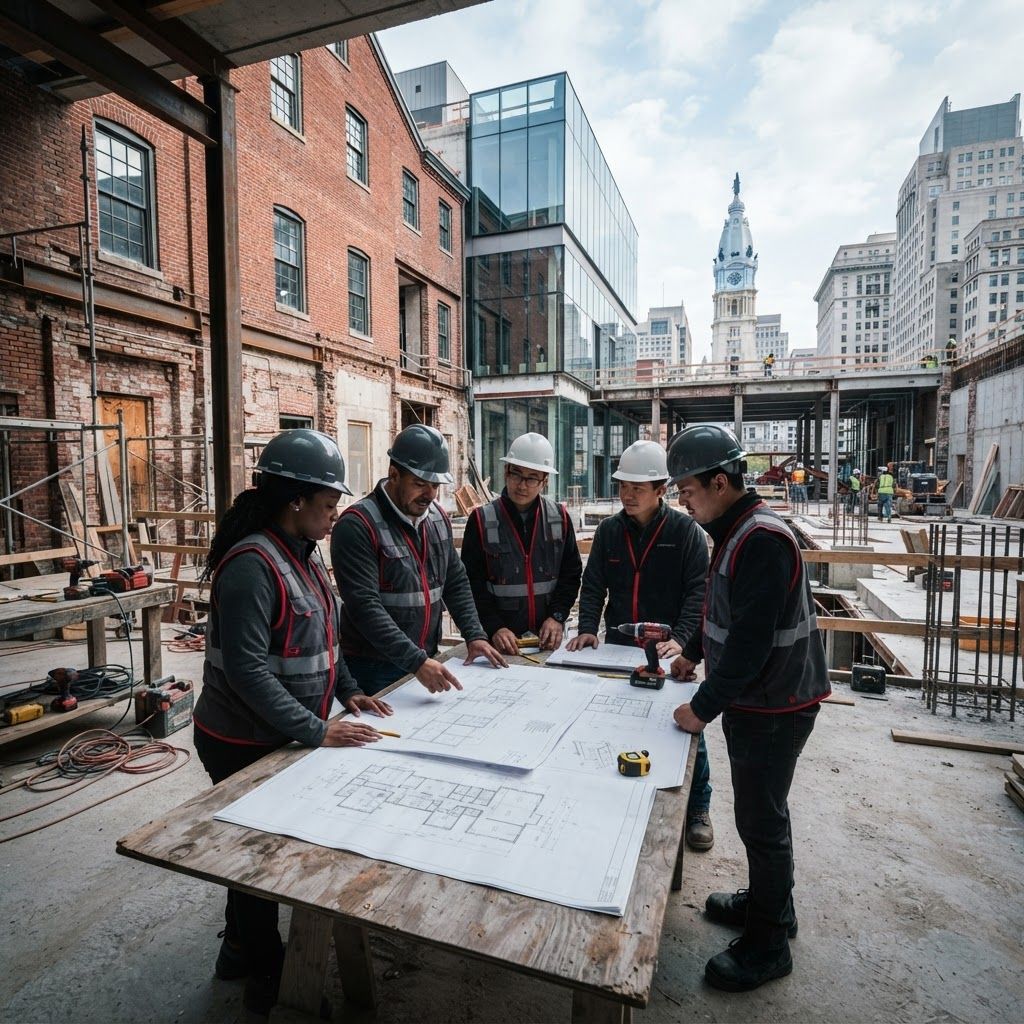
A general contractor coordinates labor, subcontractors, materials, inspections, schedule, safety, and communication. In Philadelphia, that role may also require navigating party walls, limited staging space, historic fabric, occupied buildings, utility conflicts, and neighborhood constraints. The best contractor is not simply the company with the largest portfolio; it is the team whose experience, controls, and scale fit the project.
Before selecting a contractor, owners should define scope with qualified design professionals, verify licensing and insurance as applicable, review comparable work, and speak with recent references. Bids should be evaluated for completeness rather than price alone. The following companies are notable participants in Philadelphia’s construction market, spanning major builders and renovation-focused firms.
1. LF Driscoll
LF Driscoll is one of the city’s best-known construction management names, particularly in healthcare, cultural, academic, and complex institutional projects. These environments demand rigorous coordination, detailed scheduling, and work around sensitive operations. Its portfolio demonstrates the value of specialized preconstruction and project controls on technically demanding buildings.
2. INTECH Construction
INTECH Construction has a substantial Philadelphia presence and experience across residential, hospitality, education, cultural, and commercial work. Urban projects benefit from early logistics planning and close collaboration with architects and owners. INTECH’s broad local portfolio makes it relevant when teams need familiarity with prominent city sites and varied building types.
3. Hunter Roberts Construction Group
Hunter Roberts Construction Group works across commercial, institutional, residential, and public-sector construction. Large projects often require robust safety programs, cost tracking, subcontractor management, and documentation systems. The company’s scale suits owners who need formal construction-management processes and the capacity to coordinate many specialized trades.
4. Clemens Construction Company
Clemens Construction Company is a long-standing Philadelphia builder associated with multifamily, hospitality, retail, and mixed-use projects. Dense urban development requires careful sequencing because storage, deliveries, hoisting, and street access are constrained. Experience with local subcontractor markets can be a meaningful advantage.
5. Domus Construction
Domus Construction is known for Philadelphia-area commercial, residential, institutional, and renovation work. Renovation demands investigative skill because drawings may not fully reveal existing conditions. Contractors that communicate discoveries quickly and document resulting cost or schedule changes help owners make informed decisions.
6. P. Agnes
P. Agnes has deep regional roots and a portfolio including healthcare, education, life sciences, and other institutional facilities. Technical projects often involve complex mechanical, electrical, plumbing, and technology systems. Early trade coordination and commissioning planning are essential to ensure that the completed building performs as designed.
7. Bittenbender Construction
Bittenbender Construction is a Philadelphia-based, woman-owned company associated with public, cultural, commercial, and institutional projects. Its work illustrates how local leadership and civic experience can support projects involving prominent stakeholders and occupied environments. Owners should look for teams that understand both construction details and the communication needs of public-facing work.
8. Shoemaker Construction
Shoemaker Construction has extensive experience in multifamily residential and other large building projects. Repetitive residential construction still requires demanding quality control, particularly for waterproofing, acoustics, firestopping, and finish consistency. Strong field supervision and mockups can prevent defects from being repeated across many units.
9. Post Brothers Construction
Post Brothers is widely recognized as a Philadelphia developer and builder of large multifamily and adaptive-reuse properties. Its integrated perspective can be useful for understanding how design, construction, operations, and resident experience interact. Adaptive reuse requires creative solutions for existing structure, envelope conditions, and contemporary code requirements.
10. Buckminster Green
Buckminster Green operates at a more residential and small-commercial scale, with a focus on thoughtful renovation and high-performance practices. This type of contractor may be a better match for homeowners and smaller property owners than a large institutional builder. Knowledge of older rowhomes, energy upgrades, and occupied renovations is particularly valuable in Philadelphia neighborhoods.
How to Compare Contractor Proposals
Confirm that bidders are pricing the same drawings, specifications, allowances, alternates, and schedule assumptions. A low proposal may omit permits, temporary protection, utility work, testing, or finish details included elsewhere. Request a list of exclusions and clarifications. Understand general conditions, overhead, fee, insurance, contingency, and change-order procedures.
Preconstruction is where many risks can be reduced. Constructability reviews, site investigation, long-lead purchasing, value analysis, and subcontractor input can improve cost certainty before field work accelerates. Building information modeling is increasingly used to coordinate systems and detect conflicts, but technology does not replace experienced supervision.
Philadelphia-Specific Construction Risks
Older masonry, party walls, undocumented modifications, water infiltration, lead-containing materials, and limited access are recurring concerns. Historic approvals may affect windows, facades, roofs, and exterior details. Work in occupied buildings requires dust, noise, egress, and shutdown planning. Owners should retain appropriate environmental and engineering professionals where conditions warrant.
Permits and inspections must be incorporated into the schedule. Contractors should not encourage owners to bypass required approvals. Clear responsibility for filings, utility coordination, and closeout documents belongs in the agreement.
Building a Productive Relationship
Use a written contract defining scope, payment, schedule, insurance, changes, disputes, warranties, and termination rights. Establish a regular meeting and reporting rhythm. Decisions should be documented, and owners should respond promptly when selections affect procurement.
Philadelphia offers contractors for every project scale. Select a builder based on comparable experience, team quality, safety, financial capacity, and transparent communication. A disciplined process produces better results than relying on reputation or price in isolation.
