
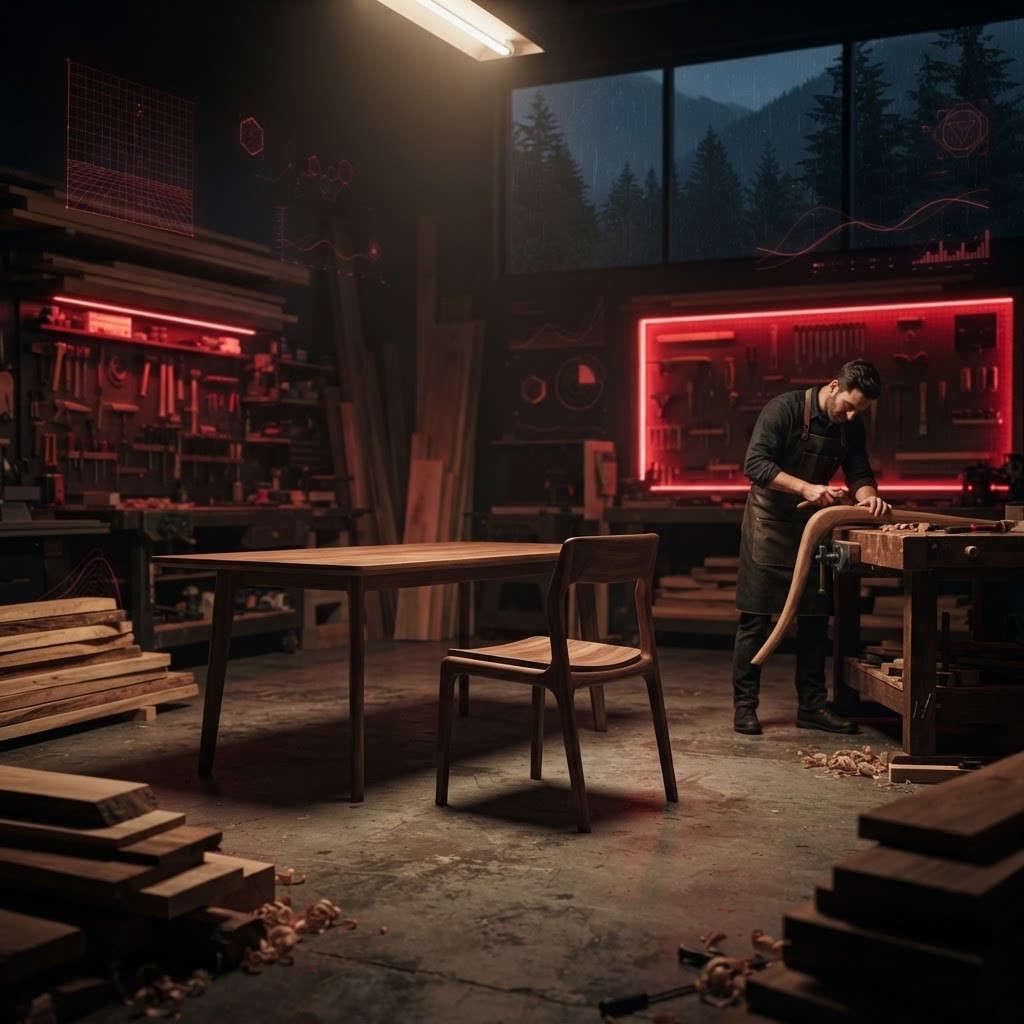
Furniture Making in the Pacific Northwest
Washington has a natural advantage in furniture manufacturing: timber. Douglas fir, western maple, alder, walnut, and cedar have been worked in the region for well over a century, and the culture of woodworking that grew around the timber economy still shapes how furniture is built here. What has changed is the market. Today's Washington makers serve technology campuses that need contract-grade workstations, hospitality groups outfitting boutique hotels, restaurants needing durable seating, and homeowners who want pieces that will last decades rather than seasons.
Two distinct segments have emerged. The first is design-led custom manufacturing, concentrated in Seattle, Tacoma, and Bellingham, where small teams build to architectural specification with an emphasis on material honesty and joinery quality. The second is production-oriented manufacturing, more common east of the Cascades and in industrial corridors, where CNC machining and finishing lines produce casegoods, office furniture, and cabinetry at volume.
Top 10 Best Furniture Manufacturers in Washington
1. Meyer Wells — A Seattle maker known for building tables, conference furniture, and architectural millwork from urban salvaged trees. The company's differentiator is provenance: pieces are traceable to specific removed trees within the region, which resonates strongly with corporate clients pursuing sustainability goals.
2. Chadhaus — Operating from Seattle, Chadhaus produces modern residential and commercial furniture with a distinctive blend of solid hardwood and blackened steel. The studio is respected for restrained industrial design, consistent finish quality, and the ability to scale a design across a full restaurant or hotel installation.
3. Grain Design and Studio Makers of Bainbridge — The Bainbridge and Kitsap area hosts a cluster of small-batch design studios producing seating, lighting, and case pieces. Their strength is design originality and material experimentation, often producing collections that reach national retailers while remaining locally manufactured.
4. Hardwood Industries and Component Manufacturers — Behind every furniture brand sits a supply chain of hardwood processors and component shops across Washington producing dimensioned lumber, panels, edge-glued tops, and turned parts. These businesses matter to buyers because they determine material availability and cost stability for finished goods.
5. Kirkland Custom Cabinetry and Casework Shops — The Eastside corridor supports a mature base of cabinet and casework manufacturers serving residential remodels and commercial tenant improvements. Their advantage is integration with architects and general contractors, delivering shop drawings, field measurement, and installation as a single scope.
6. Woodcraft Industries Washington Operations — Representing volume component manufacturing, operations of this type supply doors, frames, and machined wood components to national cabinet and furniture brands. Their value lies in tight tolerance repeatability across very large order quantities.
7. Second Use and Reclaimed Material Fabricators — Seattle's reclaimed materials sector supplies old-growth timber, warehouse beams, and salvaged panels to furniture makers. The resulting pieces carry character that new lumber cannot replicate, and the model diverts substantial material from demolition waste streams.
8. Spokane Contract Furniture Builders — Eastern Washington hosts manufacturers focused on institutional and educational furniture: classroom tables, dormitory casegoods, and library shelving. These builders compete on durability engineering and compliance with contract furniture testing standards rather than on aesthetics alone.
9. Upholstery Workrooms of Tacoma and Georgetown — Washington's upholstery workrooms produce custom seating for restaurants, theaters, and residential designers. Their differentiators include frame construction quality, foam specification expertise, and the ability to meet commercial flammability requirements for public spaces.
10. Outdoor and Cedar Furniture Producers of the Cascade Foothills — Cedar's natural weather resistance supports a niche of outdoor furniture and structure builders serving a climate defined by wet winters. These makers understand joinery and finish systems that survive Pacific Northwest moisture, a knowledge base that imported outdoor furniture rarely matches.
What Separates Good Furniture from Great Furniture
Buyers evaluating Washington manufacturers should look past surface appearance. Joinery method is the clearest signal of intent: mortise and tenon, dowel, or robust mechanical fastening indicate a piece designed to be repaired and reused, while staples and glue blocks suggest a shorter service life. Wood movement matters in a climate with significant seasonal humidity swings, so ask how tops are attached and whether panels are allowed to expand. For commercial orders, verify finish durability testing, seating weight ratings, and whether the manufacturer can supply matching pieces years later.
Sustainability and Sourcing
Sustainability is a genuine differentiator in this market rather than a marketing afterthought. Certified forestry sourcing, urban salvage programs, water-based and low-VOC finishes, and take-back or refurbishment services all appear regularly in Washington manufacturers' offerings. Corporate buyers with reporting obligations should request chain-of-custody documentation and finish system data sheets early, because retrofitting that documentation after production is difficult.
Working With a Local Manufacturer
The strongest reason to buy locally is iteration. A Washington-based manufacturer can produce a prototype, invite you to review it in person, adjust a dimension or a finish, and then run production. Freight costs are lower, lead times are shorter than overseas alternatives, and problems get resolved by a person who can visit the site. For projects with tight architectural coordination, that proximity often determines whether an installation lands on schedule.
Provide manufacturers with clear specifications, realistic timelines, and a defined budget range. The best shops in Washington are candid about what a budget will and will not achieve, and that honesty early in a project usually produces a better outcome than an optimistic quote that unravels during production.
