
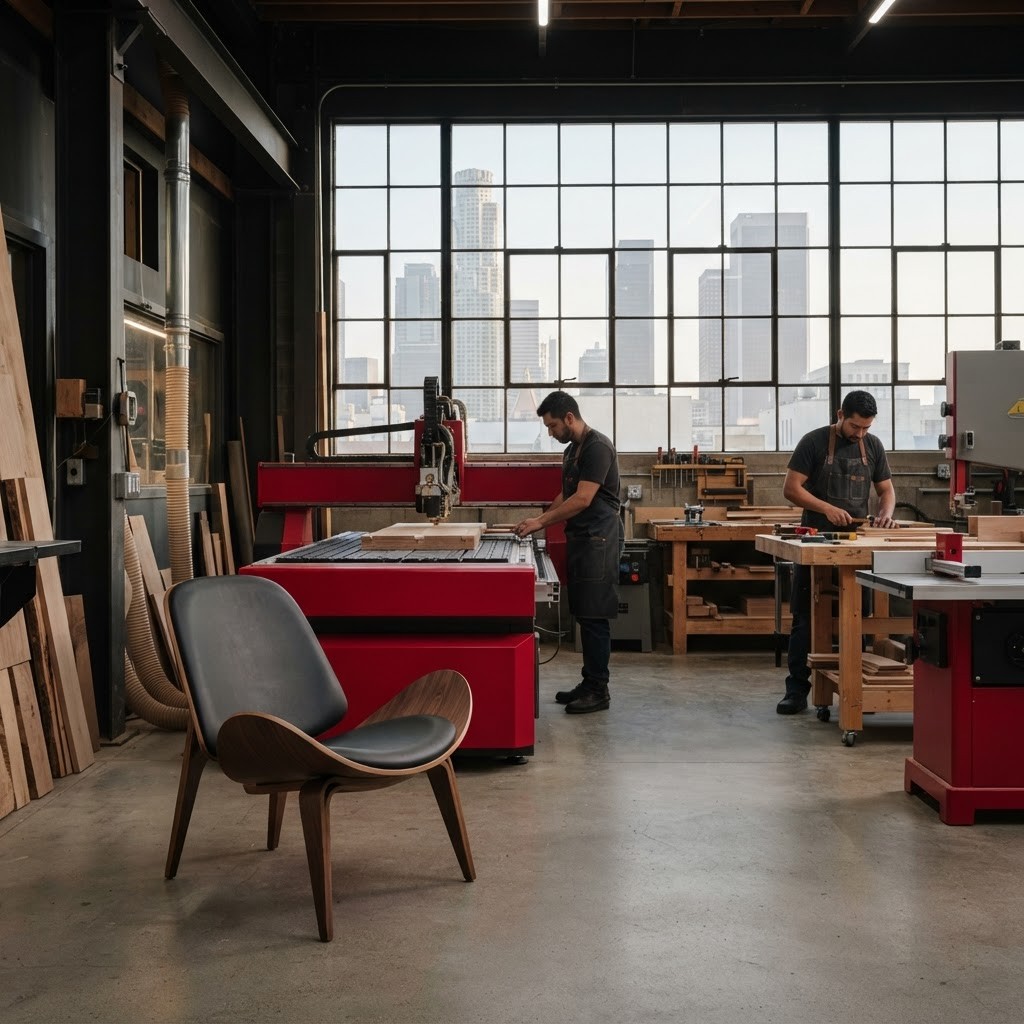
Los Angeles Furniture Manufacturing at a Glance
Los Angeles has one of the country’s most diverse furniture ecosystems, supported by interior designers, architects, hotels, restaurants, film studios, and design-conscious homeowners. Local production can give buyers greater control over dimensions, upholstery, finishes, and delivery than distant mass-market sourcing. The strongest manufacturers combine craft knowledge with dependable project management, an especially important advantage when a commercial opening or residential installation has a fixed schedule.
The businesses below represent different specialties rather than a single universal ranking. Some are known for upholstered seating, while others focus on case goods, contemporary collections, outdoor pieces, or fully custom fabrication. Buyers should confirm current capabilities, lead times, minimums, warranties, and trade policies before ordering.
1. Cisco Home
Cisco Home is closely associated with relaxed California design and domestically made upholstered furniture. Its sofas, sectionals, chairs, beds, and case goods appeal to buyers seeking comfortable proportions, natural-looking materials, and a refined but livable aesthetic. The company is also recognized for emphasizing responsible materials and construction choices, making it relevant to designers who place sustainability alongside appearance and durability.
2. A. Rudin
A. Rudin has a long-standing reputation in the Los Angeles design community for tailored upholstery and clean-lined furniture. The company serves high-end residential and hospitality projects where proportion, fabric application, and finish quality matter. Its design language generally favors timeless silhouettes over short-lived trends, which can make the pieces suitable for interiors expected to remain relevant for years.
3. Ebanista
Ebanista produces luxury furnishings with an emphasis on artisan finishes, detailed surfaces, and European-influenced forms. Its collections span seating, tables, cabinets, beds, and accessories. Designers often consider the brand when a room needs furniture with visual depth and a handcrafted character rather than anonymous mass production.
4. Formations
Formations is known for furniture and decorative pieces inspired by antiques, architecture, and global design traditions. The Los Angeles brand works across seating, tables, storage, lighting, and accessories. Its pieces suit layered interiors in which patina, substantial materials, and sculptural scale are central to the concept.
5. Croft House
Croft House represents a contemporary Los Angeles perspective, pairing streamlined forms with wood, metal, leather, and upholstery. The company offers furniture for living, dining, bedroom, and workspace settings, with customization available across selected designs. It can be a strong fit for clients who want modern furniture that still feels warm and materially expressive.
6. Stephen Kenn
Stephen Kenn is recognized for an industrial-modern approach that makes construction part of the visual story. Exposed frames, purposeful hardware, leather, canvas, and considered upholstery give many pieces an engineered character. The studio’s work is particularly distinctive in lofts, creative offices, boutique hospitality spaces, and modern residences.
7. J. Alexander Furniture
J. Alexander Furniture creates handcrafted pieces influenced by rustic modern and Southwestern design. Solid materials, hand-applied finishes, and tactile surfaces give the collection an artisanal presence. Buyers drawn to substantial wood furniture and subtle variations created by hand-finishing may find the company especially relevant.
8. Phloem Studio
Phloem Studio is a design-and-build furniture practice producing contemporary work with careful joinery and restrained forms. The studio’s approach is useful for clients who value the relationship between material, function, and construction. Its work reflects the smaller-batch side of the Los Angeles market, where direct collaboration can shape the final result.
9. MASHstudios
MASHstudios works across furniture design and fabrication, including residential, workplace, and custom environments. The company’s modern sensibility and experience with project-based production make it worth considering for businesses as well as homeowners. Its portfolio demonstrates how Los Angeles makers often move fluidly between product collections and custom commissions.
10. ModShop
ModShop is associated with glamorous, customizable furniture that draws from modern, retro, and Hollywood-inspired aesthetics. Color, upholstery, scale, and statement finishes are important parts of its appeal. It is a practical option for clients seeking personality-driven pieces for residences, entertainment spaces, and boutique commercial interiors.
How to Select a Los Angeles Furniture Maker
Begin with the intended use. A family-room sectional, restaurant banquette, hotel lounge chair, and studio prop face different demands. Ask how frames are built, what foam and suspension systems are used, whether fabrics require performance ratings, and which finishes can tolerate daily cleaning. For custom work, approve drawings, dimensions, finish samples, and fabric placement before production.
Local sourcing can simplify site visits and approvals, but Los Angeles traffic and installation restrictions still require planning. Confirm freight, receiving, stairs, elevator access, assembly, and packaging removal in writing. Commercial buyers should also discuss fire codes, accessibility, replacement components, and the ability to repeat an item later. The best manufacturer is ultimately the one whose craft, communication, capacity, and service align with the project.
Planning a Successful Supplier Relationship
Before opening an account, create a written purchasing brief that defines required products, expected order frequency, acceptable lead times, quality standards, budget limits, and delivery constraints. Share realistic forecasts without presenting them as guaranteed orders. Ask each supplier how quotations are updated, how backorders are communicated, who handles quality concerns, and what documentation accompanies a shipment. A trial order can reveal far more about picking accuracy, packaging, communication, and product consistency than a polished sales presentation.
It is also wise to avoid dependence on a single source for every critical item. Maintain approved alternatives while giving strong primary suppliers enough predictable business to invest in the relationship. Review performance quarterly using measurable factors such as on-time delivery, defect rate, response speed, invoice accuracy, and resolution of claims. In Los Angeles, delivery plans should account for traffic, loading zones, limited warehouse space, seasonal demand, and the distance between coastal, central, and inland locations. Clear receiving procedures help teams photograph damage, check quantities, preserve lot information, and report discrepancies promptly.
Finally, treat the list above as a starting point rather than a substitute for due diligence. Visit showrooms or facilities when practical, request samples, verify business credentials and insurance where relevant, and speak with comparable customers. The best long-term partner is transparent about both strengths and limitations. Consistent communication, documented expectations, and fair payment practices create a more resilient supply chain for buyer and supplier alike.
