
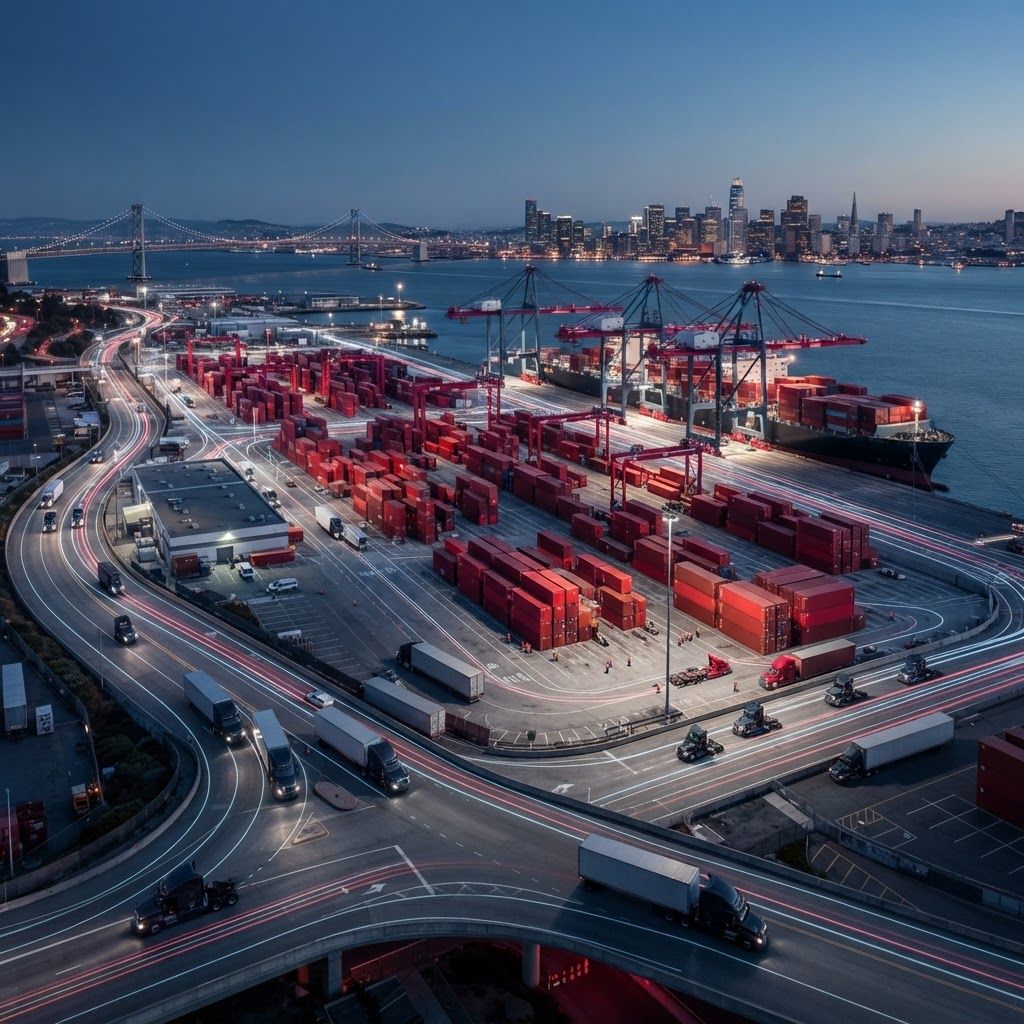
The Strategic Importance of Freight in San Francisco
San Francisco sits at the heart of one of the most economically productive regions in the world. As a gateway to the Pacific and a neighbor to the sprawling industrial corridors of the East Bay and Central Valley, the city relies on a sophisticated freight network to move raw materials, finished goods, and everything in between. Freight companies here handle the complex task of connecting global supply chains with local businesses, from technology hardware to fresh produce and consumer goods.
Full-Service Freight Providers
Several established carriers dominate the Bay Area freight landscape. Global logistics leaders such as FedEx Freight and UPS Freight maintain significant regional operations, offering less-than-truckload and full-truckload shipping backed by extensive networks. XPO Logistics and Old Dominion Freight Line are respected for their reliability, on-time performance, and advanced tracking systems that give shippers real-time visibility into their cargo.
Regional and Specialized Carriers
Beyond the national brands, regional freight specialists provide tailored services that reflect the unique demands of San Francisco commerce. Companies focused on refrigerated transport keep the region's restaurants and grocers stocked with perishable goods, while flatbed and heavy-haul operators support construction and manufacturing. These specialized carriers understand local regulations, port procedures, and the logistics of navigating a dense urban environment with strict emissions rules.
Intermodal and Port Freight
The Port of Oakland, just across the Bay, is one of the busiest container ports in the nation and a critical node for San Francisco freight. Intermodal freight companies coordinate the seamless transfer of containers between ships, rail, and trucks. This integration allows goods arriving from Asia to reach warehouses and retailers efficiently. Drayage operators, who move containers between the port and nearby distribution centers, are an essential link in this chain.
Technology and Freight Innovation
The Bay Area's identity as a technology hub has profoundly influenced its freight sector. Digital freight brokerages and platform-based carriers use data analytics, machine learning, and automated matching to connect shippers with available capacity. This innovation reduces empty miles, lowers costs, and improves efficiency. Many freight companies now offer customer portals with predictive delivery estimates and automated documentation, streamlining what was once a paperwork-heavy industry.
Sustainability in Freight Transport
California's stringent environmental standards make sustainability a defining feature of Bay Area freight. Leading companies are adopting electric and hydrogen-powered trucks, optimizing routes to cut fuel consumption, and investing in cleaner warehousing. These efforts respond both to regulation and to customer demand for greener supply chains. Freight providers that embrace sustainability gain a competitive edge in an increasingly eco-conscious market.
Choosing the Right Freight Partner
Selecting a freight company involves assessing capacity, geographic coverage, technology, and service reliability. Businesses should consider whether they need standard ground freight, expedited service, temperature-controlled transport, or international shipping. Transparent pricing, strong safety records, and responsive support are equally important. A dependable freight partner becomes an extension of a company's operations, directly affecting customer satisfaction and profitability.
How to Compare Your Options
A useful comparison begins with the details of the journey or shipment rather than a headline price alone. Consider the starting point, destination, desired schedule, volume, accessibility needs, and any special handling requirements. Then examine each operator's service area, operating hours, cancellation terms, safety practices, and ability to provide dependable status updates. Established companies should communicate clearly about what is included, where extra fees may apply, and what customers can expect if weather, congestion, or another disruption affects the plan. Reviews can reveal recurring strengths, but recent feedback and patterns across several sources are more useful than a single enthusiastic or negative comment.
San Francisco-specific experience deserves extra weight. The city's hills, loading restrictions, crowded curb space, major events, microclimates, and connections across bridges or to airports can complicate even a routine trip. Providers familiar with neighborhood access rules and regional traffic patterns are better equipped to set realistic schedules. Sustainability may also matter: efficient routing, shared capacity, electric equipment, and transparent emissions initiatives can reduce environmental impact without sacrificing service quality. Before making a decision, request a clear description of the service, confirm insurance or passenger protections where relevant, and verify how support is handled before, during, and after the job.
Making the Most of the Service
Good preparation improves almost every transportation experience. Book early during conventions, holidays, summer travel periods, and major city events, when capacity can tighten quickly. Provide accurate dimensions, passenger counts, addresses, timing, and special requirements so the operator can assign suitable equipment. Keep essential confirmation details available, allow reasonable time for San Francisco traffic, and identify backup options for truly time-sensitive plans. For recurring business needs, track punctuality, condition, communication, and total cost over several jobs rather than judging performance by price alone. A provider that consistently prevents problems and responds well when conditions change often delivers the strongest long-term value.
Conclusion
San Francisco's freight companies form the invisible infrastructure that sustains the region's dynamic economy. From national carriers with vast networks to nimble regional specialists and technology-driven platforms, the options are diverse and capable. As electrification, automation, and data intelligence reshape the industry, businesses that align with forward-thinking freight partners will be best positioned to thrive in a fast-moving marketplace.
