
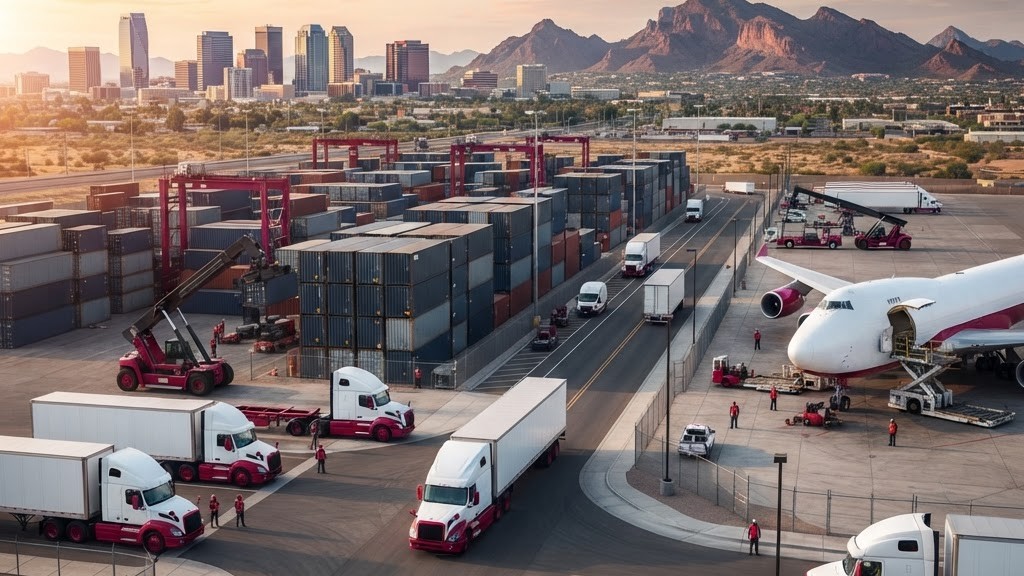
Phoenix as a Freight Market
Phoenix’s growth, proximity to Southern California, manufacturing base, construction activity, and connections to Mexico make it an increasingly important distribution market. Freight buyers can choose among less-than-truckload carriers, truckload fleets, parcel networks, air cargo providers, and freight forwarders. No single company is best for every shipment. The right choice depends on dimensions, commodity, urgency, lane, handling risk, and the level of tracking or appointment coordination required. Confirm that a carrier is authorized, insured, and experienced with the exact freight involved.
1. Old Dominion Freight Line
Old Dominion is highly regarded in less-than-truckload transportation for service consistency and a broad terminal network. Phoenix businesses use LTL when shipments are too large for parcel service but do not fill a trailer. The carrier’s operational focus can benefit time-sensitive industrial and commercial freight. Accurate classification, packaging, and dimensions are essential to avoiding adjustments after pickup.
2. FedEx Freight
FedEx Freight combines LTL capabilities with a familiar national transportation ecosystem. Multiple service speeds can support cost-versus-transit decisions, while established tracking tools aid receiving teams. It is a practical option for palletized business freight moving across regional or national lanes. Shippers should distinguish freight services from parcel products and prepare bills of lading correctly.
3. XPO
XPO operates a large North American LTL network with technology-driven visibility and substantial terminal coverage. It serves manufacturers, retailers, and distributors that need scheduled pallet movement. Digital tools are valuable, but successful execution still depends on accurate pickup details and dock readiness. Discuss limited-access, residential, liftgate, and appointment requirements before tendering the shipment.
4. Estes Express Lines
Estes is a major privately held freight carrier known for LTL and broader transportation solutions. Its network can support standard, expedited, and cross-border needs depending on the lane. Phoenix shippers value providers that can manage both local pickup and distant delivery through a consistent system. Review liability limits and purchase additional cargo protection when commodity value exceeds standard coverage.
5. Saia LTL Freight
Saia has expanded its LTL footprint and offers national reach from Western markets. It is a strong candidate for routine palletized shipments where predictable terminal handling matters. Businesses should compare published or contracted transit expectations, claims performance, and accessorial charges. Dense, stackable, well-labeled freight generally moves more efficiently and faces less damage risk than irregular loads.
6. R+L Carriers
R+L Carriers provides LTL service along with related logistics and expedited capabilities. Its range can suit businesses that prefer a carrier relationship extending beyond standard dock-to-dock freight. Phoenix customers should assess pickup coverage and destination strength on their recurring lanes. A carrier that performs well nationally may still vary by specific terminal pair and delivery region.
7. UPS Supply Chain Solutions
UPS Supply Chain Solutions extends beyond parcel delivery into forwarding, customs, freight, and contract-logistics support. It can be effective for companies combining international transportation with domestic distribution. Integrated visibility is attractive to importers, but the service design should be matched carefully to volume and complexity. Clarify which UPS entity is contracting for and physically handling each movement.
8. DHL Global Forwarding
DHL Global Forwarding is a strong choice for international air and ocean freight connected to Phoenix. As a forwarder, it coordinates carriers, documentation, and cross-border logistics rather than operating every segment itself. Global reach benefits importers and exporters navigating multiple handoffs. Buyers should understand Incoterms, customs responsibilities, duties, insurance, and destination charges before cargo departs.
9. Knight-Swift Transportation
Phoenix-based Knight-Swift is one of North America’s most significant truckload transportation groups. Its scale, equipment base, and range of services make it especially relevant to full-truckload shippers. Local corporate roots are a meaningful differentiator. Capacity commitments, drop-trailer needs, detention terms, and seasonal volume should be discussed early when building a recurring program.
10. DSV
DSV provides global forwarding, road transport, and supply-chain services for organizations with complex domestic or international flows. Its consultative capabilities are valuable when freight requires coordination across air, ocean, warehousing, and final delivery. Small occasional shippers may prefer a simpler carrier relationship, while growing importers can benefit from a provider able to redesign routes as volume changes.
How to Select a Freight Partner
Provide every bidder with the same shipment profile: origin and destination, pallet count, dimensions, weight, freight class, commodity, value, hours, and special services. Compare total landed transportation cost rather than base linehaul alone. Ask about claims ratios, on-time performance on the actual lane, tracking, escalation procedures, and cargo liability. Phoenix facilities should also plan around extreme heat for food, chemicals, electronics, and other sensitive products. A trial shipment can reveal communication and terminal performance before a company shifts critical volume.
