
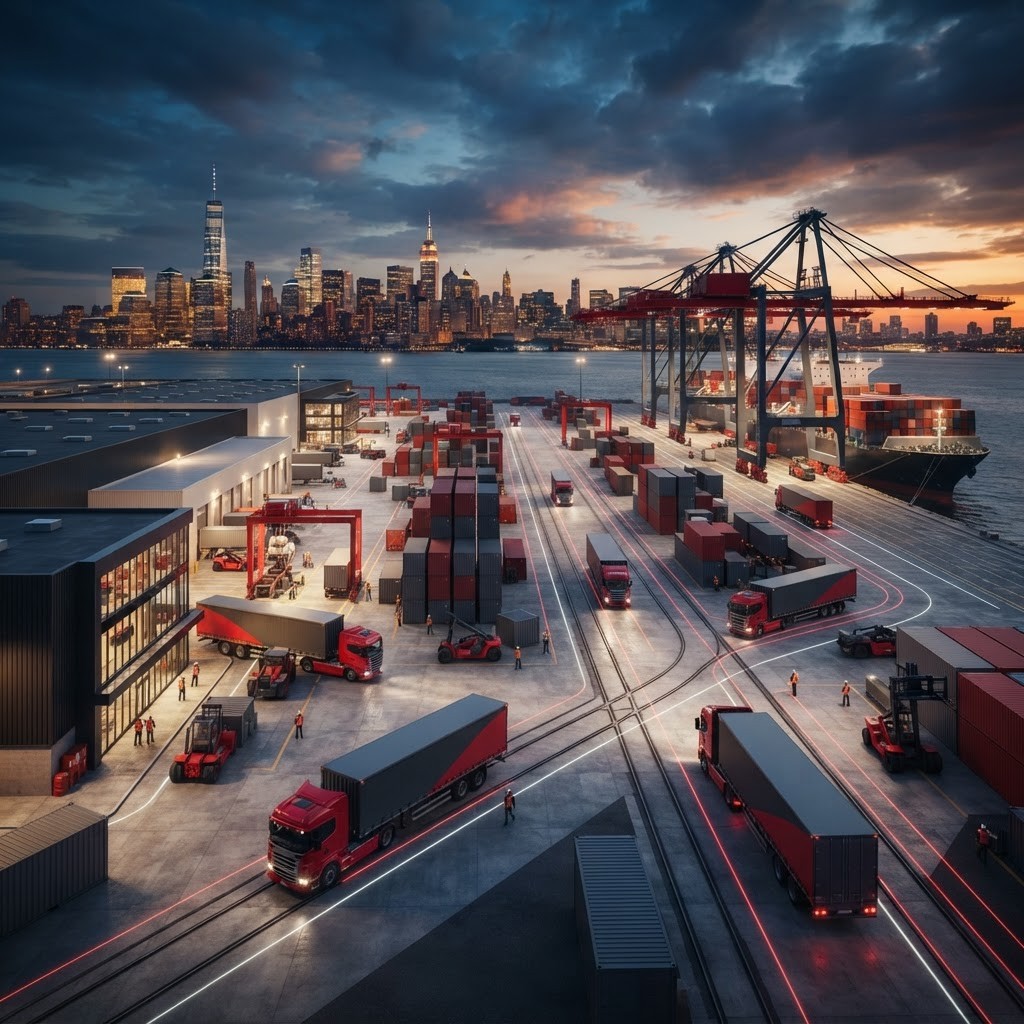
Freight and Logistics in New York
New York freight operations must navigate dense streets, bridge and tunnel restrictions, limited loading space, port congestion, airport capacity, and strict delivery windows. A provider should be evaluated by mode, service area, claims performance, visibility, specialized handling, and ability to manage final-mile constraints. The lowest quote may not be the lowest landed cost if delays, accessorial fees, or damage are common.
1. UPS Supply Chain Solutions
UPS Supply Chain Solutions combines global forwarding, customs support, distribution, and small-package connections. It is useful for companies that want international and domestic services within a broad network. Businesses should clarify which entity handles each shipment and how exceptions are escalated.
2. FedEx Freight
FedEx Freight is a major less-than-truckload carrier supporting palletized shipments throughout the region and beyond. Service choices can balance speed and cost, while tracking supports operational planning. Accurate dimensions, freight class, and delivery conditions are essential for reliable pricing.
3. DHL Global Forwarding
DHL Global Forwarding has extensive air and ocean capabilities and international trade expertise. It suits importers and exporters moving goods through New York’s airports and port region. Customs documentation, commodity rules, and destination requirements should be coordinated early.
4. XPO
XPO operates a large less-than-truckload network with technology-enabled shipment visibility. It can serve regional and national pallet freight for manufacturers, wholesalers, and retailers. Shippers should discuss appointment delivery, liftgate needs, inside service, and urban access before dispatch.
5. Old Dominion Freight Line
Old Dominion Freight Line is widely regarded for service-focused less-than-truckload transportation. Its network is relevant to businesses prioritizing consistent transit and careful freight handling. Packaging and classification remain the shipper’s responsibility and strongly influence claims outcomes.
6. Estes Express Lines
Estes provides less-than-truckload, volume, truckload, and related freight services. Broad coverage supports companies distributing from the New York area to national markets. Volume quotes and guaranteed services may be appropriate when standard LTL does not match the shipment.
7. Maersk
Maersk has evolved beyond ocean shipping into integrated logistics, including inland transport and warehousing. It is relevant to businesses using the Port of New York and New Jersey and seeking end-to-end coordination. Importers must still plan for demurrage, detention, chassis availability, and customs holds.
8. Kuehne+Nagel
Kuehne+Nagel is a global logistics provider with strong ocean, air, contract logistics, and sector-specific capabilities. Its scale benefits companies with complex international supply chains. Performance metrics, system integration, and account governance should be defined during procurement.
9. DB Schenker
DB Schenker offers international forwarding, land transport, and contract logistics. It can support industrial, retail, healthcare, and technology supply chains. Specialized commodities require early validation of temperature, security, compliance, and insurance procedures.
10. R+L Carriers
R+L Carriers provides less-than-truckload and related logistics services across a substantial North American network. It may suit regional distributors and businesses needing flexible freight options. Pickup windows and delivery-site constraints should be documented in the quote request.
Selecting the Right Partner
Create a lane profile showing shipment frequency, dimensions, weight, commodity, declared value, seasonal peaks, and accessorial requirements. Ask carriers for on-time performance, claims procedures, liability limits, technology options, and sustainability reporting. New York deliveries may require smaller vehicles, off-hour scheduling, building certificates, or advance appointments. Test a provider on representative lanes before awarding broad volume. Strong logistics partnerships depend on accurate data, transparent communication, and disciplined exception management—not simply a low rate per mile.
