
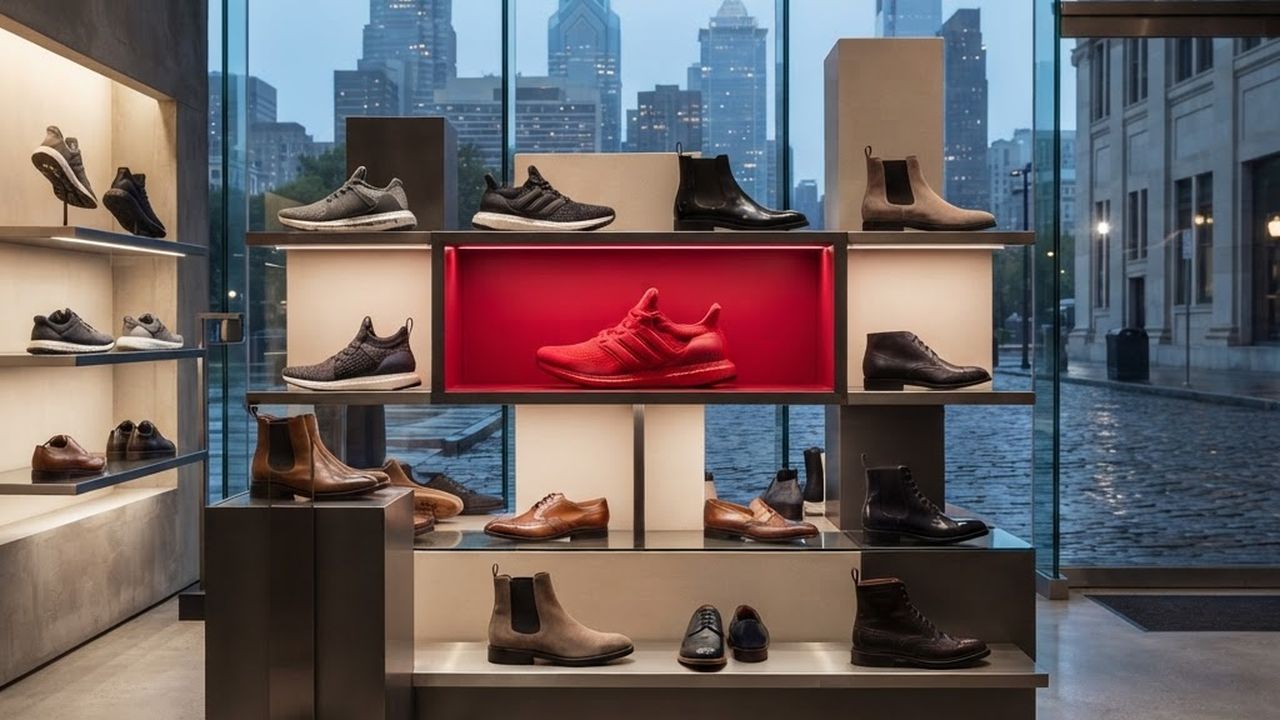
Footwear for a Walking City
Philadelphia rewards good shoes. Commuters navigate station stairs, office floors, uneven sidewalks, and long blocks, while runners use the Schuylkill River Trail and athletes fill courts and fields across the region. Winters bring cold and slush; summers demand breathability. The best footwear choice depends on fit, intended use, support, durability, and the surface underfoot.
Brand reputation is useful, but feet vary more than logos suggest. Try shoes late in the day when feet may be slightly larger, wear the socks intended for use, and check heel hold and toe room. For pain or medical concerns, seek qualified clinical guidance rather than relying on retail claims.
1. New Balance
New Balance is a strong option for walking, running, and casual wear because it offers many models and multiple widths. That range can be valuable to Philadelphia shoppers who spend long days on their feet. Performance lines differ in cushioning, stability, and geometry, so choose by use rather than appearance alone. A specialty fitting can help determine whether a neutral or stability design feels more natural.
2. Nike
Nike spans running, basketball, training, lifestyle sneakers, and weather-ready designs. Its cultural relevance is especially visible in a sports-focused city like Philadelphia. The assortment offers innovation and variety, but fit can differ significantly between franchises. Basketball shoes should be evaluated for court grip and containment, while running shoes should be tested for comfort at the intended pace.
3. Adidas
Adidas blends performance technology with influential street style. Its running foams, soccer heritage, classic terrace shoes, and modern lifestyle silhouettes serve a broad audience. Philadelphia consumers can move easily from athletic to casual contexts with many of its designs. Consider outsole traction during wet months and note that sleek casual models may not provide the same cushioning as dedicated walking shoes.
4. Reebok
Reebok has deep roots in fitness footwear and remains relevant for training, classic sneakers, and nostalgic style. Flat, stable models can work well for certain gym movements, while lifestyle collections offer an accessible way to wear retro design. A shoe optimized for lifting is not necessarily ideal for long-distance running, so match construction to activity. Versatility should never mean compromising essential support.
5. Brooks
Brooks focuses heavily on running and walking, with models organized around cushioning and support preferences. The brand is common in specialty running environments where staff can observe gait and discuss mileage. Philadelphia runners training along paved paths may value dependable road-focused options. Replace shoes based on changes in comfort and outsole wear rather than waiting for visible failure.
6. Hoka
Hoka is known for high-cushion designs and rocker-shaped geometry. The distinctive feel has attracted runners, walkers, healthcare professionals, and travelers who value underfoot comfort. Maximum cushioning does not automatically suit every person, so test the transition through each step. Wider platforms can feel stable, but model-specific fit remains important.
7. Timberland
Timberland's boots have a lasting connection to East Coast street style while also offering practical weather protection. Sturdy construction and lugged outsoles can be useful during Philadelphia's wet and cold seasons. Classic leather boots require break-in and routine care; cleaning salt promptly and conditioning leather can extend their life. Waterproof claims should be distinguished from general water resistance.
8. Dr. Martens
Dr. Martens delivers recognizable boots and shoes with a fashion identity rooted in music and subculture. The durable aesthetic works with denim, tailoring, and creative wardrobes. Many styles feel firm initially, so correct sizing and gradual break-in matter. Thick socks and leather care can improve comfort, but persistent pressure points may indicate the wrong shape rather than a need for more wear.
9. Allen Edmonds
Allen Edmonds is a respected choice for dress shoes, loafers, and boots with traditional construction. Professionals and wedding shoppers may value refined leather, width options, and the possibility of recrafting certain models. Quality dress footwear benefits from cedar shoe trees, rotation, and periodic conditioning. Proper fit should secure the heel without compressing the toes.
10. Vans
Vans offers skate heritage, casual versatility, and accessible silhouettes that suit Philadelphia's streetwear culture. Classic canvas designs are easy to style, while cushioned or weatherized variations may be better for extended walking and colder months. Flat casual shoes offer a different experience from structured athletic footwear. Consumers should select upgraded insoles or construction when all-day comfort is the priority.
Finding the Right Pair
Build a small footwear rotation around actual activities: a supportive daily walking shoe, purpose-built athletic footwear, weather-resistant boots, and an appropriate dress or casual option. Rotating pairs allows materials to dry and recover. Examine seams, outsole bonding, tread depth, and upper flexibility before purchasing, and read care guidance for leather, suede, knit, and canvas.
Philadelphia shoppers benefit from both major brand stores and knowledgeable independent retailers. Use in-person fitting whenever possible, especially for performance shoes. The best pair is the one that feels secure immediately, suits the activity, and remains comfortable after several miles—not necessarily the model receiving the most attention online.
