
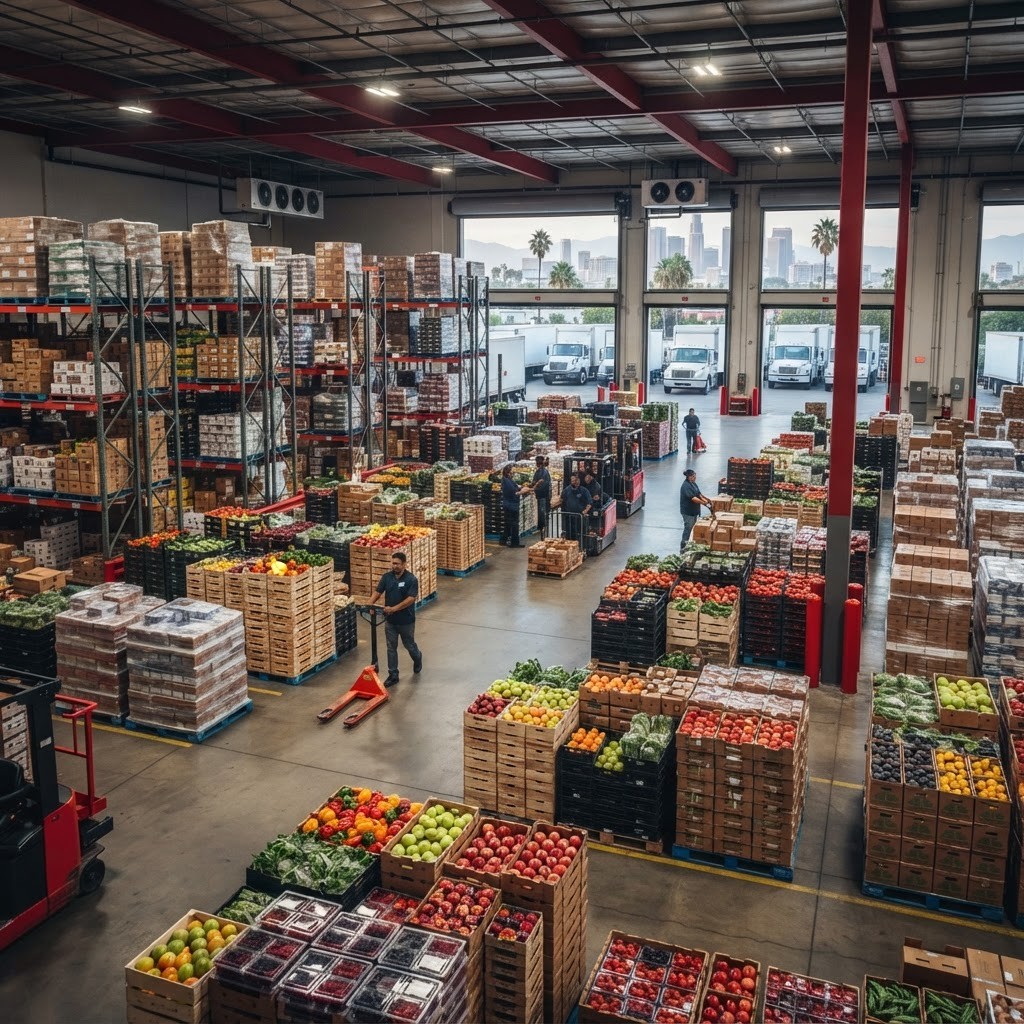
Inside the Los Angeles Food Distribution Network
Greater Los Angeles contains an enormous and diverse food economy. Independent restaurants, luxury hotels, school systems, street-food operators, supermarkets, bakeries, and specialty shops all depend on reliable wholesale distribution. The region’s cultural diversity also creates demand for ingredients that conventional broadline catalogs may not carry.
The suppliers below range from national distributors to specialized local businesses. Service areas, order minimums, delivery schedules, and account requirements vary, so buyers should confirm fit directly.
1. Sysco Los Angeles
Sysco is a broadline distributor offering produce, proteins, frozen foods, dry goods, beverages, disposables, and kitchen supplies. Its extensive catalog and delivery infrastructure suit restaurants and institutions that want to consolidate purchasing. Menu support and operational products can add value beyond ingredients.
2. US Foods
US Foods serves foodservice operators with a large assortment of national, private-label, fresh, frozen, and nonfood products. Digital ordering and business resources are useful to operators managing food costs and consistency. Buyers should compare contract pricing and substitutions at the item level.
3. Performance Foodservice
Performance Foodservice distributes food and restaurant supplies across many categories. Its capabilities support independent restaurants as well as larger operations. Reliable routing and a strong relationship with the sales representative can make a significant difference during shortages or menu changes.
4. Chef’s Warehouse
Chef’s Warehouse focuses on premium and specialty ingredients for chefs, restaurants, hotels, and gourmet retailers. Its portfolio is relevant to kitchens seeking artisanal cheese, charcuterie, specialty oils, pastry ingredients, and distinctive pantry products. Specialized curation helps chefs differentiate menus.
5. Melissa’s Produce
Los Angeles-based Melissa’s Produce is known for specialty fruits, vegetables, herbs, and global produce items. The company is a valuable resource for chefs and retailers looking beyond standard commodity produce. Product knowledge is especially useful when handling unfamiliar varieties with different ripening and storage needs.
6. LA Specialty Produce
LA Specialty Produce supplies fresh produce and specialty ingredients to Southern California foodservice customers. Its proximity to the market supports frequent delivery and responsive sourcing. Restaurants with produce-centered menus should evaluate consistency, ripeness specifications, and credit procedures.
7. Ingardia Bros. Produce
Ingardia Bros. Produce has a long history serving Southern California restaurants and food businesses with produce and related products. Local market knowledge and established routes are key advantages. Buyers can improve results by communicating exact pack, size, and maturity expectations.
8. Santa Monica Seafood
Santa Monica Seafood is a major seafood distributor with strong Southern California recognition. It supplies finfish, shellfish, and specialty seafood while emphasizing handling and traceability. Chefs should ask about origin, harvest method, freshness, sizing, substitutions, and delivery temperature.
9. West Central Foodservice
West Central Foodservice distributes meat, seafood, produce, dairy, and specialty items to restaurants and hospitality customers. A multi-category local distributor can balance broadline convenience with market-specific service. Custom cutting and chef-oriented sourcing may be important differentiators.
10. Unified Grocers and C&S Wholesale Grocers
The legacy of Unified Grocers, now connected with C&S Wholesale Grocers, remains important in supplying independent supermarkets across the West. Grocery distribution requires a different assortment and replenishment model from restaurant service. Scale, promotional support, and category breadth are central considerations for retail accounts.
Food Safety, Cost, and Service
Verify food-safety programs, temperature controls, traceability, recall communication, and receiving procedures. Inspect deliveries before signing, document rejected items, and rotate stock using first-in, first-out practices. Seafood, meat, dairy, and prepared products require especially careful cold-chain management.
Price should be evaluated with yield and consistency. A lower-cost case may create more trim loss or portion variation. Los Angeles traffic makes delivery windows challenging, so assess route reliability and emergency-order support. Many operators benefit from a broadline distributor plus selected specialists for signature ingredients. Strong wholesale relationships help kitchens navigate seasonality, inflation, shortages, and changing customer preferences without compromising the menu.
Planning a Successful Supplier Relationship
Before opening an account, create a written purchasing brief that defines required products, expected order frequency, acceptable lead times, quality standards, budget limits, and delivery constraints. Share realistic forecasts without presenting them as guaranteed orders. Ask each supplier how quotations are updated, how backorders are communicated, who handles quality concerns, and what documentation accompanies a shipment. A trial order can reveal far more about picking accuracy, packaging, communication, and product consistency than a polished sales presentation.
It is also wise to avoid dependence on a single source for every critical item. Maintain approved alternatives while giving strong primary suppliers enough predictable business to invest in the relationship. Review performance quarterly using measurable factors such as on-time delivery, defect rate, response speed, invoice accuracy, and resolution of claims. In Los Angeles, delivery plans should account for traffic, loading zones, limited warehouse space, seasonal demand, and the distance between coastal, central, and inland locations. Clear receiving procedures help teams photograph damage, check quantities, preserve lot information, and report discrepancies promptly.
Finally, treat the list above as a starting point rather than a substitute for due diligence. Visit showrooms or facilities when practical, request samples, verify business credentials and insurance where relevant, and speak with comparable customers. The best long-term partner is transparent about both strengths and limitations. Consistent communication, documented expectations, and fair payment practices create a more resilient supply chain for buyer and supplier alike.
