
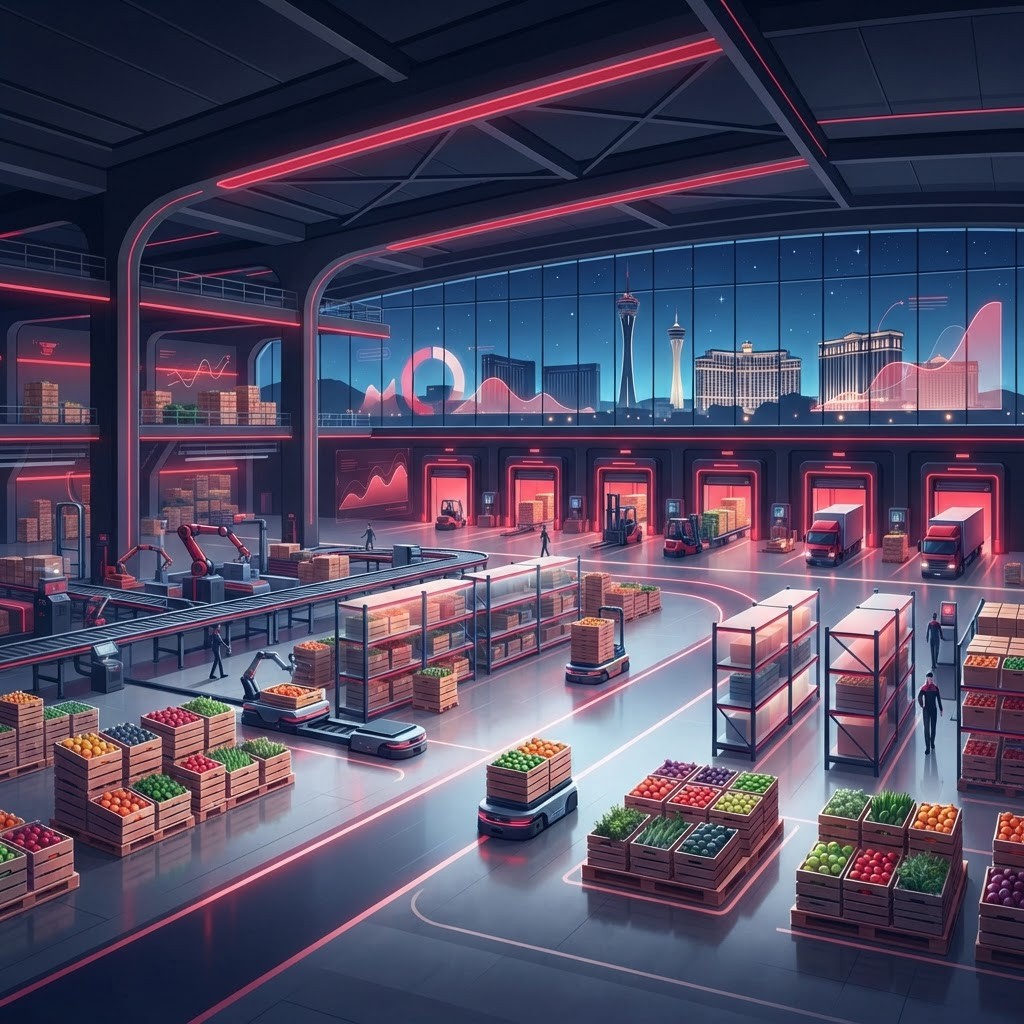
A City Built on Volume Dining
Few cities place heavier demands on food distribution than Las Vegas. Resort properties operate dozens of outlets under one roof, celebrity-chef restaurants require precise specialty items, convention catering can spike demand for thousands of covers with little notice, and neighborhood restaurants across Summerlin, Henderson and the northwest valley need dependable weekly deliveries. Add desert heat that punishes any weakness in the cold chain, and the result is a wholesale sector that competes on reliability as much as price.
Because the region grows relatively little of its own food, most product arrives through Southern California ports and the Central Valley, or by air for high-value perishables. Distributors that manage those inbound lanes well can offer fresher product and fewer substitutions, which is why sophisticated buyers evaluate logistics capability before comparing price sheets.
What Separates a Good Food Wholesaler From a Great One
Fill rate is the single most revealing metric. A supplier quoting attractive prices but delivering eighty-five percent of the order forces chefs into last-minute menu changes. Temperature integrity at receiving, accurate case counts, clean invoicing, and a knowledgeable sales representative who flags market volatility before it hits the invoice all matter enormously. Food safety documentation, third-party audit status, recall traceability and allergen labeling are non-negotiable for any operator serving the public at scale.
1. Silver State Food Distributors
Silver State Food Distributors operates as a broadline supplier, carrying dry goods, frozen items, dairy, produce, protein, disposables and cleaning chemicals under one account. For independent operators, consolidating spend with a broadliner simplifies receiving and often unlocks better pricing tiers. The company is known for consistent delivery windows and a customer portal that shows live availability, which reduces the substitution surprises that frustrate kitchens.
2. Mojave Produce Company
Mojave Produce Company focuses exclusively on fresh fruit and vegetables, running early-morning routes so restaurants receive product before service prep begins. Its buyers work directly with California and Arizona growers, and the company communicates market conditions candidly when weather or freight disrupts supply. Value-added processing such as pre-cut, washed and portioned produce helps kitchens manage labor costs without sacrificing freshness.
3. Desert Prime Meat and Protein
Desert Prime Meat and Protein serves steakhouses, hotels and butcher counters with custom cutting, aging programs and consistent grading. The differentiator here is specification discipline: when a restaurant orders a particular portion weight and trim, it receives exactly that, every delivery. The company also supports menu development by advising on alternative cuts when premium primals spike in price, a service that protects food cost during volatile markets.
4. Pacific Bridge Seafood Supply
Seafood is the least forgiving category in a desert market, and Pacific Bridge Seafood Supply built its reputation on air freight coordination and cold chain control. It supplies fresh fin fish, shellfish and sushi-grade product with harvest documentation and traceability details attached. Chefs value the daily availability list, which reflects what actually landed rather than an aspirational catalog.
5. Golden Valley Bakery Wholesale
Golden Valley Bakery Wholesale produces breads, rolls, pastries and dessert components on overnight production schedules timed to morning delivery. Its par-baked and frozen dough programs allow restaurants without bakers to serve fresh bread on demand. The company also handles custom formulations, including enriched buns built to hold up under high-volume banquet service.
6. Fremont Specialty and Import Foods
Fremont Specialty and Import Foods caters to the city's remarkable culinary diversity, stocking imported oils, aged vinegars, cured meats, cheeses, spices and regional pantry staples from Asia, Latin America, the Mediterranean and beyond. For chefs pursuing authenticity, access to a genuine specialty importer is often the difference between an approximation and the real dish. Smaller case sizes make experimentation affordable.
7. High Desert Beverage Distributors
Beverage programs carry some of the highest margins in hospitality, and High Desert Beverage Distributors supports them with non-alcoholic drinks, coffee, tea, syrups, juices and dispensing equipment service. Bundling equipment maintenance with product supply keeps machines running through peak service, and staff training on brewing standards and drink builds helps operators deliver consistency across shifts.
8. Paradise Valley Dairy and Cold Supply
Paradise Valley Dairy and Cold Supply handles milk, cream, butter, cheese, eggs and frozen goods with a refrigerated fleet designed for extreme summer temperatures. Reliability in this category is essential, since a single temperature excursion can compromise an entire delivery. The company's short lead times and multiple weekly drops help kitchens reduce on-hand inventory and shrink waste.
9. Great Basin Restaurant Supply and Foods
Great Basin Restaurant Supply and Foods combines food distribution with smallwares, packaging and takeout containers. As off-premise dining has grown, the ability to source food and packaging together has become genuinely useful, especially for operators managing delivery platforms. The company also stocks compostable and recyclable options for restaurants pursuing sustainability commitments.
10. Canyon Gate Organic and Natural Foods
Canyon Gate Organic and Natural Foods serves the growing demand for certified organic, plant-based, gluten-free and allergen-conscious products. It maintains certification documentation that operators need for menu claims, an increasingly important detail as diners scrutinize labeling. Its assortment spans bulk grains and legumes through prepared plant-based proteins.
Trends Reshaping Food Wholesale in Las Vegas
Several forces are changing the local supply landscape. Traceability technology now lets operators follow product from farm to receiving dock, which speeds recall response and supports provenance claims on menus. Labor pressure has increased demand for value-added and pre-portioned items that reduce prep hours. Sustainability goals at large resorts are pushing distributors toward route optimization, reusable packaging and food waste diversion programs. Meanwhile, controlled environment agriculture in the region is beginning to supply genuinely local greens and herbs year-round, shortening the longest link in the chain.
Practical Buying Advice for Operators
Negotiate on total landed cost rather than case price, factoring in delivery frequency, minimum order thresholds and fuel surcharges. Keep a primary broadline supplier for breadth but maintain specialists for produce, protein and seafood, where expertise clearly improves quality. Review price sheets weekly on volatile items, lock contracts on staples where possible, and track fill rate and credit frequency by vendor. Above all, invest in receiving discipline: temperature checks, weight verification and prompt documentation prevent most disputes before they start.
Final Thoughts
The wholesalers above illustrate how Las Vegas supports everything from a twelve-seat neighborhood restaurant to a resort serving thousands of meals a day. Match your operation to suppliers whose strengths align with your menu and volume, hold them to measurable standards, and the food supply chain becomes a quiet asset rather than a daily source of stress.
