
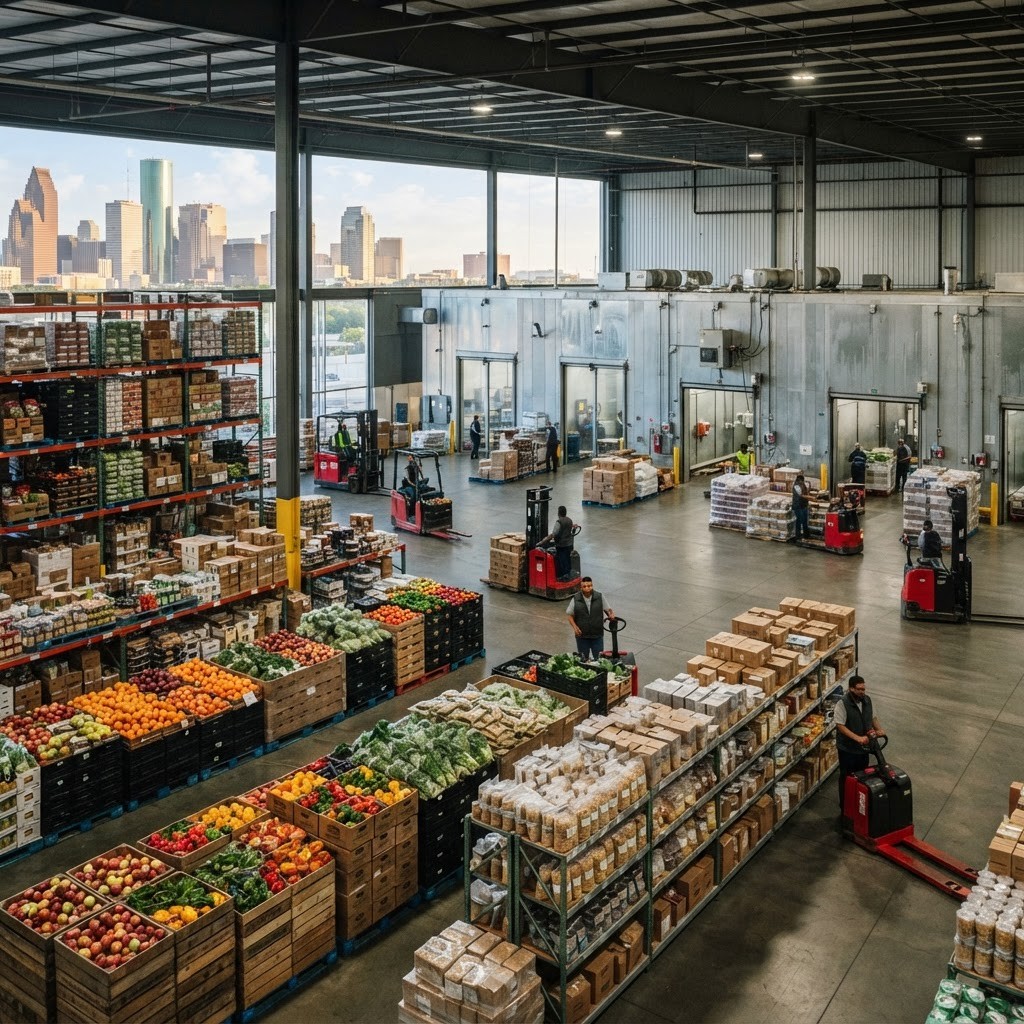
Why Houston Is a Major Food Distribution Center
Houston's port, highway network, population growth, and globally influenced dining culture make it a powerful food distribution market. Restaurants need specialty ingredients, schools and hospitals require dependable volume, and independent grocers compete through freshness and culturally relevant assortments. A strong wholesaler offers food-safety discipline, consistent delivery, transparent substitutions, and products suited to the operator's menu or shelves. Availability and service areas change, so purchasers should verify account terms, delivery schedules, and current catalogs.
1. Sysco
Houston-based Sysco is one of the best-known broadline foodservice distributors. Its scale supports restaurants, healthcare facilities, education providers, lodging businesses, and other institutional kitchens with produce, proteins, dairy, frozen foods, pantry staples, disposables, and equipment. The appeal is purchasing consolidation: an operator can source many categories through one relationship. Buyers should work closely with representatives on specifications and alternatives because matching pack size and quality level to actual menu use is essential for cost control.
2. Performance Foodservice
Performance Foodservice supplies a broad mix of food and nonfood items to restaurants and hospitality businesses. Its portfolio is relevant to operators that want national purchasing capabilities alongside category expertise. Menu planning support, culinary ideas, and operational resources can add value beyond the invoice. Houston restaurants should evaluate order cutoff times, delivery windows, fill rates, and how the distributor handles substitutions during demand spikes or weather disruptions.
3. US Foods
US Foods serves independent restaurants, multiunit concepts, healthcare organizations, and hospitality operators with a wide-ranging catalog. It is known for combining core commodities with prepared and labor-saving products. In a tight labor market, carefully selected pre-portioned or partially prepared ingredients can reduce prep time and improve consistency. Operators should calculate total plate cost and labor impact rather than dismissing convenience products based only on a higher case price.
4. Gordon Food Service
Gordon Food Service is a substantial foodservice distributor with products for commercial and institutional kitchens. Its offering typically spans fresh and frozen ingredients, beverages, supplies, and kitchen essentials. The supplier may be a practical option for organizations that value structured ordering and consistent specifications. Houston buyers serving schools, churches, caterers, or care settings should pay particular attention to nutritional data, allergen documentation, pack formats, and emergency availability.
5. Ben E. Keith Foods
Texas-rooted Ben E. Keith Foods has a strong regional identity and serves foodservice businesses with produce, meat, dairy, frozen items, groceries, beverages, and supplies. Its understanding of Texas routes and restaurant culture can be meaningful for Houston operators. Regional knowledge is especially useful when planning around major events, seasonal demand, and local menu preferences. Prospective customers should compare delivery frequency and product depth in their specific ZIP code.
6. Brothers Produce
Brothers Produce is closely associated with fresh produce distribution in Texas. Restaurants, hotels, schools, and retailers depend on produce specialists for quality inspection, cold-chain handling, seasonal guidance, and rapid turnover. Houston's long warm season supports broad produce demand, while the city's international menus require uncommon herbs, peppers, fruits, and vegetables. Buyers should establish receiving standards for temperature, ripeness, size, and acceptable substitutions to reduce waste.
7. Jake's Finer Foods
Jake's Finer Foods is a Houston foodservice distributor with deep local roots. It serves independent restaurants and hospitality customers with meats, seafood, produce, dairy, groceries, frozen foods, and supplies. Local market knowledge and personalized relationships are major differentiators for operators who want a distributor familiar with neighborhood concepts. Independent restaurants may benefit from discussing menu objectives and growth plans rather than approaching the relationship as a series of isolated orders.
8. Chef's Produce
Chef's Produce focuses on fresh produce and chef-driven ingredients. Specialty produce companies can help culinary teams source seasonal items, herbs, microgreens, mushrooms, and distinctive ingredients that elevate a menu. In Houston's competitive dining scene, access to consistent, high-quality produce supports both flavor and presentation. Chefs should communicate desired maturity and usage dates, since a product intended for same-day service may require different ripeness than one stored for several days.
9. Houston Foods
Houston Foods is known within regional grocery and food distribution channels, serving businesses that need packaged foods and culturally diverse products. A wholesaler attuned to neighborhood demand can help independent grocers build assortments that national planograms overlook. Retailers should examine shelf life, case configuration, brand recognition, and promotional support. Accurate demand forecasting is particularly important with imported or specialty products that may have longer replenishment cycles.
10. Ace Mart Restaurant Supply
Ace Mart Restaurant Supply complements ingredient distributors by supplying foodservice equipment, smallwares, cookware, storage, tabletop products, and cleaning essentials. Although its emphasis is restaurant supply rather than edible goods, it is an important wholesale resource for opening and maintaining a kitchen. Houston operators can compare durable equipment, replacement parts, and everyday tools in one category-focused relationship. Selecting commercial-grade products usually delivers better lifecycle value than repeatedly replacing consumer-grade alternatives.
Choosing the Right Food Wholesaler
Begin with food safety, cold-chain performance, and dependable delivery. Then compare case sizes, yield, quality specifications, minimums, credits, and sales support. A smaller specialist may outperform a broadline distributor in seafood or produce, while broadline consolidation can reduce administrative work. Many Houston businesses use a primary distributor plus carefully chosen specialty suppliers. Track fill rate, waste, invoice variance, and customer response so purchasing decisions remain evidence-based. The best partnership helps a kitchen or store deliver consistent quality even as commodity costs, labor conditions, and seasonal availability change.
