
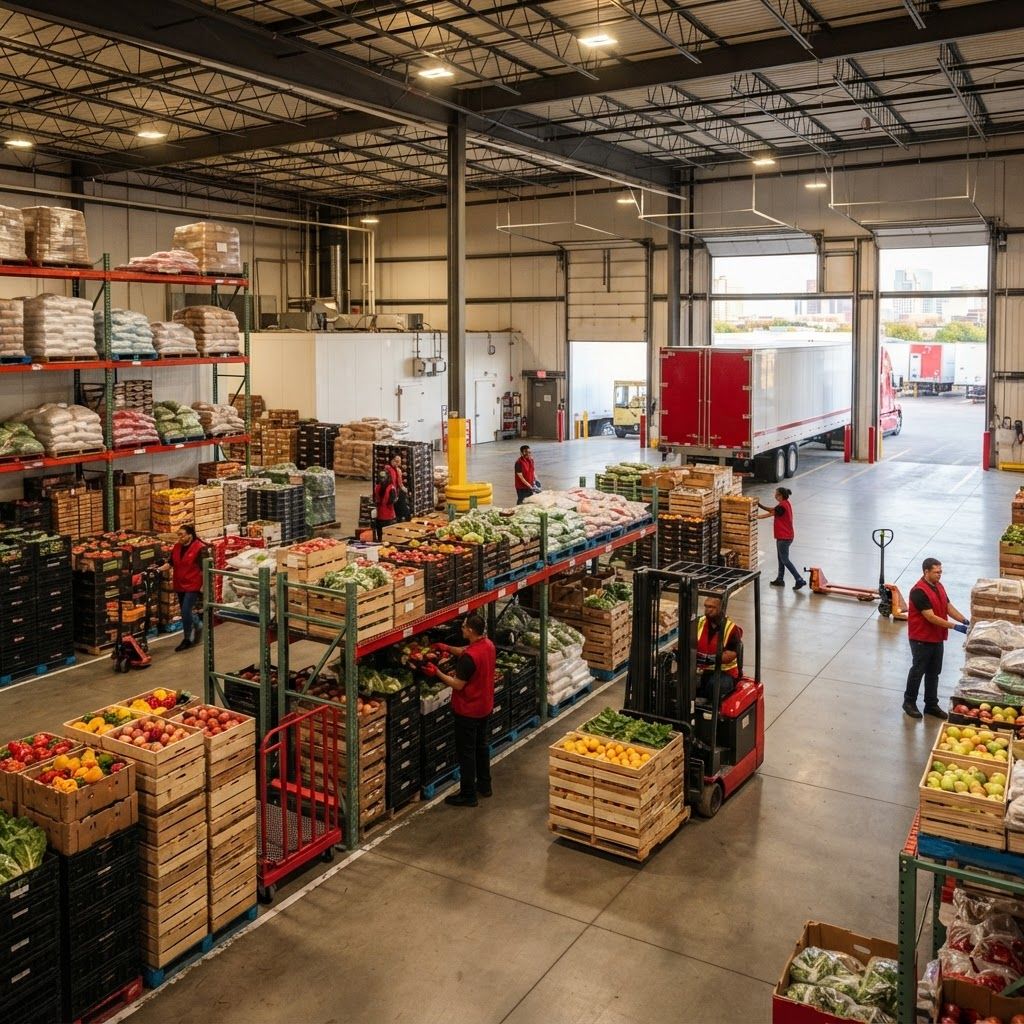
Fort Worth’s Food Distribution Landscape
Fort Worth’s restaurant growth, hospitality sector, schools, healthcare facilities, and neighborhood markets depend on reliable wholesale food distribution. A distributor influences much more than ingredient cost: product consistency, delivery windows, food safety, menu flexibility, and working capital all matter. The city’s central North Texas location provides access to national broad-line companies and specialized regional suppliers. Buyers should verify service areas, account requirements, order minimums, and current product lines before making commitments.
1. Ben E. Keith Foods
Fort Worth-based Ben E. Keith Foods is one of the region’s best-known foodservice distributors. It supplies restaurants, institutions, and hospitality operators with proteins, produce, dairy, frozen foods, dry goods, beverages, disposables, and equipment-related products. Its local history and broad assortment make it attractive to operators seeking consolidated purchasing. Menu support and category expertise can also help customers evaluate yield, portion cost, and practical substitutions.
2. Sysco North Texas
Sysco serves North Texas foodservice businesses with a large catalog and established distribution infrastructure. Restaurants and institutions can source national brands, private-label items, fresh foods, supplies, and kitchen essentials through one relationship. Scale can support consistency across multiple locations. Buyers should work with representatives to establish approved substitutions, delivery instructions, quality expectations, and an efficient order guide that prevents unnecessary variation.
3. US Foods
US Foods combines broad-line distribution with resources aimed at restaurant operations and menu development. Its range covers center-of-plate products, produce, grocery, dairy, frozen goods, and nonfood essentials. Independent operators may value access to products designed around labor savings or current dining trends. Compare case pack, usable yield, preparation time, and waste rather than selecting solely on the quoted case price.
4. Labatt Food Service
Labatt Food Service has a significant Texas footprint and serves schools, restaurants, healthcare operations, and other institutions. Customers with structured menus and strict delivery requirements can benefit from a distributor experienced in high-volume, specification-driven accounts. Traceability, temperature control, and order accuracy are especially important. Institutional buyers should include nutrition, allergen, pack-size, and approved-manufacturer requirements in purchasing specifications.
5. Hardie’s Fresh Foods
Hardie’s Fresh Foods specializes in produce and fresh-food distribution. For Fort Worth chefs, grocers, and hospitality teams, a produce specialist can offer market knowledge and attention to seasonality. Quality varies with weather, growing region, and transit conditions, so communication is essential. Buyers should define ripeness, size, grade, pack, and acceptable substitutions, then inspect deliveries promptly to preserve claim rights and reduce waste.
6. FreshPoint
FreshPoint focuses on fresh produce and related specialty items for foodservice customers. Its model can serve kitchens that prioritize variety, chef-driven menus, or consistent produce specifications. Seasonal planning may improve both flavor and value. Restaurants should coordinate menus with realistic market conditions and use trim yield when comparing options. A lower case cost does not help if excessive spoilage or preparation loss follows.
7. Restaurant Depot
Restaurant Depot offers a warehouse-style purchasing option for eligible foodservice businesses. It can be useful for independent restaurants, caterers, food trucks, and small retailers that want immediate access to food, beverages, equipment, and supplies. The format gives buyers direct control over selection and quantity. However, operators must account for pickup labor, vehicle capacity, cold-chain protection, and the discipline to avoid unplanned purchases.
8. McLane Foodservice
McLane is a Texas-based distribution leader serving restaurants, convenience channels, and large multiunit customers. Its logistics systems and high-volume capabilities are useful where precise replenishment and standardized assortments matter. Multi-location businesses should evaluate reporting, fill rates, issue resolution, and delivery consistency across sites. Strong data exchange can help forecast demand and reduce emergency transfers between locations.
9. Performance Foodservice
Performance Foodservice supplies restaurants and hospitality operators with broad food and nonfood categories. It can support customers seeking menu ingredients, operating supplies, and branded or private-label choices. The relationship is strongest when sales support is paired with transparent service metrics. Buyers should regularly review out-of-stocks, substitutions, credits, and product performance instead of treating the original agreement as permanent.
10. Brothers Produce
Brothers Produce serves Texas customers with fresh produce and specialty distribution. Regional produce suppliers can be responsive to local demand and may provide useful sourcing insight during weather or seasonal disruptions. Fort Worth kitchens should discuss cut-off times, delivery frequency, ripening programs, and quality-claim processes. Close communication is particularly valuable for high-volume items such as tomatoes, avocados, citrus, and leafy greens.
Choosing the Right Food Wholesaler
Begin with food safety. Review cold-chain practices, traceability, recall communication, sanitation standards, and applicable audits. Next, compare service reliability: order cutoffs, delivery windows, fill rates, substitutions, and credit procedures. A distributor’s lowest price is rarely the lowest total cost if late trucks, inconsistent portions, or damaged cases disrupt service. Conduct receiving checks and track recurring problems by item and route.
Fort Worth operators are also responding to demand for local flavors, convenient preparation, transparent ingredients, and responsible packaging. The right wholesaler should help identify products that fit the concept rather than pushing unnecessary complexity. Many businesses benefit from a primary broad-line distributor plus carefully chosen specialists for produce, meat, bakery, or international ingredients. Review performance quarterly, maintain backup options for critical items, and share realistic forecasts before major events.
