
Understanding Dallas Food Distribution
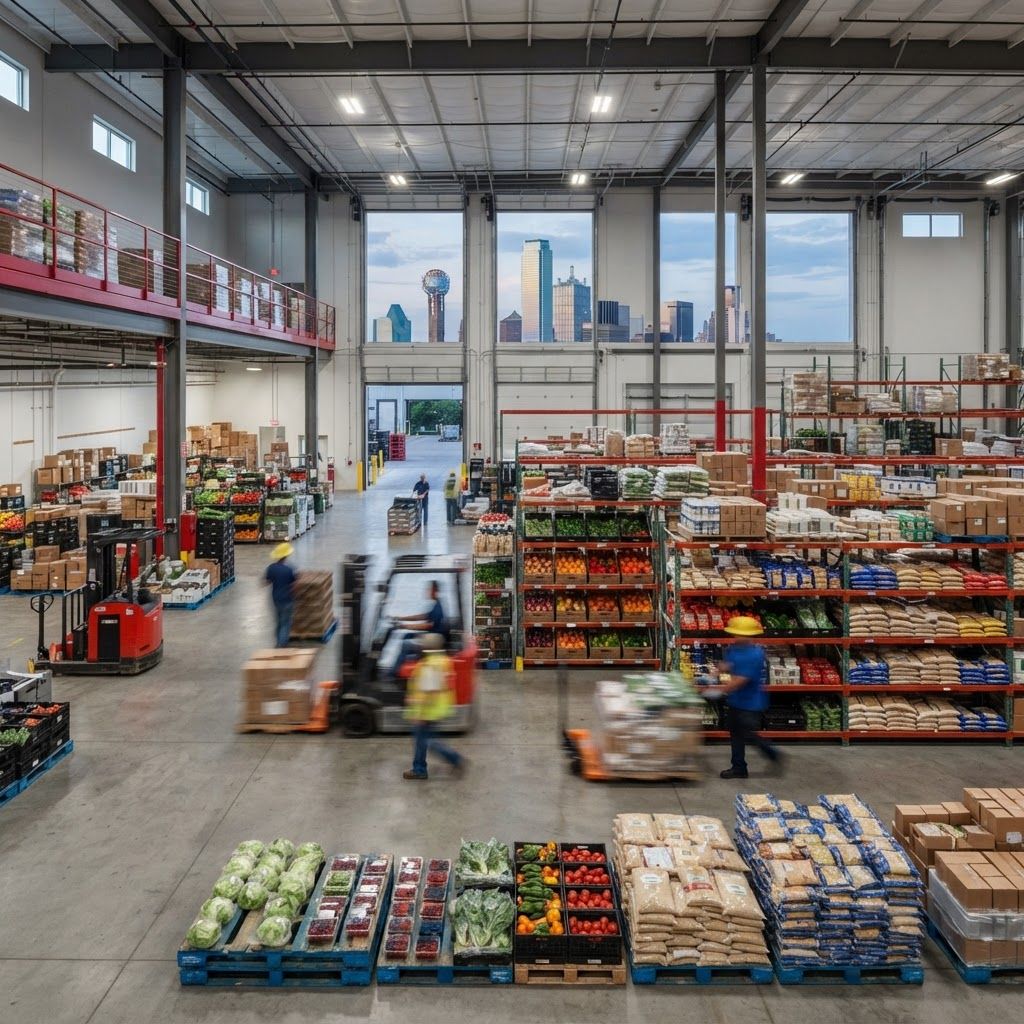
Dallas–Fort Worth is one of the country's largest logistics markets, making it a natural center for restaurant and grocery distribution. Interstate access, major cold-storage capacity, and a fast-growing population support a wide supplier network. Restaurants, caterers, schools, hotels, grocers, and institutional kitchens can choose between broadline distributors and specialists focused on produce, meat, seafood, or multicultural foods.
Food buyers should examine temperature controls, delivery schedules, traceability, recall procedures, pack sizes, and substitutions. Price matters, but consistency and food safety are equally important. The businesses below represent strong options in the Dallas market, although service territories and account requirements can change.
1. Ben E. Keith Foods
Fort Worth-based Ben E. Keith Foods is a major regional broadline distributor with deep Texas roots. It supplies restaurants and institutions with produce, proteins, frozen goods, dry groceries, beverages, disposables, and kitchen essentials. Its regional knowledge, extensive catalog, and foodservice support make it a practical option for operators that want to consolidate purchasing.
2. Sysco North Texas
Sysco North Texas gives Dallas-area kitchens access to a large national distribution platform. Its range covers fresh and frozen foods, pantry products, equipment, and nonfood supplies. The company is particularly relevant for multi-unit operators that value standardized products, structured ordering systems, and broad availability.
3. US Foods
US Foods serves restaurants, hospitality businesses, and institutional customers with a comprehensive portfolio. Alongside staples and specialty products, it is known for operational resources that can help kitchens evaluate menus and manage costs. Buyers seeking a broadline relationship may value the combination of product depth and business support.
4. Labatt Food Service
Labatt Food Service is a Texas-focused distributor serving foodservice organizations across the region. Its assortment spans meat, produce, dairy, frozen foods, groceries, and supplies. The company's familiarity with Texas routes and institutional requirements makes it relevant to schools, healthcare operations, restaurants, and other volume buyers.
5. Hardie's Fresh Foods
Hardie's Fresh Foods has a long Texas history and specializes in fresh produce and specialty ingredients. Dallas chefs often look to produce specialists for seasonal quality, careful handling, and access to distinctive fruits, vegetables, herbs, and prepared items. This focus can be valuable for restaurants where freshness and presentation are central to the menu.
6. Brothers Produce
Brothers Produce operates as a produce distributor serving Texas foodservice customers. It offers conventional and specialty fruits and vegetables along with related fresh products. A produce-centered supplier can help kitchens respond to seasonality and maintain more focused quality standards than a one-size-fits-all buying strategy.
7. Empire Baking Company
Dallas-based Empire Baking Company is a useful specialty source for artisan breads and baked goods. Its products support restaurants, hotels, caterers, and retailers that want consistent bakery quality without producing every item in-house. A local bakery relationship can also shorten lead times and support menu customization.
8. Rudolph's Meat Market and Sausage Factory
Rudolph's is a longstanding Dallas meat business known for butcher expertise and house-made sausages. While account and volume arrangements should be confirmed, its local reputation makes it notable for businesses seeking specialty cuts and traditional meat products. Such suppliers can add authenticity and differentiation to restaurant menus.
9. Restaurant Depot
Restaurant Depot operates a cash-and-carry model for qualified foodservice buyers. Its Dallas-area warehouses carry meat, seafood, produce, dairy, dry goods, beverages, and equipment. The model can suit independent operators that need flexible pickup, immediate quantities, or the ability to compare products directly.
10. McLane Company
Texas-based McLane is a major supply-chain company serving convenience stores, mass merchants, and restaurants. Its strength lies in high-volume distribution, packaged foods, beverages, candy, and operational reliability. It is especially relevant to retail formats that need frequent replenishment across a wide convenience assortment.
Choosing the Right Food Wholesaler
Build a scorecard covering fill rate, delivery accuracy, shelf life on arrival, minimum order, emergency service, and credit terms. Ask how substitutions are approved and how cold-chain exceptions are documented. Kitchens should also compare yield: a lower-priced protein or vegetable is not a bargain if trimming loss is high or usable life is short.
Many Dallas operators benefit from a hybrid strategy—one broadline distributor for routine purchasing and one or two specialists for produce, meat, bakery, or culturally specific ingredients. Review invoices regularly, forecast around local events and summer heat, and maintain backup sources. Strong supplier relationships improve not only cost control but also menu consistency and customer trust.
Practical Due Diligence Before Ordering
Before opening an account, ask each business for its current trade requirements, service area, minimum purchase, payment terms, lead times, and written return policy. Company offerings can change, so confirm that the products and support described here remain available. New buyers should begin with a measured order and assess accuracy, packaging, product consistency, and communication before making a larger commitment. References from comparable Dallas businesses can provide useful insight into real-world service.
Create a simple supplier scorecard and review it after every delivery. Useful measures include on-time performance, complete-order rate, defect frequency, response time, and the total cost after freight, handling, waste, and returns. Keep purchase orders, specifications, lot or model details, and approval records organized. Clear documentation makes discrepancies easier to resolve and helps multiple employees follow the same buying standards.
Finally, avoid depending entirely on one source for critical inventory. Dallas has strong logistics infrastructure, but severe weather, transportation interruptions, seasonal demand, and manufacturer shortages can still affect supply. Maintain a qualified secondary vendor and identify acceptable substitutes before they are urgently needed. Forecast from actual sales or usage data, review slow-moving stock, and share upcoming demand with suppliers. This disciplined approach turns a directory of possible vendors into a resilient purchasing strategy and helps a business build relationships based on quality, transparency, and dependable long-term value.
