
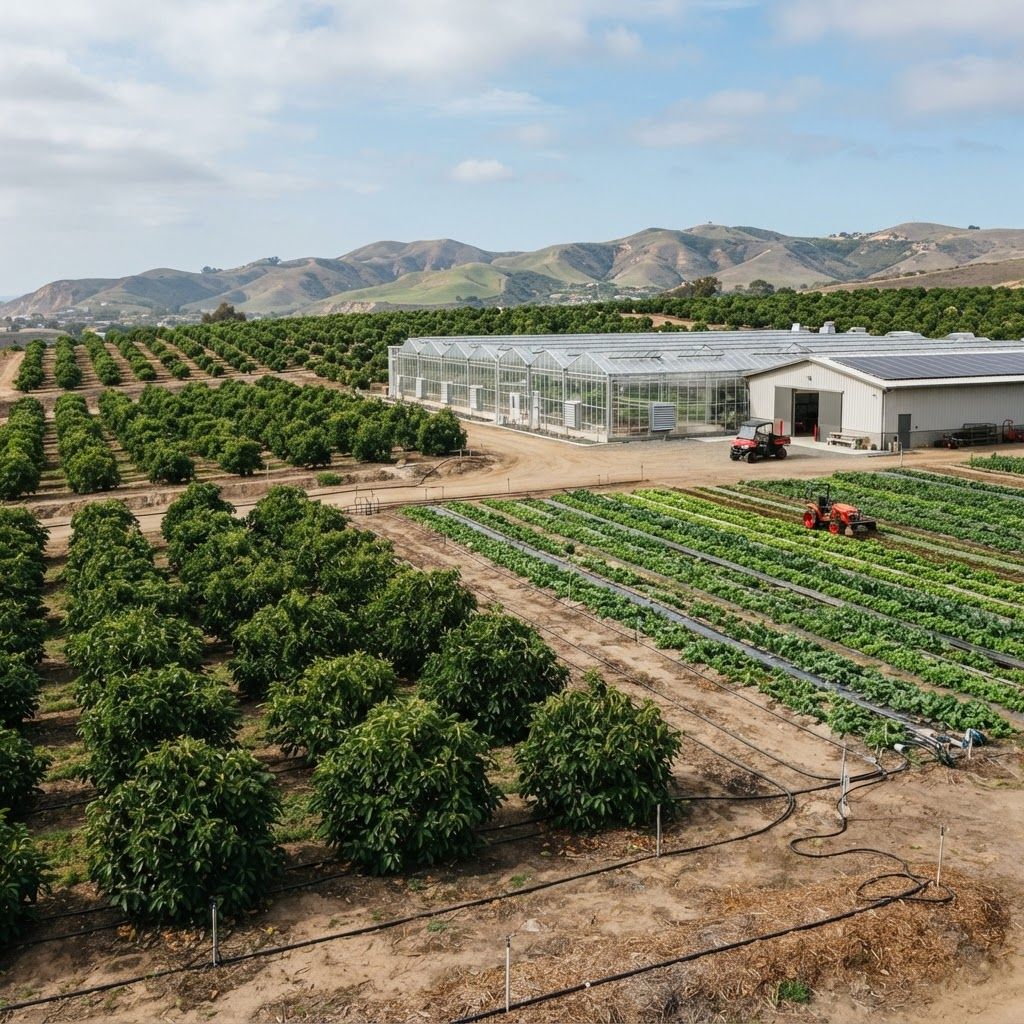
A Distinctive Agricultural Region
San Diego County combines coastal microclimates, inland valleys, steep terrain, small family farms, nurseries, orchards, and year-round specialty production. High land and water costs encourage growers to focus on quality, direct relationships, and high-value crops. The following organizations illustrate the region’s diversity; they are not ranked solely by acreage or revenue, but by their relevance, reputation, and contribution to local agriculture.
1. Stehly Farms Organics
Stehly Farms Organics is associated with certified organic produce grown in North County. The operation supplies leafy greens, citrus, avocados, and seasonal crops while participating in regional food distribution. Its value lies in combining commercial capability with a recognizable San Diego farm identity.
2. Be Wise Ranch
Be Wise Ranch has long been known for organic vegetables and strawberries. Its produce has appeared through markets and wholesale channels, helping demonstrate that diversified organic farming can operate near a major metropolitan area. Soil health and careful crop planning are central to this model.
3. Sage Mountain Farm
Sage Mountain Farm grows certified organic produce in inland San Diego County and supports community-based distribution. Seasonal diversity, direct sales, and educational engagement connect customers with regional growing cycles. The farm illustrates how smaller operations can build loyalty through transparency.
4. Coastal Roots Farm
Coastal Roots Farm is a nonprofit community farm in Encinitas. It grows organic food, supports food access, and provides educational programming. Its differentiator is a mission-driven model that links regenerative practices, community events, and distribution to people facing food insecurity.
5. Solidarity Farm
Solidarity Farm, part of Pauma Tribal Farms, demonstrates regenerative and community-centered agriculture in Pauma Valley. The operation emphasizes healthy soil, local food systems, and collaboration. It also highlights the important role of Indigenous land stewardship in the county’s agricultural future.
6. Cyclops Farms
Cyclops Farms is known for small-scale organic production and strong relationships with local chefs and consumers. By focusing on freshness and direct distribution, compact farms can serve high-value markets without competing only on volume. Community events further strengthen its local presence.
7. Carlsbad Strawberry Company
Carlsbad Strawberry Company combines commercial berry production with seasonal agritourism. Its fields are a visible reminder of agriculture within the coastal urban landscape. Pick-your-own experiences and family activities create an additional revenue stream while educating visitors about production.
8. Mellano & Company
Mellano & Company has deep roots in San Diego County floriculture. The business grows and distributes flowers while connecting regional production with broader markets. Flower farming requires precise harvest timing, cold-chain handling, grading, and rapid logistics to preserve quality.
9. Driscoll's Grower Network
Driscoll’s works with independent growers in California’s berry regions, and its brand and production systems influence the local specialty-crop economy. Breeding, quality standards, packaging, and cold-chain coordination allow delicate berries to reach consumers consistently. Buyers value predictable specifications and food-safety controls.
10. Calavo Growers
Calavo is a major avocado and fresh-food company with historic Southern California ties. San Diego County’s avocado growers operate within the market infrastructure created by packers and marketers like Calavo. Grading, ripening knowledge, traceability, and distribution are vital links between orchards and customers.
Trends Shaping San Diego Farming
Water efficiency is the defining operational challenge. Drip irrigation, soil-moisture monitoring, mulching, drought-tolerant varieties, and careful scheduling help growers produce more value per unit of water. Farms are also diversifying revenue through farm stands, subscriptions, events, flowers, and educational programs.
Consumers and institutional buyers can support the sector by purchasing seasonally, accepting natural variation, and building stable relationships with growers. San Diego agriculture is unlikely to compete with vast inland regions on commodity scale. Its strength lies in climate diversity, freshness, specialty crops, entrepreneurship, and the close connection between farms and one of California’s largest urban markets.
