
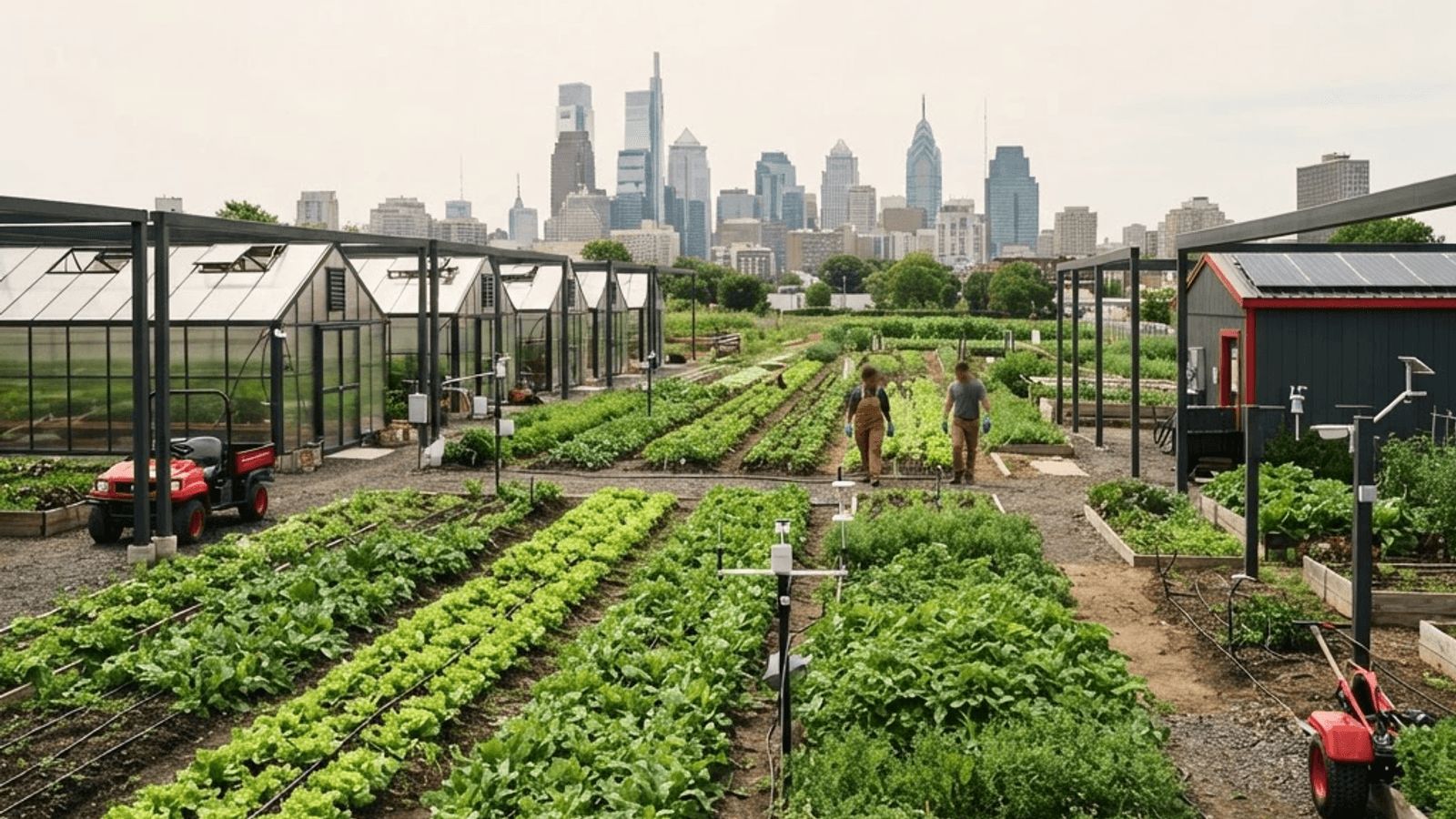
Farming in and Around Philadelphia
Philadelphia agriculture is not limited to distant rural acreage. Community farms, educational growers, orchards, greenhouses, and regional producers connect city residents with fresh food and practical knowledge. This list includes commercial farms and mission-driven agricultural organizations because both are central to the city's food system.
1. Greensgrow Farms
Greensgrow became one of Philadelphia's best-known urban agriculture names by demonstrating productive growing on constrained city land. Its legacy includes community-supported agriculture, nursery activity, education, and neighborhood food access. The organization helped make urban farming visible as both a practical and community-building enterprise.
2. Weavers Way Farms
Weavers Way Farms connects cooperative retail with local production and agricultural education. Its Philadelphia-area growing sites support seasonal produce and demonstrate how a member-owned food system can maintain direct links to cultivation. Community participation and transparency distinguish the cooperative model.
3. Sankofa Community Farm at Bartram's Garden
Sankofa Community Farm centers African diasporic crops, food sovereignty, youth learning, and neighborhood wellness in Southwest Philadelphia. Its work shows that farming can preserve culture as well as produce food. Community programming and locally relevant crops make the farm an important civic resource.
4. Mill Creek Urban Farm
Mill Creek Urban Farm has worked to improve fresh-food access and environmental education in West Philadelphia. The farm's neighborhood scale allows residents to engage directly with growing practices. Its model highlights the importance of land stewardship, affordability, and trusted community relationships.
5. Urban Creators and Life Do Grow Farm
Urban Creators developed Life Do Grow Farm as a community-centered green space in North Philadelphia. Agriculture is integrated with arts, youth engagement, events, and neighborhood development. This broader approach illustrates how reclaimed land can support social connection alongside food production.
6. Share Food Program's Nice Roots Farm
Nice Roots Farm connects local growing with Share Food Program's wider hunger-relief mission. Produce can complement large-scale food distribution while supporting education and volunteer engagement. The combination of agriculture and logistics addresses both supply and equitable access.
7. Fox Chase Farm
Fox Chase Farm is an educational farm within Philadelphia that introduces students and families to livestock, crops, and agricultural systems. Its role is less about wholesale volume and more about agricultural literacy. Hands-on exposure helps urban learners understand where food comes from and how farms operate.
8. Linvilla Orchards
Linvilla Orchards, located near Philadelphia, is a major regional agritourism and produce destination. Orchards, seasonal crops, farm-market activity, and pick-your-own experiences connect consumers with production. Diversified revenue from events and retail demonstrates a resilient model for farms near dense population centers.
9. Solebury Orchards
Solebury Orchards grows apples, peaches, berries, and other seasonal fruit in Bucks County. Its proximity to Philadelphia supports direct-market sales and regional food purchasing. Careful variety selection and season extension help maintain customer interest across the growing calendar.
10. Blooming Glen Farm
Blooming Glen Farm is a diversified organic farm serving the Philadelphia region through community-supported agriculture and markets. A broad crop plan distributes seasonal risk and gives members a varied share. The farm exemplifies how committed customers can provide predictable support for regional production.
How to Choose Local Farm Partners
Restaurants, institutions, and households should ask about seasonality, production practices, ordering schedules, and pickup or delivery. A smaller farm may offer distinctive varieties and strong traceability, while a larger operation may provide steadier volume. Buyers can strengthen relationships by planning menus around harvest windows rather than expecting every crop year-round.
Philadelphia Agriculture Trends
Urban land access, soil safety, water management, labor, and long-term funding remain significant challenges. At the same time, controlled growing, composting, cooperative distribution, and institutional purchasing create opportunities. The city's strongest farm organizations combine production with education, culture, and food access, proving that agricultural value can be measured in more than pounds harvested.
