
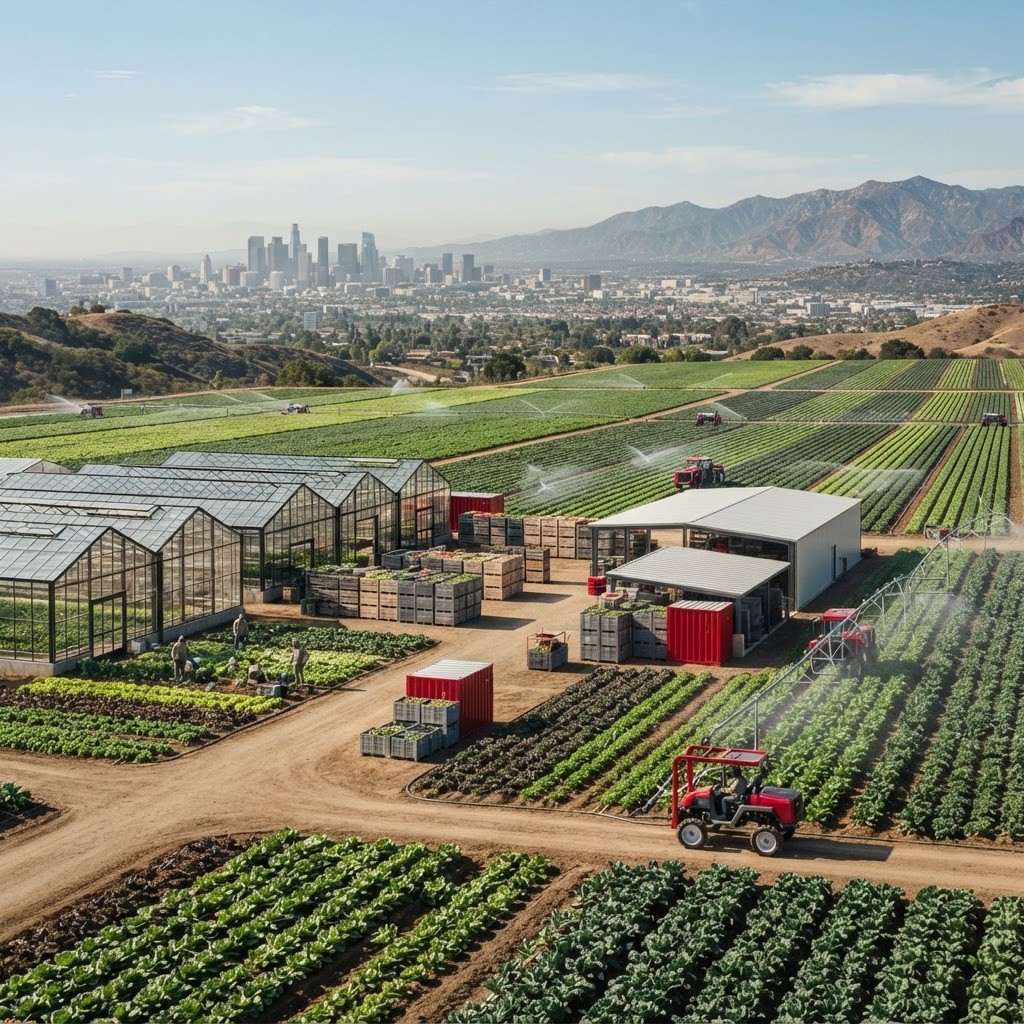
Understanding Farming in Greater Los Angeles
Los Angeles may be famous for dense neighborhoods and entertainment, but agriculture remains woven into the region’s economy and culture. Urban farms turn small parcels into productive community assets, nearby valleys supply vegetables and berries, and controlled-environment growers reduce land and water requirements. This list includes commercial producers and mission-driven agricultural enterprises that meaningfully serve the Los Angeles food system. They differ in scale and model, so “best” reflects impact, innovation, product quality, and regional relevance rather than a single ranking metric.
1. The Wonderful Company
Headquartered in Los Angeles, The Wonderful Company is connected to major California agricultural operations producing pistachios, almonds, citrus, and pomegranates. Its scale brings sophisticated growing, processing, packaging, and distribution capabilities. The company also illustrates the complex water, labor, and sustainability questions facing large California producers.
2. Grimmway Farms
Grimmway Farms is a major California vegetable producer best known for carrots and organic products. Although fields are outside central Los Angeles, its produce is deeply present in regional grocery and food-service channels. Large-scale quality systems, year-round supply planning, and organic acreage distinguish its role in Southern California’s fresh-food network.
3. Boskovich Farms
Ventura County-based Boskovich Farms is closely connected to the Los Angeles market and supplies vegetables, herbs, and fresh-cut products. Geographic proximity supports freshness and responsive distribution. Its mix of field production and value-added processing serves retailers, restaurants, and institutional buyers seeking convenient formats.
4. G Farms
G Farms operates in Southern California agriculture with a focus on fresh produce and regional supply relationships. Farms positioned near the Los Angeles basin can shorten transport compared with distant growing regions. For buyers, the important differentiators are harvest timing, food-safety programs, pack consistency, and the ability to meet changing specifications.
5. Hollandia Produce
Hollandia Produce, known for greenhouse-grown living lettuce and leafy products, demonstrates the advantages of controlled-environment agriculture. Greenhouse systems can improve consistency, protect crops from some weather pressures, and deliver roots-attached freshness. The products suit Los Angeles consumers interested in premium greens and reduced spoilage.
6. Local Roots
Local Roots developed modular indoor farming systems designed to grow food near demand. Its Los Angeles origins made the company a visible participant in the controlled-environment agriculture movement. The model highlights potential benefits such as short supply chains, controlled conditions, and efficient land use, while also showing the importance of energy economics and operational discipline.
7. Freight Farms
Freight Farms provides container-based farming technology used by growers, schools, hospitality groups, and community programs. For space-constrained Los Angeles, modular production can place leafy-green cultivation near consumers. The approach is most effective when operators have a clear sales plan, trained staff, and realistic expectations for energy, maintenance, and crop selection.
8. Farmscape
Farmscape is a Los Angeles urban farming company that designs, installs, and maintains food gardens. It serves residential, corporate, educational, and community settings, converting underused landscapes into productive spaces. Professional maintenance differentiates the service because successful edible gardens require ongoing soil care, seasonal planning, irrigation oversight, and pest management.
9. Alma Backyard Farms
Alma Backyard Farms is a community-focused urban agricultural organization rooted in Los Angeles. It uses farming to support food access, education, and pathways for people affected by incarceration. The enterprise demonstrates how small-scale agriculture can generate social value alongside produce, strengthening neighborhood relationships and practical skills.
10. Urban Homestead
Urban Homestead in Pasadena is a pioneering example of intensive residential-scale food production. Through careful use of small spaces, seasonal crops, resource conservation, and educational outreach, it has influenced urban growers far beyond its footprint. Its relevance lies in proving that meaningful production and household resilience are possible within a metropolitan setting.
What Makes a Farming Company Stand Out
Buyers should consider food-safety certification, harvest-to-delivery time, crop planning, labor practices, packaging, and traceability. Restaurants may value unusual varieties and flexible case sizes, while institutions need consistent specifications and dependable volume. Local does not automatically mean sustainable; water efficiency, soil health, energy source, waste, and transportation should be evaluated together.
California agriculture faces drought, heat, rising labor costs, land pressure, and shifting regulations. Leading operations respond with drip irrigation, protected cultivation, integrated pest management, improved forecasting, and waste reduction. Urban farms add education and neighborhood benefits but typically work with limited scale. The most resilient Los Angeles food system will combine efficient regional field agriculture, responsible large producers, innovative greenhouse systems, and community-based growing.
Opportunities for Customers and Partners
Chefs and retailers can strengthen local agriculture through realistic forecasts, fair specifications, and seasonal menu planning. Property owners can use professional urban farmers to activate rooftops, campuses, and unused land. Schools and nonprofits can pair gardens with curriculum and workforce development. Each model works best when farming is treated as a skilled, ongoing operation rather than a decorative installation.
