
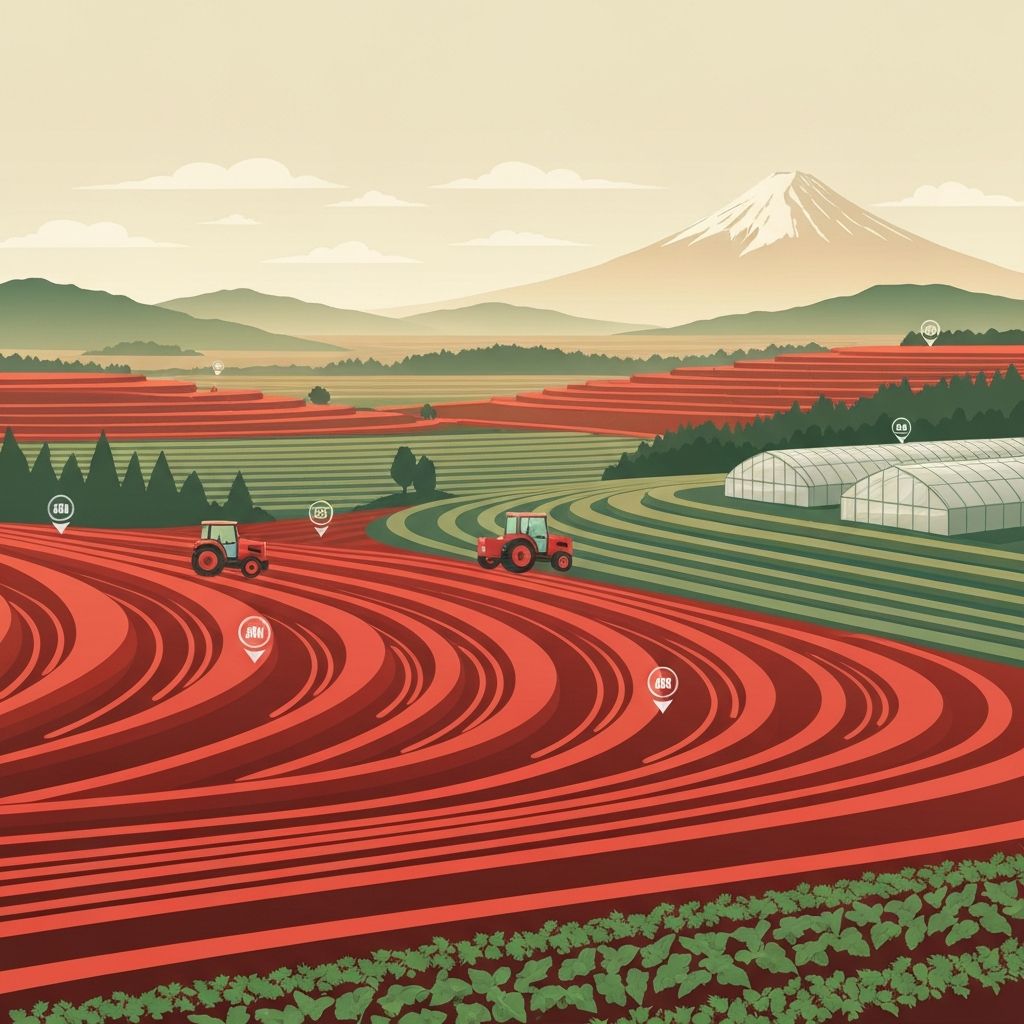
Japan's Agricultural Excellence in the Modern Era
Japan's farming industry is a remarkable blend of tradition and innovation. Despite limited arable land, the country has developed some of the most advanced agricultural practices in the world. Japanese farming companies are recognized globally for their commitment to quality, sustainability, and cutting-edge technology, producing everything from premium rice to high-grade fruits and vegetables.
Modern Japanese agriculture leverages smart farming techniques including IoT sensors, robotics, and AI-driven analytics to optimize yields, reduce waste, and meet the country's high standards of food safety. These companies are also playing a leading role in addressing labor shortages and climate challenges through innovative solutions.
1. Ja Group (Japan Agricultural Cooperatives)
The JA Group is the largest agricultural cooperative network in Japan, supporting millions of farmers across the country. It provides marketing, financing, and supply chain services, playing a vital role in stabilizing prices and ensuring fair distribution of agricultural products.
2. Kubota Corporation
While primarily known for machinery, Kubota is also deeply involved in smart farming initiatives. It develops agricultural technology platforms, autonomous tractors, and precision farming solutions, helping Japanese farms become more efficient and sustainable.
3. Yanmar Agribusiness
Yanmar is a pioneer in agricultural equipment and farming solutions. Its agribusiness division focuses on smart greenhouses, irrigation systems, and energy-efficient machinery, supporting the future of sustainable agriculture in Japan.
4. Spread Co., Ltd.
Spread is a leader in vertical farming and indoor agriculture. Its automated farms produce high volumes of fresh lettuce and leafy greens with minimal water and pesticide use, setting a global benchmark for urban farming and food security.
5. Mirai Co., Ltd.
Mirai operates one of the world's largest indoor farms, using LED technology to grow lettuce and herbs year-round. Its data-driven approach to farming has positioned it as a major innovator in alternative agriculture.
6. Hokuren Federation of Agricultural Cooperatives
Hokuren is a key player in Hokkaido's agricultural sector, supplying dairy products, grains, and vegetables. Its strong cooperative network supports thousands of farmers and ensures consistent product quality across Japan.
7. Wagyu Beef Producers Association
Japanese Wagyu beef is world-renowned, and various farming companies under this association produce premium beef cattle. Strict breeding, feeding, and quality control practices have made Japanese Wagyu one of the most prestigious meat products globally.
8. Pasona Group
Pasona has diversified into agriculture with innovative urban farming projects. Its initiatives integrate farming with corporate environments, demonstrating how agriculture can thrive in urban settings while promoting employee well-being and sustainability.
9. Toyota Floritech
Toyota Floritech, part of the Toyota Group, focuses on agricultural innovation including high-tech greenhouses and biotechnology. Its expertise in process optimization brings industrial efficiency to farming operations.
10. Asahi Noji Co.
Asahi Noji specializes in large-scale rice cultivation and vegetable farming. Known for adopting advanced agricultural practices and machinery, it has become a model for modern, efficient Japanese farming enterprises.
Innovations Driving Japan's Farming Industry
Japan's farming companies are at the forefront of agricultural innovation. Smart farming technologies such as drones, satellite imaging, and AI-powered crop monitoring are widely adopted to enhance productivity and reduce environmental impact. These tools help farmers make data-driven decisions about planting, irrigation, and harvesting.
Vertical farming and indoor agriculture are also gaining traction, especially as Japan addresses the challenges of limited farmland and an aging farming population. Companies like Spread and Mirai are demonstrating how technology can produce high-quality vegetables in compact, energy-efficient environments.
Sustainability remains a core focus, with many farming companies adopting organic methods, reducing chemical use, and implementing renewable energy solutions. These efforts align with global trends toward eco-friendly food production and consumer demand for healthier, ethically grown produce.
What Makes Japanese Farming Companies Exceptional
Japanese farming companies stand out due to their dedication to quality, innovation, and craftsmanship. From the meticulous cultivation of premium fruits like Crown melons and Ruby Roman grapes to the production of world-famous Wagyu beef, Japanese agriculture exemplifies excellence at every level.
These companies also embrace technology and cooperative models that empower farmers and ensure consistent quality. Their ability to combine centuries-old farming traditions with modern science makes them leaders in shaping the future of global agriculture.
For consumers, retailers, and partners seeking the highest standards in farming, Japan's top agricultural companies offer products that reflect a unique blend of artistry, sustainability, and technological progress.
