
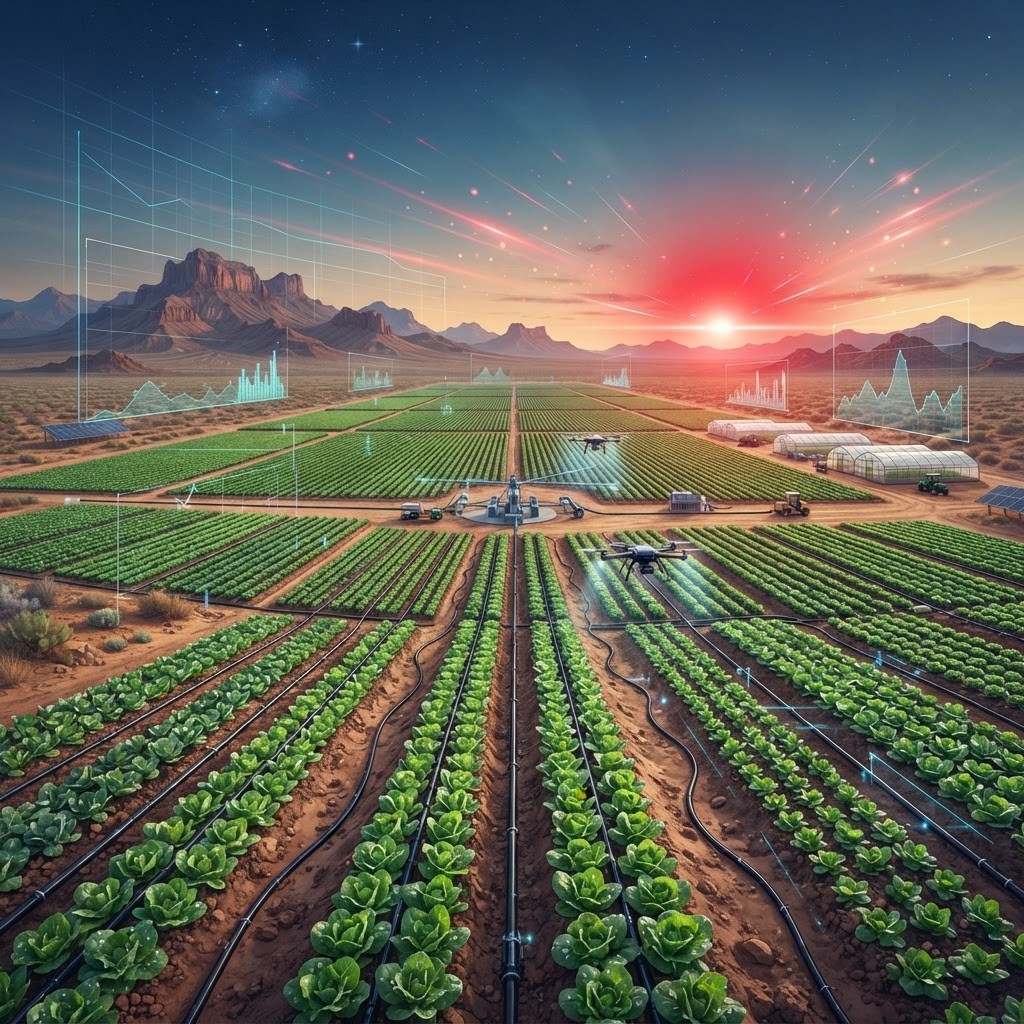
Agriculture in a Desert Valley
El Paso County sits in the Chihuahuan Desert, receiving under ten inches of rainfall in a typical year. Yet the Rio Grande valley that runs through it has supported irrigated farming for centuries, from early acequia systems to today's precision drip networks. That contrast defines the local industry: growers here cannot rely on rain, so every successful operation is fundamentally a water management business as much as a farming business.
The crops reflect those conditions. Pecans thrive in the deep alluvial soils along the river. Alfalfa and forage sorghum supply dairies and feedlots across West Texas and southern New Mexico. Chile peppers, onions, cotton, and specialty vegetables round out the mix, supported by a long growing season, abundant sunshine, and low humidity that reduces fungal disease pressure.
What Sets the Best Local Farming Companies Apart
The strongest operations in the region share three characteristics. They invest heavily in irrigation technology, replacing flood systems with drip, micro-sprinkler, and soil-moisture-sensor networks that stretch limited allocations further. They diversify revenue, combining commodity acreage with higher-value specialty crops, custom farming services, or direct-to-consumer sales. And they plan around water rights and district allocations years in advance, treating drought as a permanent design constraint rather than an occasional emergency.
Leading Farming Companies Serving El Paso
1. Rio Grande Valley Pecan Farms — One of the region's most recognizable growing operations, this company manages mature pecan orchards along the river corridor and handles its own shelling and grading. Its reputation rests on consistent nut quality, careful canopy and irrigation management, and long-term relationships with domestic and export buyers.
2. Mesilla Basin Produce Growers — Focused on chile peppers, onions, and seasonal vegetables, this grower supplies regional processors and grocery distributors. Cold-chain handling, food safety certification, and staggered planting schedules that extend the harvest window are central to its operation.
3. Franklin Mountain Farms — A diversified operation combining alfalfa, forage sorghum, and cotton acreage with custom harvesting services for neighboring landowners. By selling machine time as well as crops, it smooths out the revenue swings that come with commodity price cycles.
4. Socorro Family Agriculture — A multigenerational farm in the lower valley producing cotton, hay, and vegetables. It is respected locally for soil stewardship practices including cover cropping, laser-leveled fields, and rotation schedules that maintain organic matter in a climate that works against it.
5. Desert Sun Organic Growers — Certified organic vegetable and herb production aimed at regional grocers, restaurants, and farmers markets. The company leans on the desert's low disease pressure and long season to make organic methods economically viable, and it maintains strong composting and beneficial-insect programs.
6. Upper Valley Dairy & Forage — An integrated dairy and forage operation that grows most of its own feed. Vertical integration insulates it from hay market volatility, while modern manure management returns nutrients to cropland and reduces fertilizer purchases.
7. Fabens Cotton Company — Cotton production and ginning services for growers in the eastern part of the county. Module handling, fiber quality testing, and classing support help local producers capture better prices from textile buyers.
8. Hueco Bolson Hydro Farms — A controlled-environment operation growing leafy greens, herbs, and tomatoes in greenhouses. Recirculating hydroponic systems use a fraction of the water required by field production, and year-round output gives retailers a dependable local supply.
9. El Paso Valley Vineyards — Wine grape cultivation in a region with a surprisingly deep viticultural history that predates California's. Warm days, cool nights, and careful canopy management support quality fruit for regional wineries, while agritourism adds a second revenue stream.
10. Border Fresh Farm Partners — A grower-shipper that aggregates produce from smaller farms across the valley, providing packing, cooling, and distribution. For small operators, this model offers market access that would be impossible to build independently.
Water, Technology, and the Future of Local Farming
Water allocation is the single most important variable in El Paso agriculture. Surface deliveries from the Rio Grande depend on upstream reservoir storage, and in low-allocation years growers supplement with groundwater that can carry higher salinity. That reality has accelerated adoption of technologies once considered optional: subsurface drip irrigation, soil moisture probes, satellite and drone imagery for crop stress detection, and variable-rate fertility programs guided by grid soil sampling.
Salinity management is a parallel challenge. Growers apply gypsum, use leaching irrigations timed to avoid waste, and select salt-tolerant varieties. Meanwhile, labor availability has pushed investment in mechanization for harvesting and packing, and rising energy costs have made solar arrays on pump stations increasingly common across the valley.
Working With El Paso Growers
Buyers evaluating local farming partners should look closely at food safety documentation, cold-chain capability, and consistency of supply across a full season rather than a single harvest. Ask about water rights and irrigation infrastructure, because those factors determine whether a grower can deliver reliably in a dry year. For landowners seeking custom farming, verify equipment fleets, agronomic advisory capacity, and references from neighboring properties.
Community relationships also matter. Many of these companies participate in irrigation district governance, cooperative extension trials, and local food programs, which signals both technical competence and long-term commitment to the valley.
Final Thoughts
Farming in El Paso is an exercise in precision. The growers who lead the region have accepted that water is the limiting factor and built their entire operations around using it well. That discipline produces high-quality pecans, chile, forage, and vegetables, and it positions the valley's agriculture sector to remain productive even as climate pressures intensify.
