
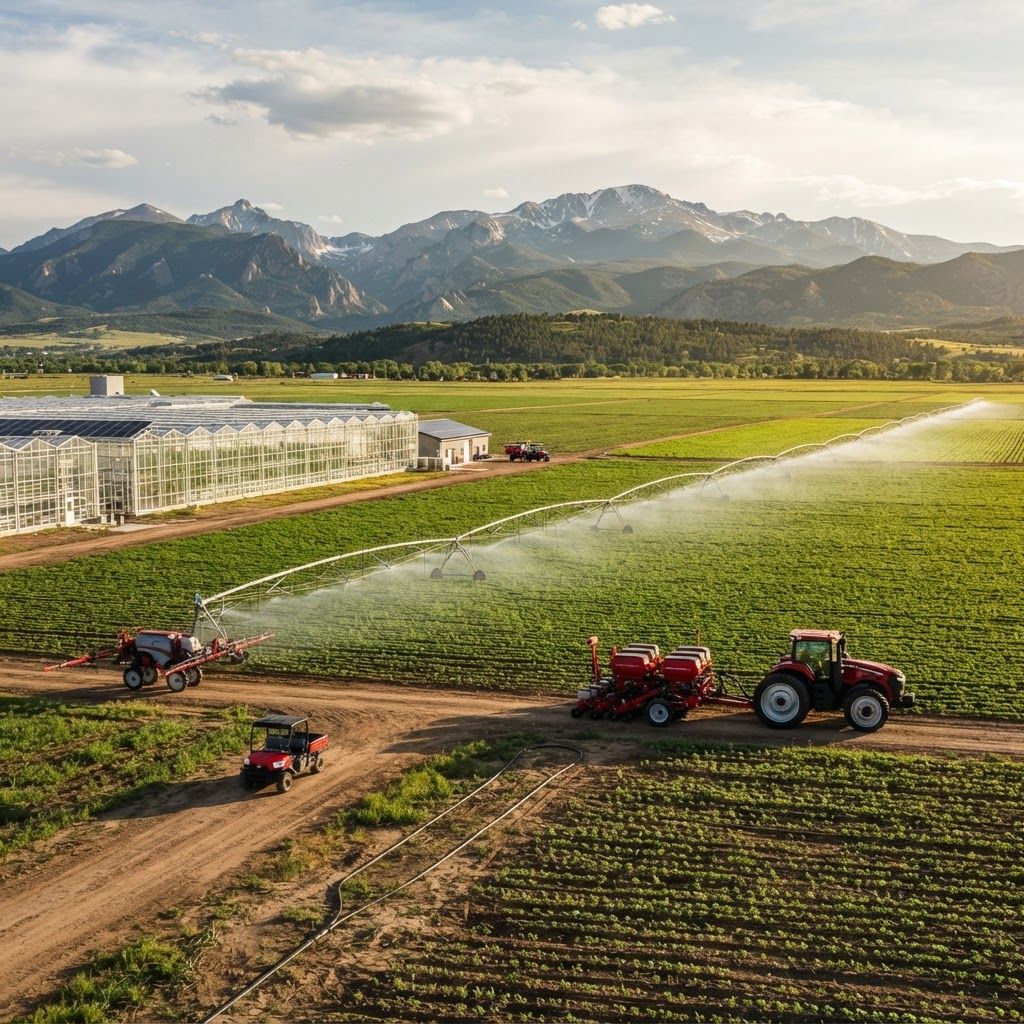
Agriculture at the Foot of the Rockies
Farming in and around Denver is shaped by a unique environment. High altitude, semi-arid conditions, and dramatic temperature swings force local farming companies to be resourceful and innovative. Despite these challenges, the region has cultivated a robust agricultural sector that supplies fresh produce, grains, and livestock to Colorado communities and beyond. The result is a farming landscape defined by resilience and forward thinking.
Denver's proximity to major distribution routes also makes it a logistical advantage for farming companies. Producers can move goods efficiently to urban markets, grocery chains, and restaurants, helping keep the farm-to-table movement thriving throughout the metro area.
What Makes a Top Farming Company
The best farming companies in Denver share several defining traits. They embrace water-efficient irrigation, an essential practice in a region where water is a precious resource. They also invest in soil health, crop rotation, and integrated pest management to maintain long-term productivity without depleting the land.
Leading operations diversify their output, growing a mix of crops and often integrating livestock to stabilize revenue across seasons. Many have adopted greenhouse and controlled-environment agriculture to extend growing seasons and protect against the region's unpredictable weather. This adaptability is what separates enduring farms from those that struggle with volatility.
Notable Operations in the Region
The Denver area is home to a spectrum of farming enterprises, from established family farms to modern commercial operations. Businesses such as Grant Family Farms historically pioneered organic production in Colorado, while operations like Ekar Farm and various community-supported agriculture programs connect residents directly to local growers. Larger commercial producers supply grains and forage crops that support both food and livestock industries.
Urban and peri-urban farms have also emerged, transforming vacant lots and greenhouses into productive spaces. These smaller operations emphasize hyper-local distribution, supplying farmers markets and restaurants with same-day freshness that large distributors cannot match.
Trends Driving Modern Farming
Sustainability and technology are the twin engines of change in Denver agriculture. Precision farming tools, including soil sensors and data-driven planning, help companies optimize inputs and reduce waste. Regenerative practices that rebuild soil carbon are gaining traction as both an environmental and economic strategy.
Consumer demand for organic, locally grown, and transparently sourced food continues to rise. Farming companies that communicate their practices clearly and build direct relationships with buyers are well positioned to capture this loyal customer base. Vertical farming and hydroponics are also expanding, offering year-round production within the metro footprint.
The Future of Denver Farming
As Colorado's population grows, the demand for locally produced food will only intensify. Farming companies that combine ecological stewardship with smart technology are best equipped to meet this demand while preserving the land for future generations. Their work sustains not only the regional food supply but also the cultural identity of a state rooted in agriculture.
For anyone interested in fresh, responsibly grown food, Denver's leading farming companies represent the very best of Colorado's agricultural spirit.
