
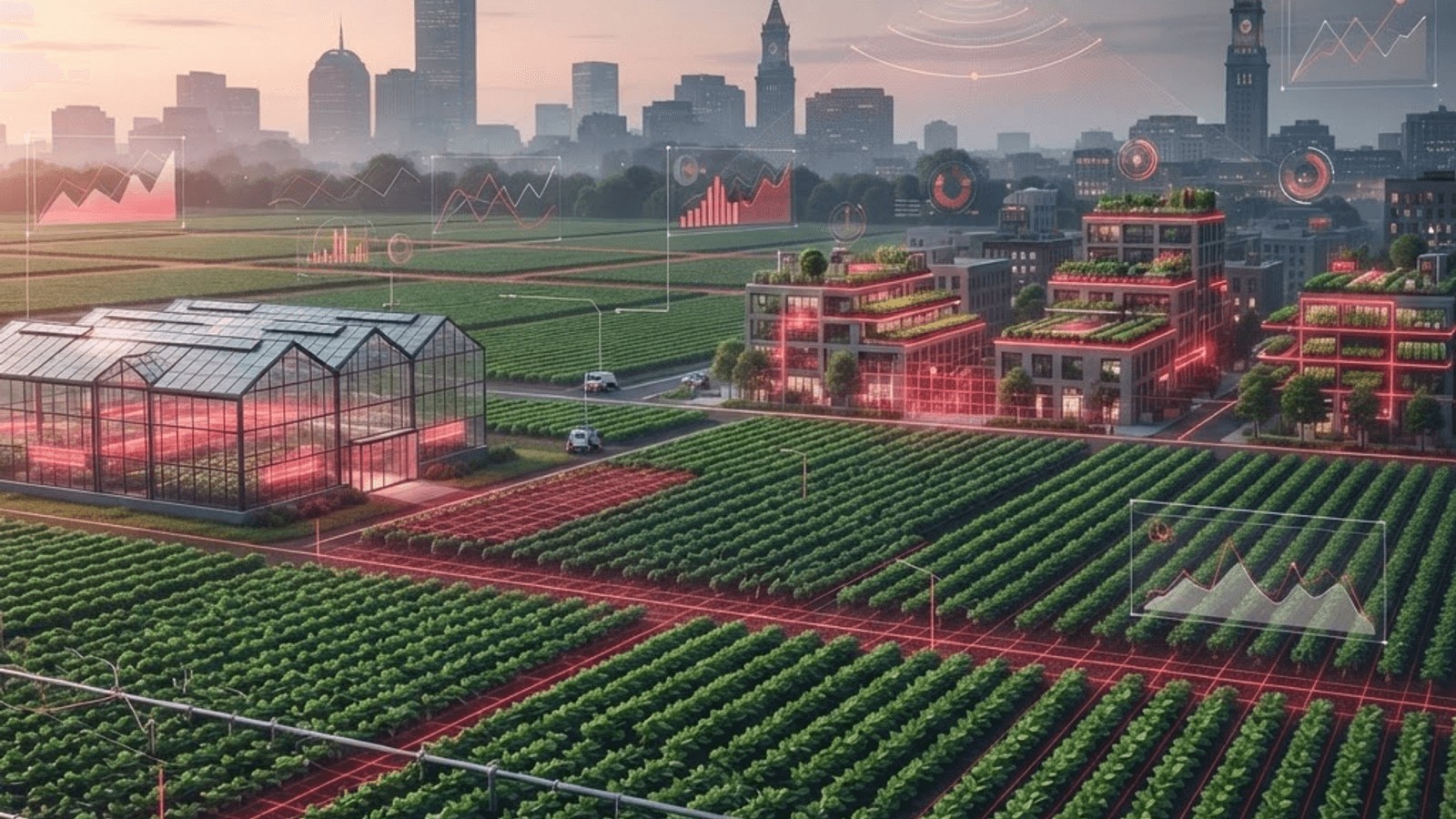
Agriculture in the Shadow of a Major City
Boston is not the first city that comes to mind when discussing agriculture, yet eastern Massachusetts sustains a remarkably productive and diverse farming sector. Land is expensive and parcels are small, so farms here rarely compete on commodity volume. Instead they succeed through direct-to-consumer sales, premium quality, extended season production, agritourism and supplying an exceptionally food-conscious urban market willing to pay for freshness and provenance.
The result is a farming economy built around vegetables, fruit, cut flowers, dairy, eggs, honey, maple products, nursery stock and protected cultivation. Add to this a genuinely innovative urban agriculture movement inside city limits, supported by municipal policy that permits rooftop farms, ground-level commercial growing and hydroponic facilities in former industrial buildings, and Boston becomes one of the more interesting agricultural markets in the northeast.
What Defines a Successful Boston-Area Farm
Proximity to a large, affluent and diverse population changes the economics of farming. A farm forty minutes from downtown can sell at farmers markets, run a community supported agriculture subscription, supply restaurants directly, host school visits and operate a farm stand, all from the same acreage. Diversified revenue smooths risk in a region where a single bad frost or wet spring can devastate a crop.
Season extension is the other defining capability. High tunnels, greenhouses, cold storage and indoor production allow eastern Massachusetts growers to supply markets far beyond the short outdoor window, which is essential when restaurant and retail buyers want year-round consistency.
Top 10 Best Farming Companies in Boston
1. Ward's Berry Farm. Based in Sharon, Ward's is among the best known diversified farms serving the Boston market, combining pick-your-own berries, a substantial farm store, wholesale vegetable production and prepared foods. Its ability to bridge agritourism and commercial supply is a model many regional farms study.
2. Verrill Farm. A Concord institution known for sweet corn, tomatoes and an outstanding farm store, Verrill Farm exemplifies the high-quality, reputation-driven model that works well in the affluent western suburbs. Its seasonal events and bakery extend the brand beyond produce.
3. Allandale Farm. Straddling Brookline and Boston, Allandale is often described as the last working farm in the city and a cornerstone of local food education. It grows a wide range of vegetables and flowers while operating a popular retail garden and produce centre.
4. Green City Growers. A Somerville-based company that designs, builds and maintains urban farms on rooftops, campuses, corporate sites and stadium terraces across Boston. It has helped normalise commercial urban agriculture in the city and manages some of its most visible rooftop growing spaces.
5. Higher Ground Farm and rooftop growers. Boston's rooftop farming projects have proven that intensive vegetable and herb production is viable on urban buildings, supplying restaurants within walking distance and dramatically reducing transport time from harvest to plate.
6. Freight Farms. A Boston company producing container-based hydroponic growing systems used by farmers, institutions and food businesses. While it is as much a technology company as a farm, it has made Boston a genuine centre of controlled environment agriculture innovation.
7. Brookwood Community Farm. Operating in the Blue Hills area, this community-oriented farm combines organic vegetable production with a strong educational and volunteer programme, supplying members and local food access initiatives.
8. Wilson Farm. A long-established Lexington operation combining extensive local growing with a large market retail business, Wilson Farm is one of the most recognised agricultural brands in Greater Boston and a major employer in the sector.
9. Drumlin Farm. Run as a working farm and wildlife sanctuary in Lincoln, Drumlin Farm blends livestock, vegetable production, conservation and education, serving as a key public gateway to understanding regional agriculture.
10. Boston-area urban farming cooperatives and neighbourhood growers. Networks of small commercial growers operating in Dorchester, Mattapan and Roxbury supply culturally relevant crops to local markets and corner stores, addressing food access while building genuine small business capacity.
Trends Shaping Boston Agriculture
Controlled environment agriculture is the most visible trend. Indoor vertical farms, container systems and advanced greenhouses reduce weather risk, allow year-round production close to consumers and appeal to buyers who prioritise consistency. Boston's engineering and venture capital ecosystem has accelerated this shift more than in most cities.
Climate adaptation is equally important. Growers report warmer winters, unpredictable rainfall and new pest pressure, driving investment in irrigation, drainage, cover cropping, soil health practices and more resilient varieties. Regenerative approaches that build organic matter and water-holding capacity have moved from fringe to mainstream.
Direct market channels continue to strengthen. Farmers markets across the metro area, subscription boxes, online ordering with home delivery and restaurant partnerships all give farms better margins than wholesale commodity channels. Institutional purchasing from universities and hospitals committed to local sourcing has also become a meaningful revenue stream.
Choosing a Farm Partner
Restaurants, retailers and institutional buyers evaluating Boston-area farms should look at consistency of supply, food safety documentation, harvest scheduling flexibility, packing standards and communication during difficult seasons. The best partnerships involve planning crops together months ahead rather than placing spot orders.
For consumers, the criteria are simpler: freshness, growing practices, transparency and the experience the farm offers. Eastern Massachusetts has enough excellent options that visiting several and comparing is genuinely worthwhile. Supporting these operations keeps working farmland in production in one of the most development-pressured regions in the country.
