
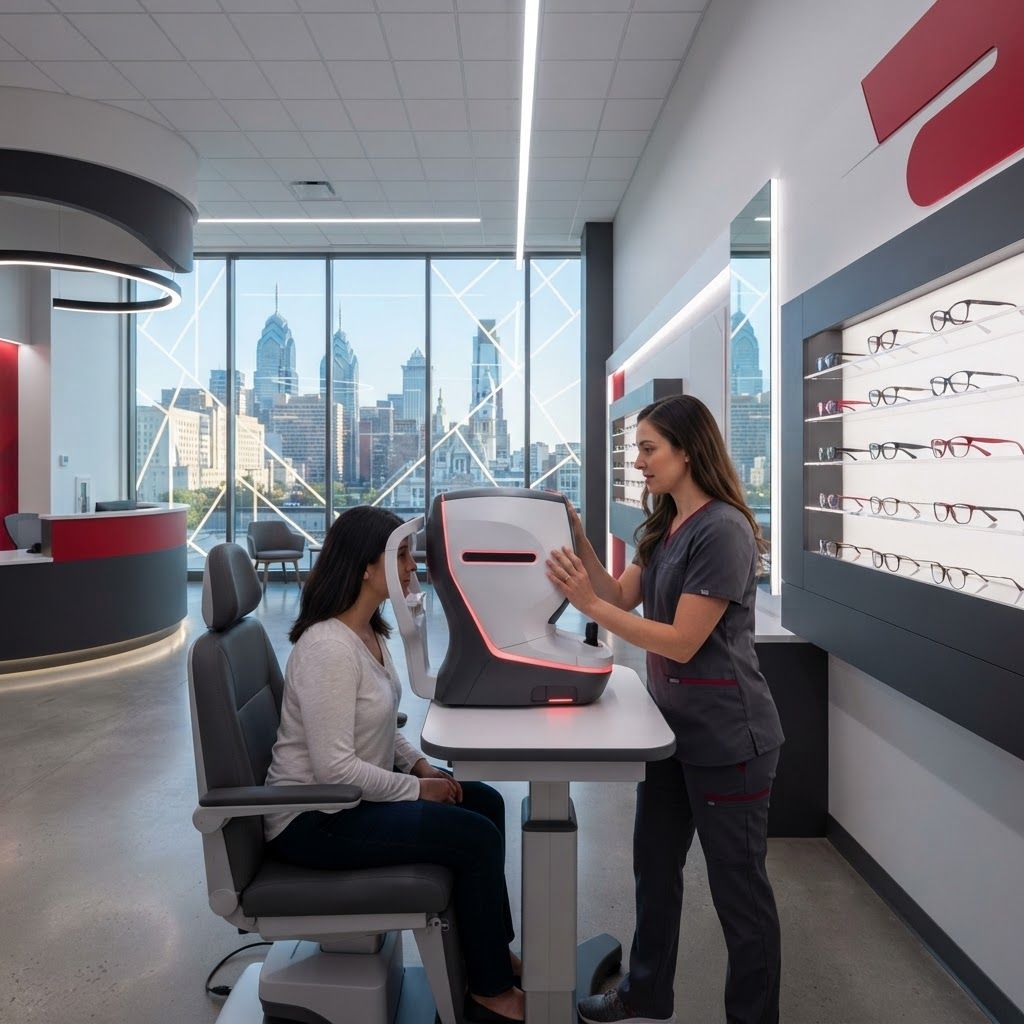
Philadelphia’s Eye Care Landscape
Good eye care includes more than updating a glasses prescription. Comprehensive exams can identify glaucoma, retinal disease, cataracts, corneal disorders, and signs of systemic illness. Philadelphia is unusually strong in ophthalmology because it combines historic specialty institutions, academic research centers, and community optometry. The right provider depends on whether you need routine refraction, urgent evaluation, surgery, pediatric expertise, or long-term disease management.
1. Wills Eye Hospital
Wills Eye is internationally recognized for ophthalmic care and handles conditions across nearly every subspecialty. Its teams treat retinal disease, glaucoma, cataracts, corneal problems, ocular tumors, neuro-ophthalmic disorders, and eye trauma. Patients with unusual diagnoses or complex surgical needs often value its concentrated expertise, while emergency services make it a major regional referral destination.
2. Scheie Eye Institute
Part of Penn Medicine, Scheie Eye Institute blends academic research with comprehensive clinical care. Specialists manage glaucoma, retina and vitreous disease, corneal disorders, inflammation, inherited eye disease, and other complex problems. Integration with Penn’s broader medical system benefits patients whose eye symptoms intersect with neurologic, autoimmune, genetic, or systemic conditions.
3. The Eye Institute at Salus at Drexel University
The Eye Institute provides comprehensive vision services through an educational clinical model. Offerings include primary eye care, low-vision rehabilitation, pediatric services, specialty contact lenses, and management of ocular disease. Multiple community locations and an emphasis on accessible care make the institute relevant for patients seeking thorough examinations and coordinated referrals.
4. Jefferson Health Ophthalmology
Jefferson’s ophthalmology services cover routine and advanced medical and surgical eye care. The academic setting allows collaboration with neurologists, endocrinologists, and other specialists when vision changes relate to broader health concerns. Its Center City presence is convenient, and system-based records can simplify coordination for established Jefferson patients.
5. Temple Ophthalmology
Temple University Hospital’s ophthalmology program serves a broad urban population with cataract, glaucoma, retinal, corneal, and general eye services. The team’s connection to a major teaching hospital supports complex diagnosis and surgical care. Temple is also an important access point for residents in North Philadelphia and surrounding neighborhoods.
6. Children’s Hospital of Philadelphia Division of Ophthalmology
CHOP specializes in eye conditions affecting infants, children, and adolescents. Pediatric ophthalmologists evaluate strabismus, amblyopia, congenital disorders, eye injuries, and vision issues linked to developmental or systemic disease. Child-friendly testing methods and collaboration with other pediatric subspecialists distinguish the program from adult-focused clinics.
7. Kremer Eye Center
Kremer Eye Center is known regionally for refractive procedures, cataract surgery, and treatment of common eye diseases. Patients exploring laser vision correction often appreciate dedicated screening and technology-focused consultations. Because not everyone is a candidate, a responsible evaluation should discuss corneal health, prescription stability, dry-eye risk, realistic outcomes, and alternatives.
8. Ophthalmic Partners
Ophthalmic Partners provides medical and surgical eye care through multiple specialists and regional offices. Its breadth includes cataract, retina, glaucoma, and corneal care. A multi-specialty model can reduce fragmented referrals when a condition evolves or when a patient has overlapping problems requiring coordinated expertise.
9. Philadelphia Vision Center
Philadelphia Vision Center offers accessible routine eye examinations, eyewear support, and contact lens services. It may suit patients whose primary needs are updated prescriptions, preventive screening, and convenient neighborhood care. During any routine exam, patients should mention flashes, new floaters, pain, sudden blur, diabetes, or family history because these details may require medical referral.
10. Modern Eye
Modern Eye combines optometric examinations with a design-conscious eyewear experience. Its approach appeals to patients who view glasses as both a medical device and personal accessory. Beyond frame selection, the value of an optometry visit rests on accurate refraction, ocular health screening, contact lens guidance, and appropriate escalation when disease is suspected.
How to Select an Eye Provider
Choose an optometrist for many routine exams, prescriptions, and contact lens needs, and an ophthalmologist for surgery or medical eye disease. Confirm insurance, referral requirements, and whether diagnostic imaging is billed separately. Seek immediate evaluation for sudden vision loss, a curtain-like shadow, severe pain, chemical exposure, or trauma rather than waiting for a standard appointment.
Technology and Prevention
Philadelphia centers increasingly use optical coherence tomography, wide-field retinal imaging, advanced lens measurements, and minimally invasive glaucoma procedures. Technology is most useful when paired with thoughtful interpretation. Adults should follow an exam schedule based on age and risk, while people with diabetes, strong family history, high eye pressure, or prior disease may need closer monitoring.
