
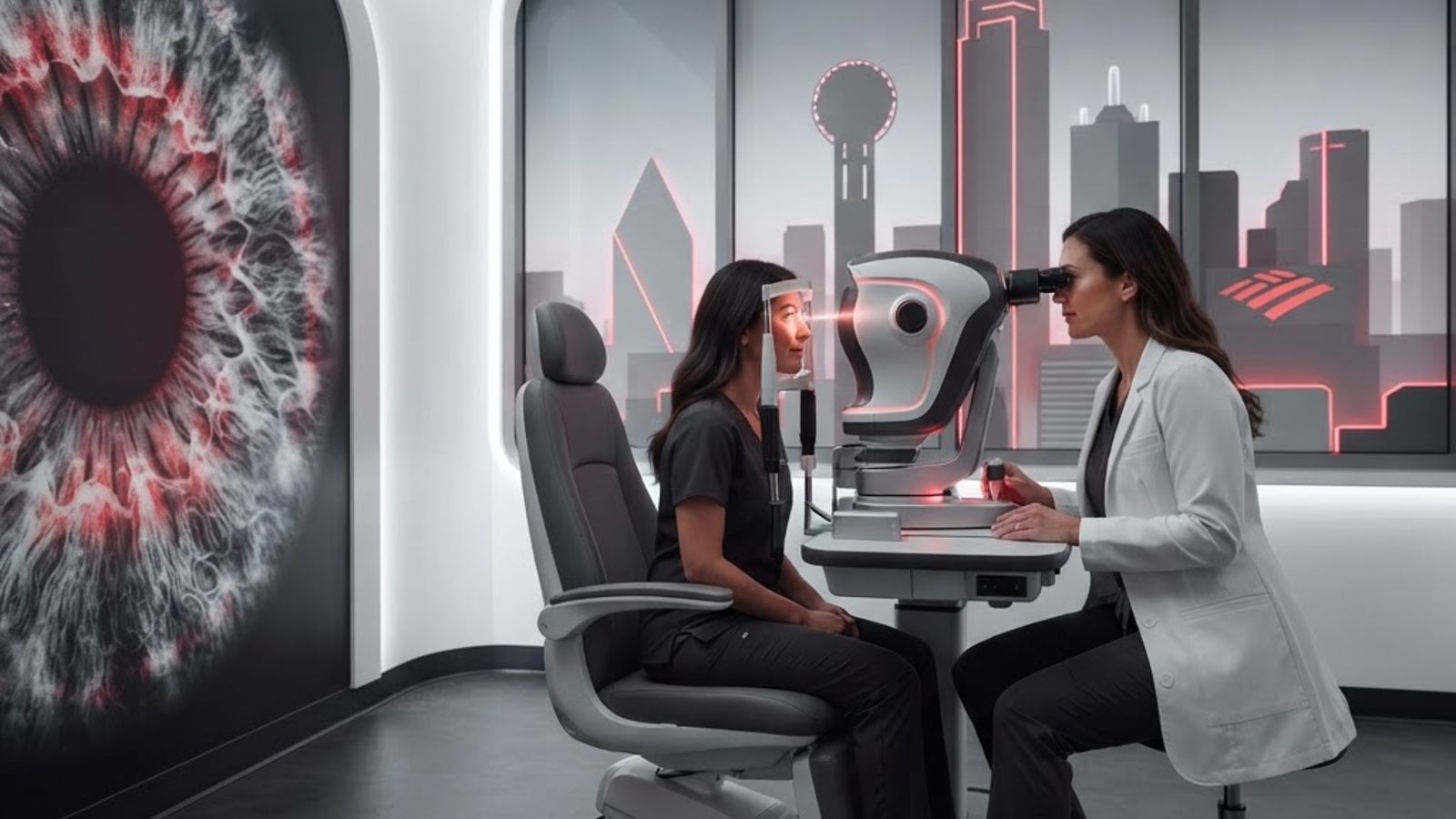
Navigating Eye Care in Dallas
Eye care ranges from routine glasses prescriptions to urgent retinal surgery, and choosing the correct provider matters. Optometrists commonly perform comprehensive exams and manage many everyday conditions, while ophthalmologists are medical doctors who provide surgical and advanced disease care. Dallas has academic centers, large specialty groups, pediatric programs, and retail-accessible clinics. Sudden vision loss, flashes with a curtain-like shadow, severe eye pain, or chemical injury requires urgent evaluation.
1. UT Southwestern Ophthalmology
UT Southwestern provides academic ophthalmology for routine and highly complex conditions. Specialists cover retina, cornea, glaucoma, neuro-ophthalmology, ocular oncology, uveitis, and reconstructive surgery. The connection to research and other medical departments is valuable when eye disease overlaps with neurologic, autoimmune, cancer, or systemic conditions. Access may involve referral depending on the service and insurance plan.
2. Key-Whitman Eye Center
Key-Whitman is a long-established North Texas ophthalmology group. It provides cataract care, vision correction, glaucoma management, retina services, dry-eye treatment, and comprehensive exams through multiple locations. The breadth of services makes it convenient for patients who want continuity from diagnosis through surgery and follow-up. Outcomes, candidacy, and alternatives should be discussed carefully before any elective procedure.
3. Cornea Associates of Texas
Cornea Associates of Texas focuses on corneal disease and surgery, including complex surface disorders, keratoconus, transplants, and cataract-related care. A subspecialty center is particularly useful when a condition requires concentrated expertise beyond routine eye care. Patients should bring prior records and imaging where possible. Treatment often requires long-term follow-up and close coordination with a regular optometrist or ophthalmologist.
4. Texas Retina Associates
Texas Retina Associates treats diseases of the retina and vitreous, such as macular degeneration, diabetic eye disease, retinal tears, detachments, and vascular disorders. Retinal symptoms can be time-sensitive, so a group with specialized imaging and surgical capability is important. Many patients are referred by another eye professional. Ongoing injection or monitoring schedules should be understood before treatment begins.
5. Glaucoma Associates of Texas
Glaucoma Associates of Texas concentrates on a disease that can progress without obvious early symptoms. Services include detailed pressure assessment, optic-nerve imaging, visual-field testing, medication management, laser treatment, and surgery. Specialty expertise is valuable for difficult-to-control pressure or unusual glaucoma. Consistent follow-up is essential because stability is measured over time rather than at a single visit.
6. Kleiman Evangelista Eye Centers
Kleiman Evangelista offers cataract surgery, refractive procedures, comprehensive ophthalmology, and related services across the Dallas-Fort Worth area. The group is known for surgical vision correction and modern diagnostic technology. Patients considering elective surgery should compare realistic benefits, side effects, lens choices, surgeon experience, and post-operative access. Not every patient is an appropriate candidate for every technology.
7. Children’s Health Ophthalmology
Children's Health provides pediatric ophthalmology for conditions such as eye alignment disorders, congenital problems, injuries, and vision issues linked to complex medical diagnoses. Child-focused specialists understand visual development and use age-appropriate examinations. Early assessment can be important because untreated problems may affect lasting vision. Families should ask how care will coordinate with school, pediatrics, or neurology.
8. Pediatric Eye Specialists
Pediatric Eye Specialists serves young patients with medical and surgical eye needs, including strabismus and amblyopia. A dedicated pediatric setting can reduce anxiety and improve the quality of an exam when children cannot describe symptoms clearly. Parents should bring developmental and family history and follow patching, glasses, or medication instructions consistently, as treatment success often depends on home routines.
9. Envision Dallas
Envision Dallas provides eye and vision services while supporting people who are blind or visually impaired through rehabilitation, employment, and community programs. Its broader mission recognizes that eye health is not only about diagnosis but also about independence and quality of life. Individuals with permanent vision loss may benefit from low-vision resources and adaptive strategies in addition to medical treatment.
10. MyEyeDr.
MyEyeDr. offers accessible optometric care at Dallas-area locations, including routine eye exams, contact-lens services, glasses, and screening for common eye conditions. This model works well for annual vision needs and convenient retail selection. If an exam identifies signs of cataract, glaucoma, retinal disease, or another medical issue, appropriate referral to an ophthalmologist becomes the priority.
How to Evaluate an Eye Center
Match the clinician's specialty to the condition and verify insurance for both professional and facility charges. Ask which tests are medically necessary, how frequently they should be repeated, and what symptoms require immediate contact. For surgery, discuss expected vision, anesthesia, recovery, risks, and who handles after-hours complications. Bring current glasses, contact-lens information, medication lists, and a driver if dilation will make travel unsafe.
Protecting Vision in North Texas
Dallas sunshine makes ultraviolet protection important, while allergies and air-conditioned environments can worsen dry-eye symptoms. Diabetes and high blood pressure require regular medical and eye monitoring because damage may occur before vision changes are obvious. Protective eyewear matters during construction, yard work, and sports. The strongest eye-care relationship combines routine prevention with rapid access to specialty expertise, helping Dallas patients preserve vision through every stage of life.
