
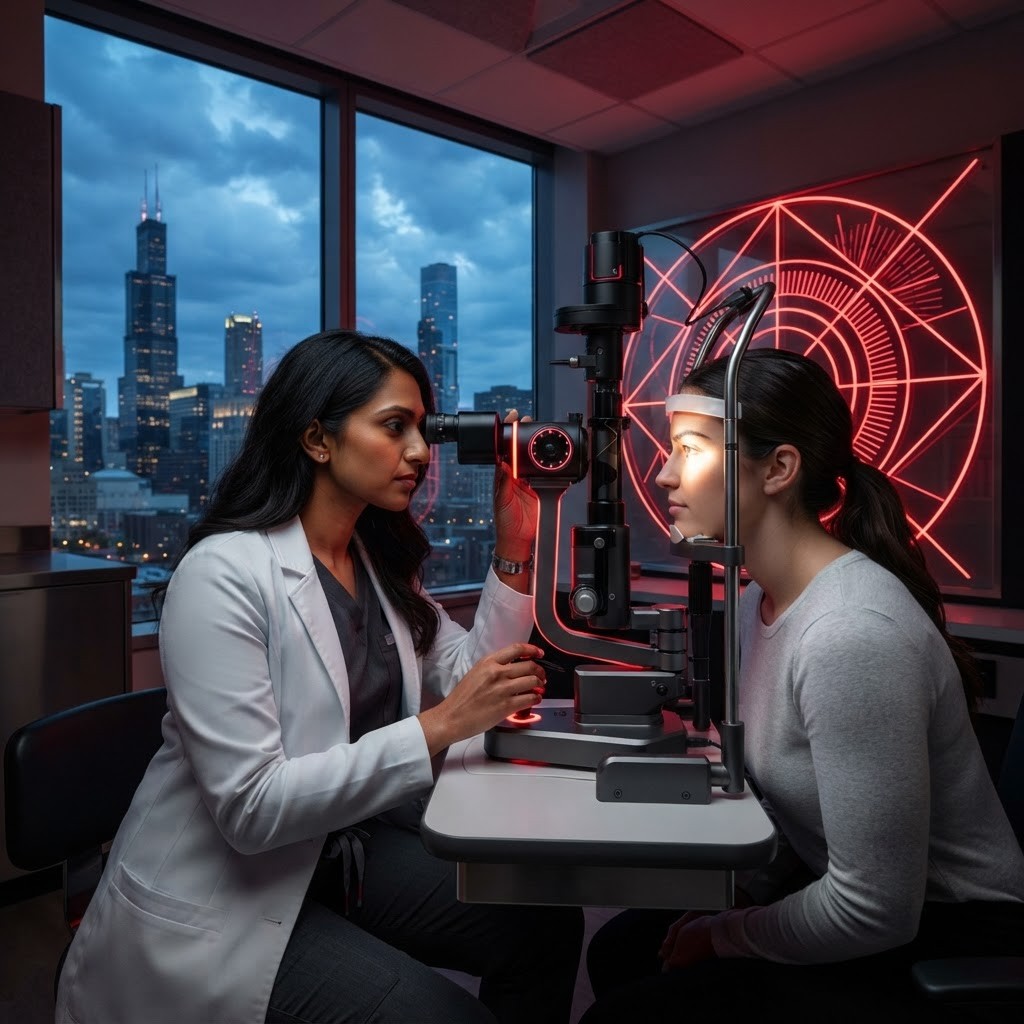
Understanding Eye Care Options
Routine vision checks, medical eye disease, and surgery require different expertise. Optometrists commonly provide exams, prescriptions, and management of many conditions, while ophthalmologists are physicians who diagnose disease and perform surgery. Chicago patients should choose based on the problem, not simply the nearest optical shop. Sudden vision loss, flashes with new floaters, severe eye pain, or eye injury requires urgent evaluation.
1. Illinois Eye and Ear Infirmary at UI Health
The Illinois Eye and Ear Infirmary is a major academic destination with deep expertise across ophthalmic specialties. Its teams address retinal disease, glaucoma, corneal disorders, pediatric conditions, neuro-ophthalmology, and complex surgery. The institution’s teaching and research environment supports multidisciplinary review and access to advanced diagnostics, making it especially valuable for difficult cases and second opinions.
2. Northwestern Medicine Ophthalmology
Northwestern Medicine provides comprehensive ophthalmology connected to a large academic health system. Patients can access specialists in retinal care, glaucoma, cornea, cataract surgery, and other fields. Integration with physicians managing diabetes, autoimmune disease, or neurologic conditions can improve coordination when eye findings are part of a broader health issue.
3. University of Chicago Medicine Ophthalmology
University of Chicago Medicine offers medical and surgical eye care with the resources of an academic center. Its specialists manage common age-related disease as well as unusual and complex conditions. South Side access and strong links to other medical departments make the program a significant regional resource.
4. Rush University Medical Center Ophthalmology
Rush delivers diagnostic, medical, and surgical eye care from its central medical campus and associated clinics. Its ophthalmologists can coordinate with neurology, endocrinology, and other specialties when vision problems overlap with systemic disease. Patients seeking cataract, retinal, glaucoma, or comprehensive evaluations may appreciate the continuity of a large system.
5. University Eye Specialists
University Eye Specialists provides comprehensive ophthalmology with experience in cataracts, glaucoma, retina, corneal conditions, and routine medical eye care. A specialist group can offer a more focused environment than a general health system while retaining access to multiple ophthalmic disciplines. Patients should confirm which clinician best matches their diagnosis.
6. Chicago Eye Institute
Chicago Eye Institute serves the region with medical and surgical eye services, including cataract care, retinal evaluation, glaucoma management, and comprehensive exams. The practice format may suit patients who want specialty depth with community-based access. For surgery, compare the proposed lens or procedure, expected visual outcome, and likely out-of-pocket cost.
7. Rosin Eyecare
Rosin Eyecare has a long-standing Chicago-area presence and offers eye exams, glasses, contact lenses, and medical or surgical services through a broad network. Multiple locations are convenient for households seeking routine care. The organization’s range can also facilitate referral when an exam reveals cataracts, glaucoma risk, or retinal concerns.
8. Kraff Eye Institute
Kraff Eye Institute is especially associated with refractive and vision-correction procedures, alongside comprehensive evaluations. It may appeal to patients exploring LASIK or other elective options. Careful screening is essential because corneal thickness, dry eye, prescription stability, age, and lifestyle all influence candidacy and outcome.
9. Chicago Cornea Consultants
Chicago Cornea Consultants focuses on corneal disease, cataract treatment, refractive surgery, and related anterior-segment care. Subspecialty expertise can matter for conditions such as keratoconus, corneal scarring, complex dry eye, or prior surgical complications. Patients benefit when diagnostic imaging and treatment planning are concentrated in the relevant field.
10. LensCrafters
LensCrafters locations across Chicago provide convenient access to eyewear and, at many sites, eye examinations through independent optometrists. This can be practical for routine prescriptions, contact lens fitting, and frame selection. Patients with known eye disease should ensure they receive appropriate dilation, imaging, and referral rather than relying solely on a retail vision check.
How to Evaluate a Center
Confirm whether you need an optometrist, comprehensive ophthalmologist, or subspecialist. Ask about dilation, imaging, after-hours coverage, and how quickly urgent symptoms are assessed. For surgery, understand benefits, risks, alternatives, recovery, and who manages postoperative care. Insurance coverage for medical eye care differs from vision benefits used for routine exams and eyewear, so verify both.
Eye Health in an Urban Environment
Chicago residents face long hours on screens, seasonal allergies, dry indoor heat, bright lakefront glare, and chronic conditions such as diabetes that can affect vision. Eye centers increasingly use high-resolution imaging, minimally invasive glaucoma procedures, advanced lens technology, and telehealth triage. Prevention remains central: wear protective eyewear, manage systemic health, use sun protection, and schedule examinations at intervals recommended for your age and risk factors.
