
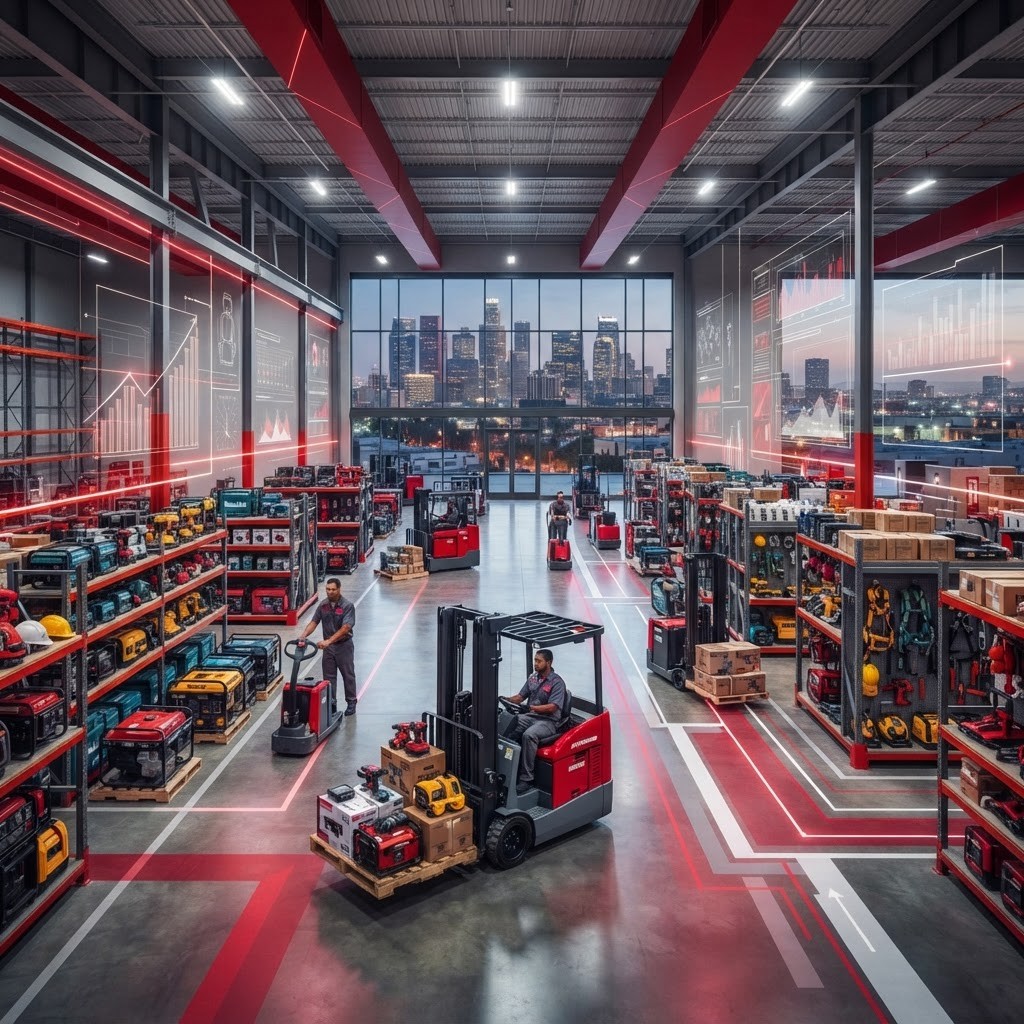
Equipment Purchasing in the Los Angeles Market
Los Angeles companies operate under unusual pressures: expensive floor space, demanding safety standards, heavy traffic, and projects ranging from high-rise renovation to port logistics. Equipment wholesalers help businesses preserve cash, standardize fleets, and obtain replacement items without lengthy downtime. This list covers broad industrial distributors and valuable specialists. The right choice depends on application, service requirements, delivery area, and whether ownership, leasing, or rental best matches expected utilization.
1. Grainger
Grainger is a leading source for maintenance, repair, and operations equipment. Its enormous assortment includes material handling products, safety gear, motors, pumps, tools, lighting, and facility supplies. Digital procurement controls and account reporting suit larger organizations, while regional branches and distribution capabilities help local teams solve urgent maintenance problems.
2. Fastenal
Fastenal combines industrial products with inventory-management services. Beyond fasteners, the company supplies tools, abrasives, safety products, cutting equipment, and material handling essentials. Onsite programs and vending systems can reduce stockouts and improve accountability, making Fastenal attractive to manufacturers, contractors, and facilities with repeat consumption.
3. McMaster-Carr
McMaster-Carr is valued for an exceptionally organized catalog and a broad range of industrial components. Buyers can find equipment, hardware, raw materials, test instruments, plumbing products, and unusual replacement items in one place. Fast regional shipping and clear technical specifications are major advantages when maintenance staff need to identify a solution without a lengthy sourcing process.
4. White Cap
White Cap concentrates on professional construction supplies and equipment. Its selection covers concrete tools, anchors, safety products, power tools, waterproofing materials, and jobsite consumables. Knowledge of contractor workflows and regional delivery makes it a useful partner for Los Angeles builders navigating dense sites and compressed schedules.
5. Sunbelt Rentals
Sunbelt Rentals gives contractors and event, industrial, and facilities teams access to equipment without full ownership. Categories include aerial lifts, earthmoving machines, generators, climate control, pumps, and specialty tools. Rental can be financially sensible for short projects, peak workloads, and equipment requiring maintenance expertise.
6. United Rentals
United Rentals offers one of the industry’s broadest rental fleets, with general construction, trench safety, power, HVAC, access, and material handling equipment. National account support benefits organizations running projects across several markets, while local branches provide dispatch and service. Training and managed solutions can also support safety and utilization goals.
7. Quinn Company
Quinn Company serves Southern California with heavy construction, power, and agricultural equipment. It is particularly relevant for buyers seeking Caterpillar machinery, engines, generators, parts, and field service. The combination of new, used, rental, and maintenance choices allows contractors to structure acquisition around workload and capital priorities.
8. Coastline Equipment
Coastline Equipment supplies construction machinery and support across Southern California. Its focus on earthmoving and compact equipment is useful for grading, utility, landscaping, and infrastructure contractors. Parts access and trained service personnel are crucial differentiators because heavy equipment value depends on uptime over its full operating life.
9. Raymond West
Raymond West specializes in intralogistics, lift trucks, racking, automation, and warehouse optimization. Its consultative approach can help distributors improve product flow rather than merely replace a forklift. With Los Angeles industrial rents at a premium, solutions that increase storage density and reduce travel time can create substantial operational value.
10. Restaurant Depot
Restaurant Depot is a practical wholesale equipment source for food-service operators. Along with ingredients and disposables, locations offer cookware, refrigeration-related items, shelving, preparation tools, and front-of-house essentials. Independent restaurants and caterers often appreciate the ability to inspect products and purchase immediately rather than wait for scheduled freight.
Evaluating Total Cost and Service
Price is only one part of equipment economics. Buyers should calculate delivery, installation, operator training, preventive maintenance, energy consumption, consumables, downtime, resale value, and disposal. Confirm electrical or emissions requirements, local permitting implications, warranty response, and parts lead times. For heavy machinery, ask about mobile technicians and guaranteed response expectations. For warehouse systems, assess whether the supplier can design layouts and coordinate installation.
Rental is generally attractive for uncertain demand or specialized tasks, while ownership often suits equipment used consistently. Used equipment may deliver value if inspection records and parts support are strong. Los Angeles buyers should also account for restricted loading access and traffic-dependent transport. A wholesaler that plans delivery windows, provides accurate specifications, and remains accountable after the sale can outperform a cheaper supplier that leaves the customer to manage every complication.
