
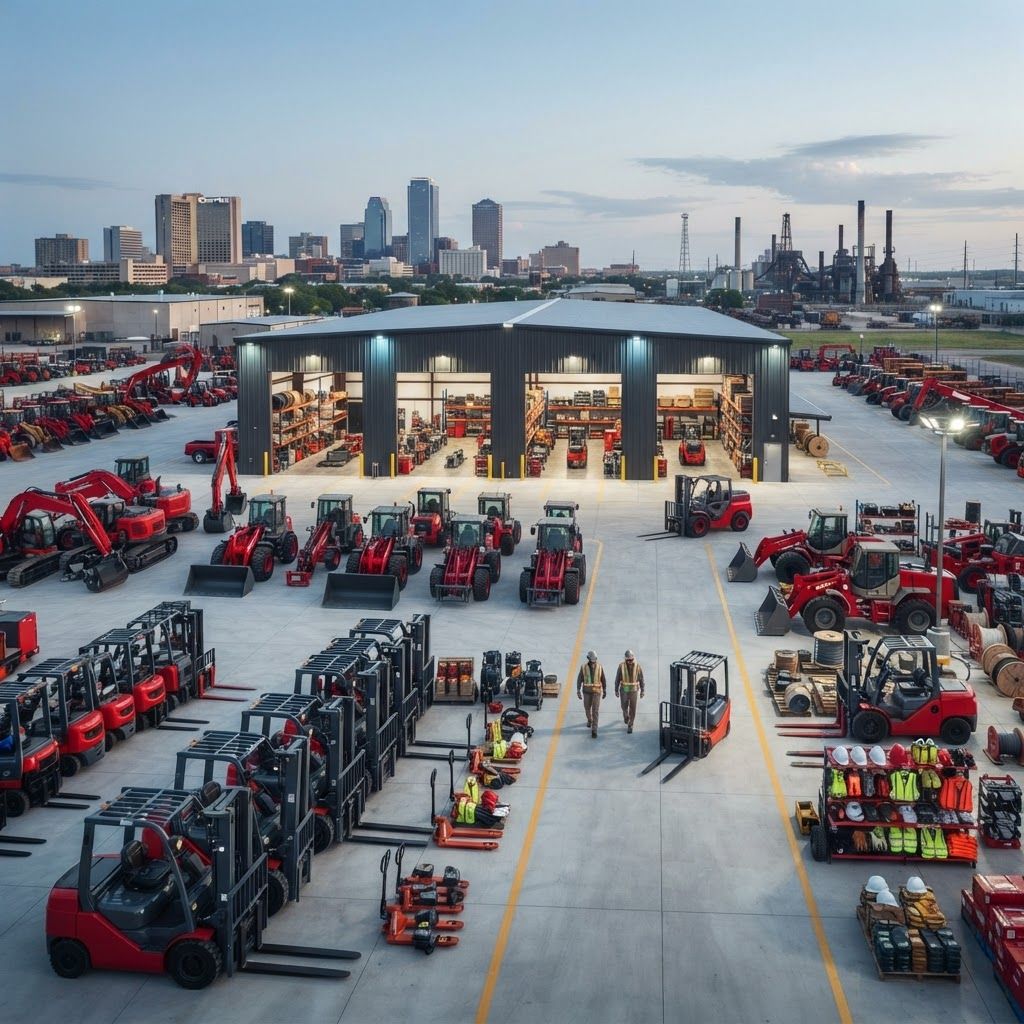
Equipment Supply for a Growing City
Fort Worth’s construction, warehousing, manufacturing, energy, agriculture, and transportation industries depend on productive equipment. A wholesale or dealer relationship often lasts far beyond the initial purchase because parts, service, training, and resale value shape the real return. The suppliers below cover heavy construction, forklifts, industrial tools, compressed air, and agricultural equipment. Buyers should confirm territories, current brands, rental availability, and account terms before building specifications.
1. Holt CAT
Holt CAT is a major Texas dealer for Caterpillar equipment, engines, power systems, parts, and service. Fort Worth contractors and industrial customers can consider it for earthmoving, paving, power, and jobsite needs. Its scale and support network are major differentiators. Buyers should compare machine configuration, technology packages, preventive maintenance, operator training, and expected utilization rather than focusing only on acquisition price.
2. Kirby-Smith Machinery
Kirby-Smith Machinery supplies and supports heavy construction and industrial equipment from multiple manufacturers. A multi-brand dealer can help customers compare machines across excavating, lifting, paving, and material-handling applications. Demonstrations are important because visibility, control response, attachment changes, and operator comfort affect production. Ask for service-response commitments and local parts availability for critical models.
3. RDO Equipment
RDO Equipment serves construction, agriculture, and technology-driven equipment customers. Precision systems, telematics, and machine-control capabilities are increasingly important alongside the iron itself. Fort Worth contractors can use production data to manage idle time, fuel, maintenance, and job progress. Before purchase, determine who owns the data, how subscriptions work, and whether systems integrate with current workflows.
4. ASCO Equipment
ASCO Equipment is a Texas equipment dealer offering sales, rentals, parts, and service across construction and material-handling categories. The ability to rent before buying can help contractors validate performance under real conditions. Buyers should compare hourly utilization and project pipeline when deciding between rental, lease, and ownership. Attachment compatibility can also increase fleet flexibility.
5. Equipment Depot
Equipment Depot focuses on forklifts, warehouse equipment, aerial lifts, and material-handling solutions. Fort Worth distribution centers can benefit from site evaluations that consider aisle width, rack height, floor condition, load profile, and shift patterns. Equipment selection should include batteries or fuel systems, chargers, ventilation, pedestrian safety, and technician response. Fleet management data can reveal underused units and recurring damage.
6. Briggs Equipment
Briggs Equipment supports material handling, warehouse operations, and related equipment needs through sales, rental, parts, and service. It can serve facilities seeking forklifts, access equipment, and integrated support. Buyers should assess technician coverage and replacement-rental policies because downtime can stop receiving or shipping. Standardizing controls across a fleet may also reduce training demands.
7. United Rentals
United Rentals gives contractors and facilities access to a broad rental fleet including aerial, earthmoving, power, climate, trench-safety, and general construction equipment. Rental is well suited to temporary demand, specialized tasks, or uncertain utilization. Customers should clarify rates, transport, environmental charges, damage waivers, fuel, cleaning, and off-rent procedures to understand true project cost.
8. Sunbelt Rentals
Sunbelt Rentals serves construction, industrial, and event-related customers with general and specialty equipment. Its range can help businesses source multiple categories through one account. Specialty divisions may provide expertise beyond a basic tool counter. Fort Worth customers should reserve early during peak construction periods and confirm the exact capacity, accessories, and site requirements for each unit.
9. Grainger
Grainger supplies industrial equipment, maintenance products, safety gear, motors, pumps, material-handling items, and tools. It is especially useful for maintenance, repair, and operations teams seeking broad availability and standardized purchasing. Buyers can reduce duplicate stock by developing approved item lists. Critical spares should be chosen through a risk review rather than simply copying historical consumption.
10. Texas First Rentals
Texas First Rentals provides construction equipment and tools with regional market knowledge. It can be a useful partner for contractors needing earthmoving, aerial, compaction, power, or jobsite equipment without long-term ownership. Local teams may understand North Texas soil, weather, and project conditions. Customers should inspect delivered units, document condition, and ensure operators receive model-specific familiarization.
Evaluating Equipment Suppliers
Calculate total cost of ownership across purchase, financing, transport, fuel or energy, maintenance, wear parts, insurance, downtime, and resale. Ask each supplier for service locations, technician coverage, parts fill rates, preventive programs, and escalation procedures. Safety resources and operator training deserve substantial weight. A productive but poorly supported machine can become the most expensive unit in a fleet.
Fort Worth companies increasingly use telematics, electric material-handling equipment, machine control, and predictive maintenance. Technology should solve a defined problem rather than add complexity. Pilot new equipment on a representative job, gather operator feedback, and compare measured production. The strongest equipment wholesaler or dealer provides honest application advice, dependable field support, and a clear plan for the entire lifecycle.
