
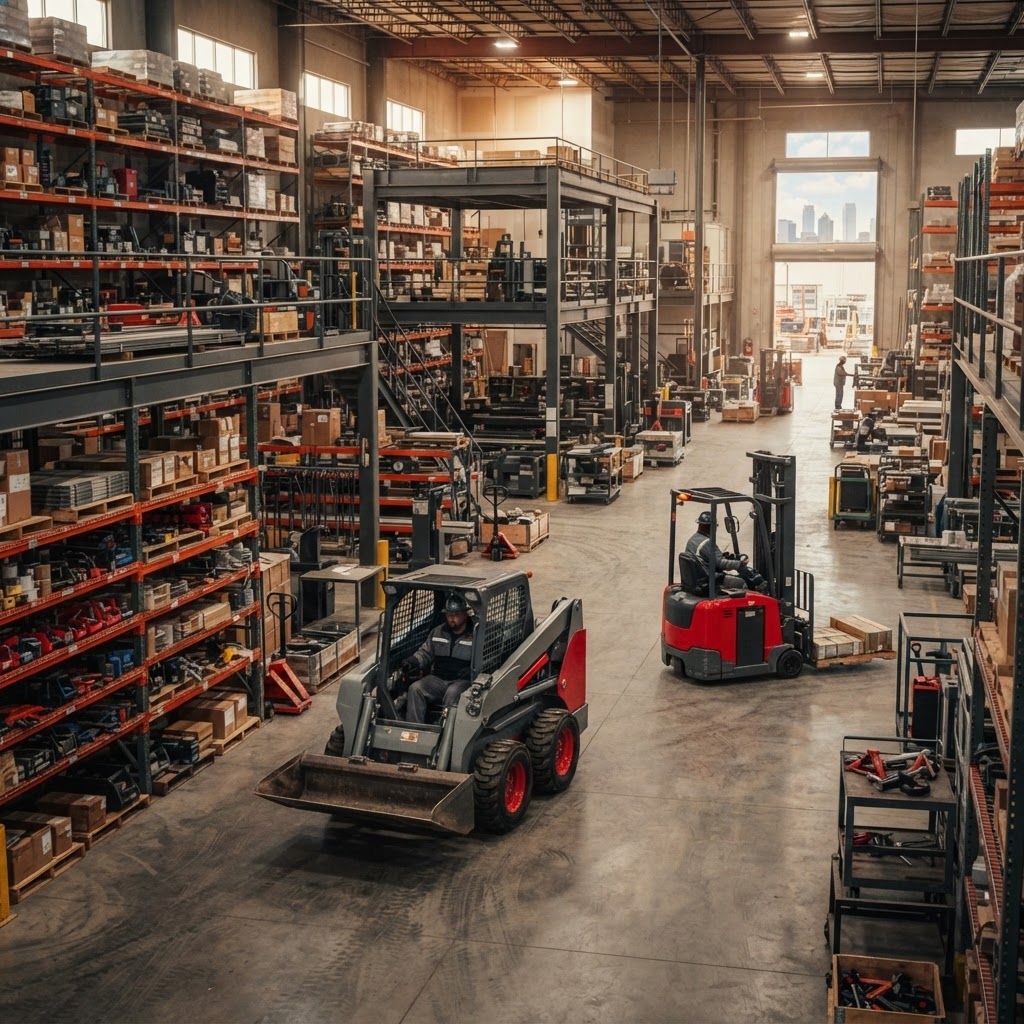
Equipment Sourcing in North Texas
Dallas–Fort Worth is a major construction, warehousing, transportation, and manufacturing market. Contractors and facility operators need equipment that can withstand heat, dust, long operating hours, and demanding schedules. The local supplier landscape includes heavy machinery dealers, rental networks, forklift specialists, industrial distributors, and tool companies.
Equipment should be evaluated on lifetime value rather than purchase price alone. Availability of technicians, replacement parts, operator training, telematics, financing, and rental alternatives can determine actual productivity. These ten businesses are established resources for the Dallas market.
1. HOLT CAT
HOLT CAT is a prominent Texas Caterpillar dealer serving construction, power, and industrial customers. Its offering includes heavy equipment, engines, rentals, parts, and service. The company's Texas footprint and technician network are major advantages for contractors whose machines cannot remain idle.
2. RDO Equipment Co.
RDO Equipment Co. supports construction, agriculture, and related industries with machinery, technology, parts, and service. Buyers can explore equipment for earthmoving, roadbuilding, compact work, and precision applications. Its technology focus is useful as contractors adopt grade control and connected fleet management.
3. Kirby-Smith Machinery
Kirby-Smith Machinery supplies heavy and compact construction equipment from multiple manufacturers. The company offers sales, rentals, parts, and shop or field service. A multi-brand dealer can help buyers compare machine configurations and match equipment more closely to job requirements.
4. ASCO Equipment
Associated Supply Company, commonly known as ASCO Equipment, is a Texas-based dealer serving construction and material-handling customers. Its portfolio includes equipment sales, rental, parts, and service. Regional ownership and experience with Texas operating conditions are meaningful differentiators.
5. United Rentals
United Rentals has extensive Dallas-area coverage and a broad rental fleet spanning aerial work platforms, earthmoving, power, climate control, trench safety, and general construction tools. Rental can be financially sensible for short projects, specialized tasks, and periods of uncertain utilization.
6. Sunbelt Rentals
Sunbelt Rentals offers general and specialty equipment through a large branch network. Dallas contractors can access lifts, generators, pumps, earthmoving machines, flooring tools, and engineered solutions. Its specialty divisions are helpful when a project requires technical planning in addition to equipment delivery.
7. Equipment Depot
Equipment Depot serves material-handling operations with forklifts, aerial equipment, warehouse products, rentals, parts, and service. Distribution centers can benefit from fleet studies and planned maintenance. Battery technology, aisle dimensions, lift height, and duty cycle should all be assessed before selecting a forklift.
8. Briggs Equipment
Dallas-based Briggs Equipment provides material handling, industrial equipment, rentals, fleet management, and service. Its local roots and broad operational support make it relevant to warehouses, manufacturers, and logistics companies. Businesses with mixed fleets may value a supplier capable of supporting multiple equipment types.
9. Grainger
Grainger is a major industrial distributor supplying maintenance, repair, safety, material-handling, and facility equipment. While it is not a heavy-machinery dealer, its inventory is central to daily operations. Dallas facilities can consolidate tools, safety products, motors, pumps, and routine maintenance needs through one source.
10. White Cap
White Cap focuses on professional contractors with tools, safety gear, concrete accessories, fasteners, and construction supplies. Its trade-oriented assortment supports crews that need jobsite consumables alongside durable equipment. Branch access and delivery can help prevent small supply gaps from interrupting work.
Choosing Between Purchase and Rental
Estimate annual utilization, transport costs, storage, insurance, maintenance labor, and residual value. Frequently used core machines may justify ownership, while specialty equipment often makes more sense as a rental. Ask suppliers for service response targets, preventive maintenance options, parts fill rates, and operator training.
Dallas businesses should also plan for seasonal heat and storm demand. Cooling systems, tires, batteries, hydraulic hoses, and dust filtration need disciplined inspection. Telematics can reveal idle time and unsafe operation, helping managers right-size fleets. A high-quality equipment supplier supports uptime throughout the asset's life, not just on delivery day.
Practical Due Diligence Before Ordering
Before opening an account, ask each business for its current trade requirements, service area, minimum purchase, payment terms, lead times, and written return policy. Company offerings can change, so confirm that the products and support described here remain available. New buyers should begin with a measured order and assess accuracy, packaging, product consistency, and communication before making a larger commitment. References from comparable Dallas businesses can provide useful insight into real-world service.
Create a simple supplier scorecard and review it after every delivery. Useful measures include on-time performance, complete-order rate, defect frequency, response time, and the total cost after freight, handling, waste, and returns. Keep purchase orders, specifications, lot or model details, and approval records organized. Clear documentation makes discrepancies easier to resolve and helps multiple employees follow the same buying standards.
Finally, avoid depending entirely on one source for critical inventory. Dallas has strong logistics infrastructure, but severe weather, transportation interruptions, seasonal demand, and manufacturer shortages can still affect supply. Maintain a qualified secondary vendor and identify acceptable substitutes before they are urgently needed. Forecast from actual sales or usage data, review slow-moving stock, and share upcoming demand with suppliers. This disciplined approach turns a directory of possible vendors into a resilient purchasing strategy and helps a business build relationships based on quality, transparency, and dependable long-term value.
