
Choosing an Energy Supplier in Phoenix
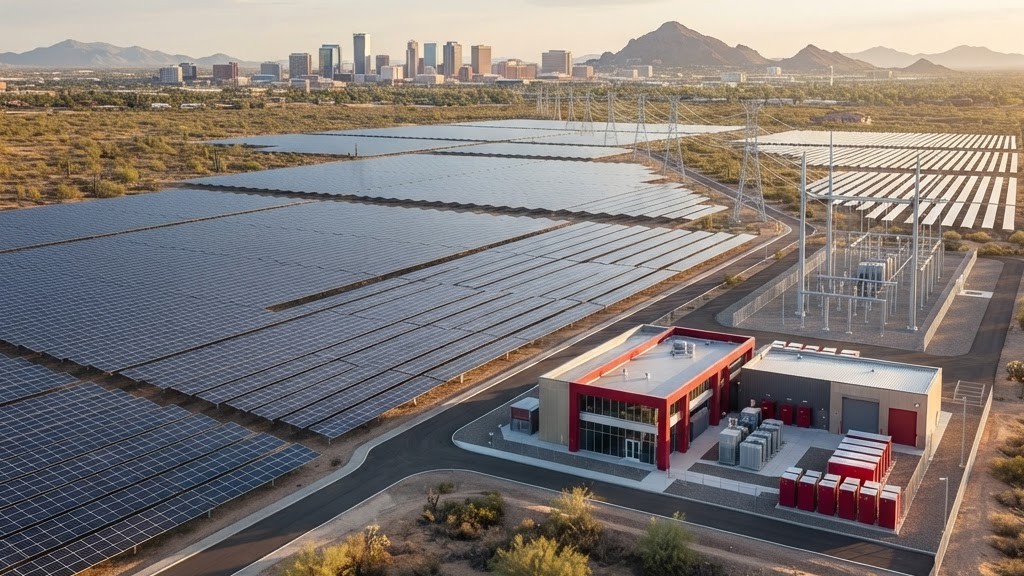
Phoenix has one of the most distinctive energy markets in the United States. Extreme summer temperatures create substantial cooling demand, while abundant sunshine gives homes, commercial properties, and public agencies unusually strong opportunities for solar generation. The best provider depends on location, service territory, load profile, ownership goals, and whether a customer needs regulated electric service, rooftop solar, battery storage, or a utility-scale project partner. The following companies stand out for their regional presence, technical capabilities, or role in Arizona's changing energy economy.
1. Arizona Public Service
Arizona Public Service is the state's largest electric utility and serves many customers across metropolitan Phoenix. Its scale supports extensive generation, transmission, outage response, efficiency programs, and grid modernization. APS is especially relevant to customers within its regulated territory who want established service options and access to programs involving rooftop solar interconnection, electric vehicles, demand management, and energy efficiency. Customers should compare rate plans carefully because time-of-use structures can materially affect households with heavy afternoon cooling loads.
2. Salt River Project
Salt River Project is a community-based water and power organization with deep roots in the Valley. It serves a large portion of Greater Phoenix and is known for operating a diverse power portfolio and major regional infrastructure. SRP offers resources for residential and commercial efficiency, electrification, solar, and demand management. Its long local history and integrated role in water and power make it a central energy institution, particularly for businesses evaluating expansion sites in the East Valley.
3. First Solar
Tempe-based First Solar is one of Arizona's most significant clean-technology companies. It manufactures advanced thin-film photovoltaic modules and supports large-scale solar development rather than functioning as a conventional retail utility. The company is notable for American manufacturing, utility-scale performance, and a lifecycle-minded approach to module design and recycling. Developers and institutional buyers value its bankable technology, manufacturing depth, and experience in hot, arid conditions relevant to the Southwest.
4. DEPCOM Power
DEPCOM Power provides engineering, procurement, construction, operations, and maintenance services for utility-scale solar and energy storage. Headquartered in the Phoenix area, the company is positioned close to one of the country's most active solar markets. Its integrated capabilities can reduce coordination challenges for developers that need a partner from design through long-term operation. DEPCOM is particularly relevant for large commercial, utility, and independent power projects rather than individual rooftop installations.
5. Arevon Energy
Scottsdale-based Arevon Energy develops, owns, and operates renewable energy projects, including solar and battery storage. Its portfolio and in-house expertise make it an important participant in the transition toward dispatchable clean power. Battery storage is increasingly valuable in Arizona because it can shift solar production into high-demand evening hours. Organizations exploring power purchase agreements or large clean-energy procurement may find Arevon's development and asset-management experience especially meaningful.
6. Sunrun
Sunrun is a major residential solar and battery provider with service in the Phoenix market. The company offers purchase and financing structures intended to make home energy systems more accessible. Its broad scale supports standardized installation processes, monitoring, and ongoing service. Homeowners should examine equipment specifications, production assumptions, warranties, escalation clauses, and transfer terms before selecting any long-duration solar agreement.
7. Tesla Energy
Tesla Energy supplies solar and battery solutions, including the Powerwall home storage system, in Arizona. The combination of solar production, intelligent controls, and backup capability appeals to residents concerned about outages or peak-period electricity costs. A tightly integrated hardware and software ecosystem is a key differentiator. Prospective customers should confirm installation timelines, utility interconnection requirements, backup-load design, and the amount of usable storage needed for essential appliances during summer conditions.
8. Harmon Solar
Harmon Solar is an Arizona solar contractor serving residential and commercial customers. Local market knowledge is useful because permitting, utility interconnection, roof construction, and rate structures vary across the Valley. The company handles system design and installation with an emphasis on projects suited to Arizona properties. Commercial clients can also evaluate parking canopies and other configurations that create shade while producing electricity.
9. SouthFace Solar & Electric
SouthFace Solar & Electric is a Phoenix-based contractor offering solar and electrical expertise. Its electrical background can be valuable for projects that involve service-panel upgrades, batteries, electric vehicle charging, or broader property improvements. Customers looking for a consultative local provider may appreciate the ability to address both generation and electrical-system details. As with any installer, buyers should request clear production estimates and written warranty responsibilities.
10. Veregy
Phoenix-based Veregy works with public-sector, education, healthcare, and commercial organizations on energy efficiency, infrastructure modernization, solar, and sustainability projects. Its approach is broader than simply selling electricity; it focuses on reducing consumption and improving facilities. For municipalities, schools, and large building portfolios, that combination of engineering, financing knowledge, and performance-focused implementation can produce value beyond a single energy technology.
Phoenix Energy Trends to Watch
Solar-plus-storage, virtual power plants, electric vehicle charging, and smart demand management are reshaping the local market. Heat resilience is also becoming a procurement priority. Buyers should compare total lifetime cost rather than headline pricing, verify contractor credentials, study utility rate impacts, and understand maintenance obligations. Commercial users should review interval demand data before designing a project, while homeowners should consider roof age, shade, household usage patterns, and plans to move.
Final Selection Advice
There is no universal best energy supplier for every Phoenix customer. APS and SRP remain foundational utility choices based on service territory, while First Solar, DEPCOM, and Arevon play major roles in large-scale clean energy. Sunrun, Tesla Energy, Harmon Solar, and SouthFace address distributed energy needs, and Veregy supports complex institutional improvements. A strong decision starts with a clearly defined objective, multiple detailed proposals, realistic savings assumptions, and careful review of contracts, warranties, and local interconnection rules.
