
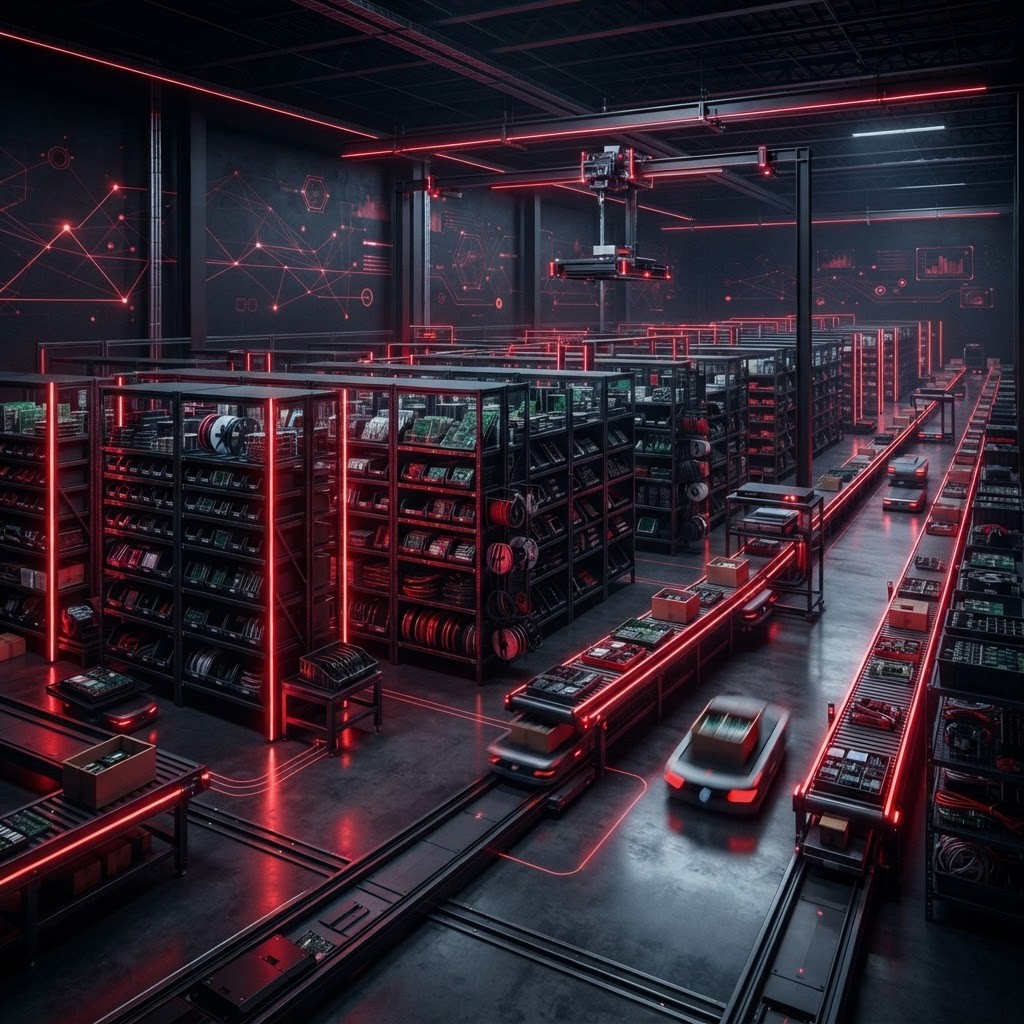
Why Electronics Distribution Matters in Washington
Washington's economy runs on electronics. Aerospace manufacturers embed avionics and sensors in every aircraft. Cloud and data center operators consume servers, networking gear, and power equipment at extraordinary scale. Medical device companies in Bothell and Redmond build precision instrumentation. Food processors and mills automate lines with controls and drives. Behind all of that sits a distribution layer that holds inventory, manages obsolescence, and gets parts to engineers quickly.
Electronics wholesalers in the state span several models. Global authorized distributors carry manufacturer franchises with guaranteed authenticity and full traceability. Industrial automation distributors focus on controls, sensors, and motion products with strong local technical support. IT and audiovisual distributors serve integrators and managed service providers. Independent brokers source hard-to-find and end-of-life parts. Each serves a genuinely different need, and mature buyers use more than one.
Top 10 Best Electronics Wholesalers in Washington
1. Digi-Key and Mouser Regional Fulfillment for Washington Engineers — Catalog distributors dominate prototype and low-volume component sourcing. Their value is breadth and speed: hundreds of thousands of line items, detailed technical data, and next-day availability that keeps engineering teams from stalling over a single component.
2. Arrow Electronics Northwest Operations — As a global authorized distributor, Arrow supports Washington manufacturers with franchised semiconductors, supply chain programs, and design engineering resources. Its strength is production-scale support, including scheduled deliveries, bonded inventory, and lifecycle management for long-production-run products.
3. Avnet and Production Component Distribution — Avnet offers similar franchised breadth with additional design services and embedded system support. Manufacturers value assistance navigating allocation periods, when securing semiconductors requires forecast discipline and distributor advocacy with suppliers.
4. Platt Electric Supply — With numerous Washington branches, Platt serves electrical contractors and industrial customers with wire, distribution equipment, lighting, controls, and automation products. Branch density and will-call convenience make it a daily resource for field teams.
5. North Coast Electric — A Pacific Northwest electrical and automation distributor, North Coast is known for industrial automation expertise including PLCs, drives, and networking. Their technical specialists frequently work directly on plant floors, which distinguishes them from pure fulfillment operations.
6. Turtle and Industrial Automation Specialists of the Puget Sound — Automation-focused distributors serve manufacturers upgrading legacy equipment. Their advantage is application engineering: recommending the right sensor, drive, or safety system and supporting commissioning rather than simply shipping a box.
7. Vitek and Regional Electronic Component Wholesalers — Mid-sized regional wholesalers stock connectors, passives, wire, and hardware with strong local service. They fill an important gap for small manufacturers whose volumes are too low for franchised programs but who still need reliable, consistent supply.
8. ScanSource and Technology Product Distributors Serving Washington VARs — Specialty technology distributors supply barcode, point-of-sale, networking, and communications hardware to resellers and integrators. They add configuration services, financing, and vendor certification support that channel partners depend on.
9. Independent Brokers and Obsolete Component Sourcing Firms — When a product has a fifteen-year service life and a component reaches end of life, brokers become essential. The best maintain rigorous counterfeit screening including documentation review, electrical testing, and decapsulation analysis when warranted.
10. Surplus and Refurbished Electronics Wholesalers of Seattle and Spokane — Surplus dealers supply test equipment, industrial controls, and IT hardware at reduced cost while extending equipment life. They serve budget-constrained buyers and support sustainability objectives by keeping usable hardware in circulation.
Authenticity and Counterfeit Risk
Counterfeit electronic components remain a genuine hazard, particularly for aerospace, medical, and defense applications where failure carries serious consequences. Buying through authorized channels is the strongest protection because it preserves an unbroken chain from manufacturer to buyer. When authorized stock is unavailable, insist on documented incoming inspection, verified traceability, and written testing reports. Establish these requirements as purchasing policy rather than negotiating them under schedule pressure.
Evaluating Wholesalers Beyond Price
Consider stocking programs, which allow a distributor to hold inventory against your forecast and release it as needed, smoothing cash flow and protecting against shortages. Assess lead time transparency, since accurate visibility is more valuable than optimistic promises. Review returns and warranty handling, technical support depth, and whether the distributor can support kitting or value-added services that reduce your internal handling. For contractors and integrators, branch proximity and after-hours availability often outweigh small price differences.
Trends in Electronics Distribution
Supply chain resilience remains the dominant theme after several years of semiconductor volatility, and buyers now routinely qualify alternate parts and hold strategic buffer stock. Automation demand continues to grow across Washington's food, wood products, and logistics sectors, expanding the industrial controls segment. Data center construction throughout Central and Eastern Washington drives sustained volume in power distribution, cooling controls, and networking. Finally, right-to-repair and circular economy pressure is increasing interest in refurbished equipment and long-term parts availability.
Washington buyers are well served by this ecosystem, but the advantage goes to those who plan. Share forecasts, build relationships before a crisis, and document sourcing requirements clearly, and distribution becomes a competitive strength rather than a recurring emergency.
