
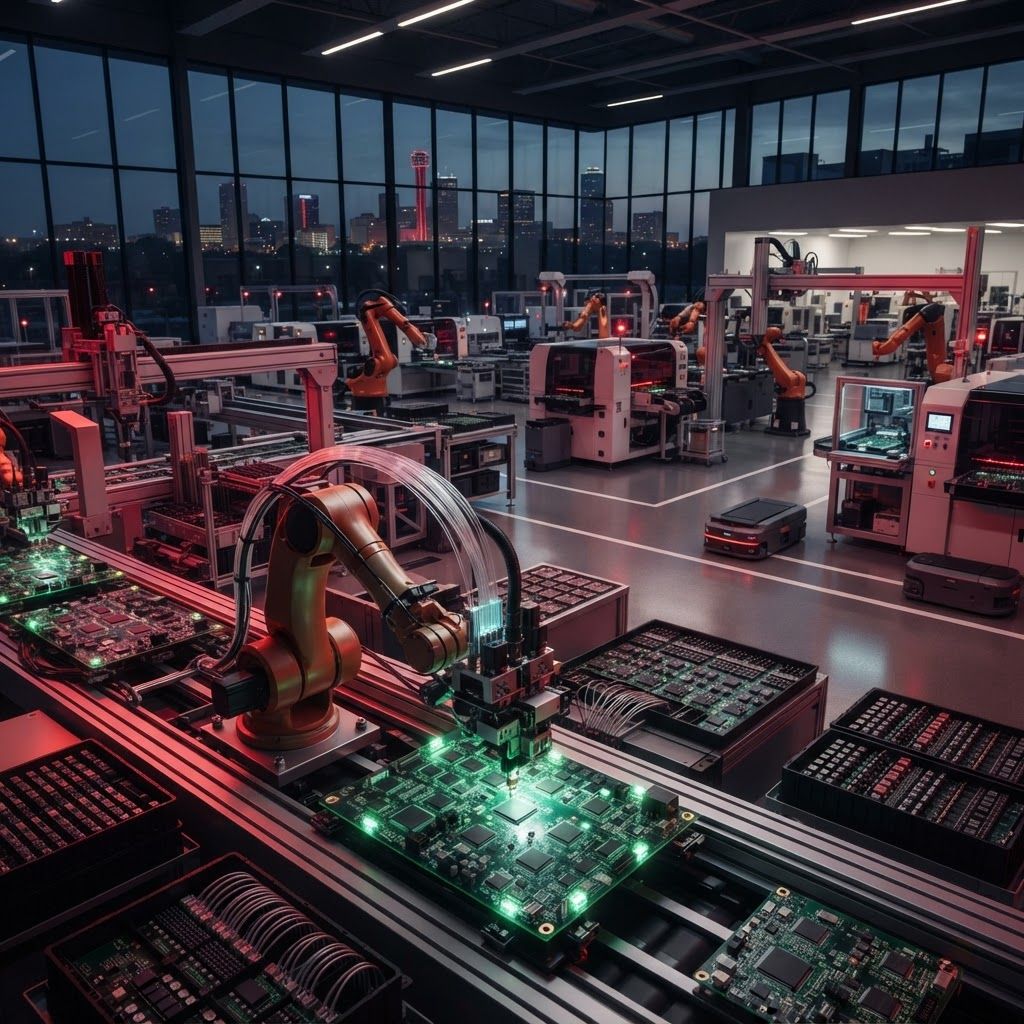
An Advanced Electronics Hub
Fort Worth is one of the country's most important aerospace and defense centers, and that concentration supports a sophisticated electronics ecosystem. Local and regional facilities work with avionics, sensors, communications equipment, embedded controls, rugged computers, printed circuit assemblies, and power systems. The area's engineering workforce, proximity to major airports, and access to the broader Dallas-Fort Worth technology corridor strengthen its appeal for complex programs.
The organizations below range from global prime contractors to specialized electronics companies serving North Texas. Buyers should distinguish original equipment design from contract manufacturing, repair, integration, and distribution. Certifications, cybersecurity, component traceability, counterfeit prevention, and lifecycle support are especially important in regulated markets.
1. Lockheed Martin
Lockheed Martin's Fort Worth operation is central to advanced military aircraft production. Electronics are deeply integrated into these platforms through avionics, mission systems, sensors, communications, and flight controls. The company stands out for large-scale systems integration, rigorous program management, and work under demanding defense standards. Its presence also sustains a network of electronics suppliers and engineering firms across the region.
2. Bell Textron
Fort Worth-based Bell develops and manufactures helicopters and advanced vertical-lift aircraft. Its products depend on flight-control electronics, displays, navigation, communications, and integrated mission technologies. Bell's differentiator is the combination of aircraft engineering, manufacturing, testing, and long-term support. Suppliers seeking aerospace work must be prepared for strict documentation, configuration control, and traceability.
3. Elbit Systems of America
Headquartered in Fort Worth, Elbit Systems of America develops defense and homeland-security technologies, including avionics, night-vision systems, sensors, communications, and sustainment solutions. The company combines local engineering with broader international technology resources. Its focus on mission-critical performance makes quality assurance, secure supply chains, and environmental testing core parts of its manufacturing approach.
4. BAE Systems
BAE Systems maintains a significant presence in the North Texas defense technology community. Its electronics activities include advanced controls, electronic warfare, communications, and aircraft-related systems. The company's strengths include deep domain expertise and experience supporting long-life government programs. For subcontractors, success typically requires strong process discipline and the ability to manage controlled technical information.
5. Raytheon
Raytheon, part of RTX, has major operations in the Dallas-Fort Worth region and is known for radar, sensors, communications, missiles, and integrated defense electronics. Its programs demand high-reliability components and tightly managed production. The organization is an important regional customer for precision electronics, testing, machining, and engineering services. Suppliers benefit from mature quality systems and robust obsolescence planning.
6. Nokia
Nokia's North Texas presence connects the region to telecommunications infrastructure, networking equipment, and research. While specific manufacturing footprints evolve, the company remains influential in the local electronics and communications talent market. Its work highlights trends such as network automation, energy-efficient hardware, and software-defined systems. Businesses seeking communications technology should evaluate interoperability and lifecycle support alongside hardware capability.
7. Sanmina
Sanmina is a global electronics manufacturing services company with capabilities relevant to North Texas aerospace, defense, communications, medical, and industrial customers. Services can span printed circuit board assembly, complex systems, engineering, and supply-chain management. Its scale and regulated-industry experience are key differentiators. Buyers should match a program's volume and complexity to the most appropriate facility and service model.
8. Flex
Flex is a major contract design and manufacturing organization serving numerous technology sectors. The company's regional supply-chain reach makes it a useful benchmark for businesses seeking product engineering, manufacturing, and logistics at scale. Flex differentiates through a broad global footprint and experience moving products from design to volume production. Smaller customers should clarify minimum volumes and program onboarding requirements.
9. Benchmark Electronics
Benchmark Electronics supports complex products in aerospace, defense, medical, semiconductor, and industrial markets. Its capabilities include design engineering, electronics assembly, precision technologies, and testing. For Fort Worth companies developing high-mix, lower-volume equipment, Benchmark's regulated-market experience can be especially relevant. Detailed design-for-manufacturability collaboration helps reduce risk before production begins.
10. Creation Technologies
Creation Technologies provides electronics manufacturing services for original equipment manufacturers, including design, printed circuit assembly, system integration, and after-market support. Its model is suited to customers seeking a collaborative manufacturing partner rather than a component catalog. Buyers should examine engineering depth, test development, sourcing controls, and the facility's experience with their required regulatory environment.
Evaluating Electronics Manufacturers
Start by defining product maturity, expected annual volume, compliance needs, test strategy, intellectual-property controls, and component risk. Ask prospective manufacturers about quality certifications, traceability, first-article processes, engineering-change control, and business continuity. In 2026, resilient sourcing, cybersecurity, export compliance, and component obsolescence remain major concerns. Fort Worth companies gain an advantage from proximity to deep aerospace expertise, but the best partner will be the one that provides transparent communication and repeatable quality from prototype through sustainment. A useful final audit should also cover test-data retention, warranty response, capacity during demand surges, and plans for redesign when critical components reach end of life. Visiting the production floor can reveal process discipline, workforce engagement, and material controls that are difficult to judge from a quotation alone.
