
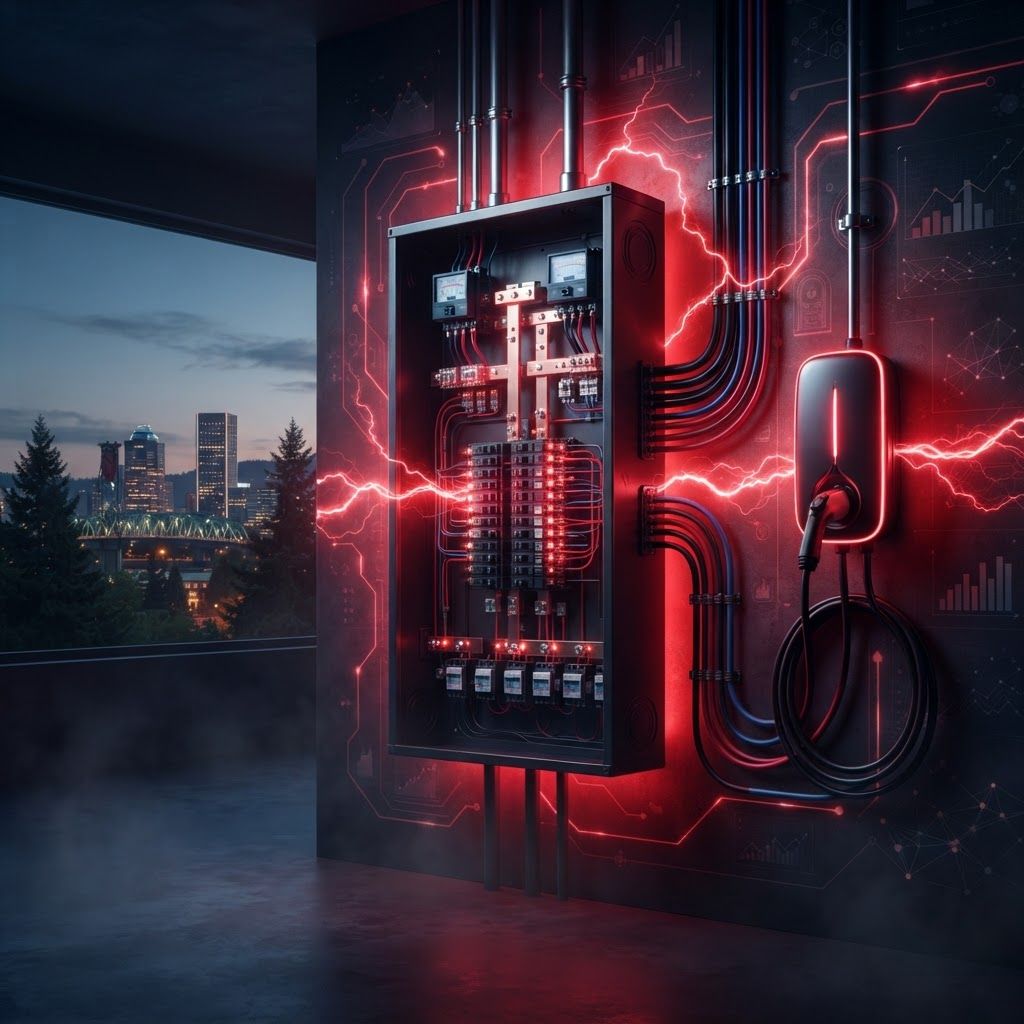
Why Electrical Capacity Became Portland's Quiet Bottleneck
Electrical work used to be an occasional home concern. Now it is often the first constraint on a renovation. Portland's older housing stock frequently still contains original knob-and-tube wiring, cloth-insulated conductors, ungrounded two-prong outlets, and service panels rated at 60 or 100 amps. Those systems were designed for a household with a few lights, a radio, and a refrigerator, not for a modern home running a heat pump, induction range, heat pump water heater, EV charger, home office equipment, and a full kitchen of appliances.
The regional push toward electrification has accelerated the collision. A homeowner who wants to replace a gas furnace with a heat pump and add a level 2 EV charger may discover both projects hinge on a service upgrade. Understanding that sequence early prevents stalled remodels and surprise costs midway through a project.
Understanding Panels, Load, and Service Upgrades
Two things determine electrical headroom: total service capacity in amps and available physical breaker space. A panel can be full of breakers while the service still has capacity, or the reverse. A qualified electrician performs a load calculation that accounts for square footage, heating and cooling equipment, major appliances, and continuous loads such as EV charging, then compares that to your existing service.
Solutions are not always a full service upgrade. Load management devices can allow an EV charger to share capacity with other large loads by pausing charging when demand spikes. Subpanels can add breaker space without changing service size. Circuit consolidation and dedicated circuits for high-draw appliances often resolve nuisance tripping without major work. A good electrician presents the least invasive option that actually solves the problem, and explains when a full upgrade genuinely is the right call.
Safety Issues That Deserve Immediate Attention
Some conditions are urgent rather than optional. Federal Pacific Stab-Lok and Zinsco panels have documented breaker failure histories and are widely recommended for replacement. Aluminum branch wiring from the mid-century period requires proper connectors at every termination. Ungrounded outlets near water, missing GFCI protection in kitchens, bathrooms, garages, and exteriors, and missing arc-fault protection in bedrooms are all code-driven safety items. Warm outlets, buzzing switches, flickering under load, scorch marks, and repeated breaker trips should never be ignored or reset repeatedly.
Smoke and carbon monoxide alarm requirements also matter. Interconnected alarms with proper placement significantly outperform scattered battery units, and most electricians can address this inexpensively during other work.
Top 10 Best Electricians in Portland
1. Rose City Electric
A residential-focused contractor known for panel upgrades, knob-and-tube replacement, and clear load calculations. Detailed written scopes and neat panel labeling are frequently praised by clients.
2. Bridgetown Power Systems
Specializes in service upgrades, subpanels, and electrification readiness for heat pumps and induction cooking. The team coordinates directly with HVAC contractors and utility scheduling.
3. Willamette EV & Energy
Concentrated on level 2 EV charger installation, load management devices, and solar-ready wiring. Familiarity with incentive programs and permitting across multiple jurisdictions is a notable strength.
4. Cascade Electrical Contractors
A full-service firm handling residential remodels and light commercial tenant improvements. Depth of licensed staff supports larger scopes and reliable inspection scheduling.
5. Stumptown Rewire Specialists
Focused on whole-home rewiring in older houses, working carefully within plaster walls to minimize damage. Restoration planning and dust containment are built into its process.
6. Northwest Safety Electric
Known for diagnostic troubleshooting, hazardous panel replacement, and GFCI and AFCI retrofits. The company leads with inspection reports that prioritize issues by risk level.
7. Alberta Lighting & Electric
Specializes in interior and exterior lighting design, including recessed layouts, undercabinet systems, landscape lighting, and dimming controls. Clients value the attention to light quality and glare control.
8. Columbia Commercial Electric
Serves small commercial properties, multifamily buildings, and mixed-use spaces with code compliance, emergency lighting, and panel maintenance. Property managers cite dependable documentation.
9. Evergreen Smart Home Electric
Combines electrical work with structured wiring, networking, and smart device integration. Useful for clients planning automation, security, or whole-home audio alongside electrical upgrades.
10. Hawthorne Heritage Electric
A small team dedicated to historic homes, balancing modern safety requirements with preservation of original finishes and fixtures. Frequently referred for period properties under design review.
Trends in Residential Electrical Work
Four developments are shaping demand. Electrification of heating, cooking, and water heating is driving service upgrades at scale. Bidirectional EV charging and home battery storage are moving from novelty toward practical backup power, particularly after regional storm outages. Load management technology is reducing the need for expensive service increases. And LED lighting with tunable color temperature and quality dimming has raised expectations for lighting design in ordinary remodels.
Budgeting and Verifying Your Contractor
Always confirm that both the business and the individual performing work are properly licensed in Oregon, and that the company carries bonding and general liability coverage. Permits and inspections are your protection, not bureaucratic friction. Any contractor who suggests skipping a permit on panel or service work is transferring risk to you and jeopardizing future insurance claims and resale disclosures.
Costs vary widely. Small circuit additions and fixture work sit at the low end. Panel replacements are moderate. Full service upgrades involving utility coordination, meter base, and mast work cost more. Whole-home rewires are the largest residential electrical projects and should always include a written plan for wall repair. Compare bids on scope, materials, permit inclusion, and warranty rather than on headline totals.
Final Thoughts
Electrical upgrades are the least glamorous and most consequential improvements many Portland homes need. They reduce fire risk, unlock heat pumps and EV charging, and remove obstacles that would otherwise stall a remodel. Start with a professional load calculation and safety inspection, address hazardous conditions first, and choose a licensed electrician who documents work clearly and pulls permits without being asked.
