
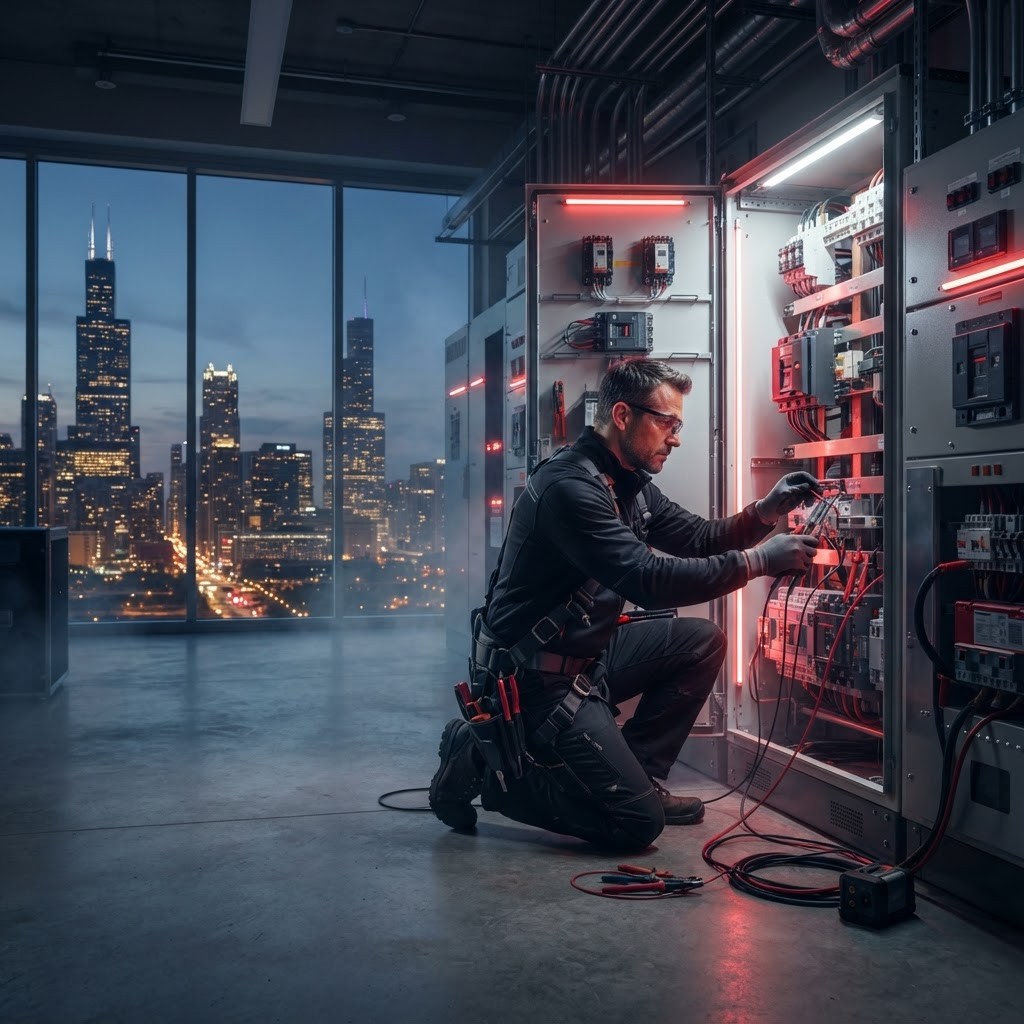
Electrical Work in a Demanding Market
Electrical systems are becoming more important as buildings adopt electric heating, vehicle charging, renewable energy, automation, and expanding data infrastructure. Chicago contractors must combine code knowledge, safe work practices, accurate coordination, and dependable commissioning. The firms below range from major commercial specialists to established service providers, so project fit should guide every shortlist.
1. Continental Electrical Construction Company
Continental Electrical Construction Company is a major Chicago electrical contractor serving commercial, institutional, industrial, and mission-critical projects. Its capabilities include construction, service, technology, energy solutions, and complex power systems. Scale and technical depth make it relevant to projects requiring extensive manpower and formal project controls.
2. Gurtz Electric
Gurtz Electric has longstanding Chicago-area experience in electrical construction and service. The company works across healthcare, commercial, industrial, and institutional markets. Its familiarity with complicated facilities and active environments supports phased upgrades where safety and operational continuity are critical.
3. Kelso-Burnett
Kelso-Burnett is an established electrical contractor serving commercial, industrial, institutional, and transportation clients. The firm offers construction, maintenance, and specialized electrical capabilities. A long regional presence provides knowledge of local labor, facilities, and project requirements.
4. Jamerson & Bauwens Electrical Contractors
Jamerson & Bauwens is recognized for electrical work in healthcare, data, commercial, and institutional environments. The contractor’s experience with critical systems suits facilities where reliability, testing, and detailed documentation matter. Early involvement can help teams coordinate power, equipment, and controls before installation.
5. Meade
Meade provides electrical, infrastructure, and utility services in the Chicago region. Its work includes transportation, traffic systems, power, and large-scale electrical construction. The company’s infrastructure capabilities distinguish it from contractors focused mainly on building interiors.
6. Gibson Electric
Gibson Electric delivers electrical and telecommunications services for commercial and institutional projects. The firm is experienced with sophisticated workplace, high-rise, hospitality, and technology requirements. Coordinating power and low-voltage systems through one experienced team can simplify dense interior installations.
7. Aldridge Electric
Aldridge Electric is a large contractor with expertise in power, transportation, industrial, and infrastructure markets. Its capabilities cover complex utility and mission-critical assignments that demand disciplined safety and planning. The company is particularly relevant where electrical construction extends beyond a conventional building footprint.
8. Maron Electric Company
Maron Electric serves Chicago with electrical construction, maintenance, and service for commercial and institutional clients. Its local experience supports responsive work in existing buildings as well as new projects. Facility managers often need contractors that can troubleshoot immediate issues while planning durable upgrades.
9. Kellenberger Electric
Kellenberger Electric provides residential and commercial electrical service in Chicago and nearby communities. Typical work includes repairs, panel upgrades, lighting, wiring, and code corrections. For homeowners, careful load calculations and a clear understanding of existing conditions are essential before adding major electric equipment.
10. Highlights Chicago
Highlights Chicago focuses on electrical service, lighting, and residential or light-commercial improvements. The company is relevant for owners planning fixture upgrades, troubleshooting, or modernization. A qualified electrician should explain protection devices, circuit capacity, and any code implications associated with the proposed work.
Electrical Industry Trends
Electrification is driving demand for service upgrades, heat pumps, induction equipment, and electric-vehicle charging. Commercial projects are adding intelligent lighting controls, energy monitoring, battery systems, and resilient backup power. Prefabricated assemblies and digital coordination can reduce field congestion, while thermal scanning and predictive maintenance help identify risks before failure.
Choosing Safely and Strategically
Confirm licensing, insurance, safety performance, and experience with the specific occupancy and voltage involved. Ask who will engineer or permit the work, how shutdowns will be planned, and what testing and labeling are included. Commercial owners should review commissioning, as-built documentation, and training. Homeowners should insist on written scope and permits where required. The best electrical contractor provides a safe installation, communicates operational impacts, and leaves a system that future technicians can understand.
Planning for a Successful Chicago Project
Before work starts, owners should document existing conditions and define who is responsible for design, permits, material selections, access, protection, inspections, and final cleanup. Chicago schedules should account for building management rules, neighborhood constraints, seasonal weather, and products with long manufacturing lead times. It is wise to keep a reasonable contingency for concealed conditions, especially in older properties. Written meeting notes, current drawings, approved samples, and a shared decision log reduce misunderstandings as work progresses.
References are most useful when they come from recent projects with a similar building type and scope. Ask those clients whether the team maintained the site, communicated upcoming decisions, handled changes fairly, and returned promptly for closeout items. Review the contract carefully and avoid relying on verbal assumptions. Payment milestones should correspond to verifiable progress, while warranties should identify both covered work and the process for requesting service. Finally, remember that a ranked list is a starting point rather than a substitute for due diligence. Availability, staffing, and company focus can change. Interview multiple qualified providers, compare equivalent scopes, verify current credentials, and choose the team that demonstrates technical competence, transparent communication, and a realistic understanding of the project.
