
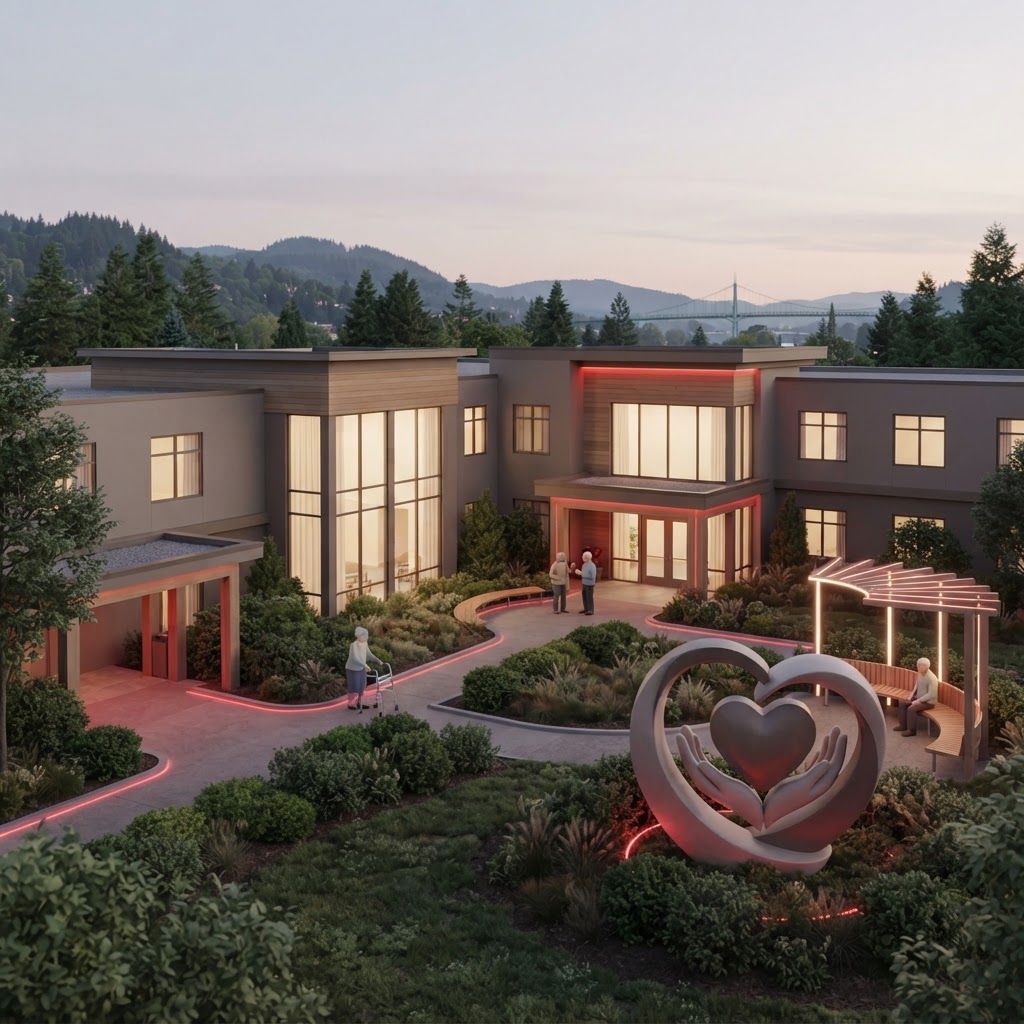
Understanding Senior Care Options in Portland
Portland's senior living landscape spans a wide spectrum, and the terminology matters. Independent living communities provide housing, meals, and social programming for older adults who manage daily tasks on their own. Assisted living adds help with bathing, dressing, medication management, and mobility. Memory care offers secured environments and specialized staffing for residents living with Alzheimer's disease or other forms of dementia. Skilled nursing facilities deliver round-the-clock licensed clinical care.
Oregon has historically been recognized for progressive long-term care policy, including a strong emphasis on community-based alternatives to institutional nursing homes. That legacy shows in Portland, where many communities are designed around residential-scale buildings, private apartments, and resident autonomy rather than hospital-style corridors.
Ten Highly Regarded Elderly Care Communities
1. Terwilliger Plaza
A resident-governed continuing care retirement community near downtown Portland, Terwilliger Plaza is notable for its cooperative structure, which gives residents meaningful influence over operations. The campus offers independent living with access to higher levels of care as needs change, along with a strong calendar of lectures, fitness classes, and arts programming.
2. Rose Villa Senior Living
Located in Oak Grove along the Willamette River, Rose Villa is widely cited as a model for the small-house senior living movement. Rather than a single large building, it is arranged as a walkable neighborhood of cottages and apartments with a town center, performance space, and gardens. Its design philosophy prioritizes independence, outdoor access, and intergenerational community connection.
3. Cedar Sinai Park
Cedar Sinai Park serves Southwest Portland with a continuum that includes assisted living, memory care, rehabilitation, and long-term nursing care. Rooted in Jewish tradition while welcoming residents of all backgrounds, the organization is recognized for culturally attentive care, kosher dining options, and a mission-driven nonprofit structure.
4. Holladay Park Plaza
Situated in Northeast Portland's Lloyd District, Holladay Park Plaza appeals to seniors who want to stay in an urban setting with transit access, restaurants, and cultural venues nearby. The high-rise community combines independent living apartments with on-site health services, dining venues, and a fitness and aquatic center.
5. Mirabella Portland
Mirabella occupies a striking high-rise in the South Waterfront district and is known for its environmentally focused construction and city views. Residents benefit from proximity to major medical institutions, an on-site clinic, multiple dining rooms, and a robust wellness program. It typically attracts active retirees seeking a walkable, amenity-rich lifestyle.
6. Marquis Companies
Marquis operates multiple post-acute and long-term care locations throughout the Portland region. The organization is often selected for rehabilitation after hospitalization, with therapy gyms, on-site pharmacy services, and care coordination designed to support recovery and safe transitions home when possible.
7. Avamere Living
Avamere maintains a substantial Portland-area footprint spanning assisted living, memory care, rehabilitation, and skilled nursing. Its scale allows for standardized clinical protocols and internal therapy services, which families frequently value when a loved one requires complex medical oversight alongside daily assistance.
8. Brookdale Senior Living
With several communities across the metro area including Beaverton, Hillsboro, and Southeast Portland, Brookdale offers assisted living and memory care with structured programming and predictable service tiers. Its consistency and geographic spread make it a practical option for families who want to keep a parent near a specific neighborhood.
9. Russellville Park Retirement Community
Located in Southeast Portland, Russellville Park provides independent living, assisted living, and memory care on a single campus. Families often highlight the ability to transition between levels of care without relocating to an entirely new community, which reduces disruption for residents with progressing needs.
10. Courtyard Village at Raleigh Hills
Courtyard Village serves Southwest Portland with a smaller-scale, community-focused environment. Its size supports familiarity between staff and residents, and programming tends to emphasize social dining, day trips, and personalized activity planning rather than large-group scheduling.
What Portland Families Should Evaluate
Begin with a clinical assessment. A physician, geriatric care manager, or hospital discharge planner can define whether the need is assistance with daily living, memory support, or licensed nursing care. Selecting a community that cannot meet future needs is the most common and costly mistake families make.
Then review state records. Oregon's Department of Human Services publishes licensing and inspection information for long-term care settings, and reviewing recent findings provides an objective counterweight to marketing materials. Ask specifically about staffing ratios during evenings and weekends, caregiver turnover rates, and how the community handles falls, wandering, and medical emergencies.
Cost and Financial Planning
Portland senior living costs vary substantially by care level and location. Independent living generally carries the lowest monthly rate, while memory care and skilled nursing sit at the upper end because of staffing intensity. Families should clarify what the base rate includes, how care-level surcharges are assessed, how often rates increase, and what triggers a mandatory move to a higher level of care.
Funding sources may include private savings, long-term care insurance, veterans benefits, and Medicaid for qualifying residents. Because Oregon supports community-based care through its Medicaid program, some assisted living and adult foster homes accept Medicaid, though availability is limited and waitlists are common.
Touring Effectively
Visit at least twice, once scheduled and once unannounced during a mealtime. Observe whether residents appear engaged, whether call lights are answered promptly, and whether staff address residents by name. Smell and noise levels are meaningful indicators. Talk with residents and their visiting family members directly, since they provide the most candid assessment available.
Final Thoughts
Portland offers an unusually strong range of senior living models, from cooperative high-rises downtown to cottage neighborhoods along the river. The right choice depends on medical needs, financial reality, and the personality of the person moving in. Prioritize communities that plan for changing needs, communicate clearly about cost, and treat resident dignity as a daily operational standard rather than a marketing phrase.
