
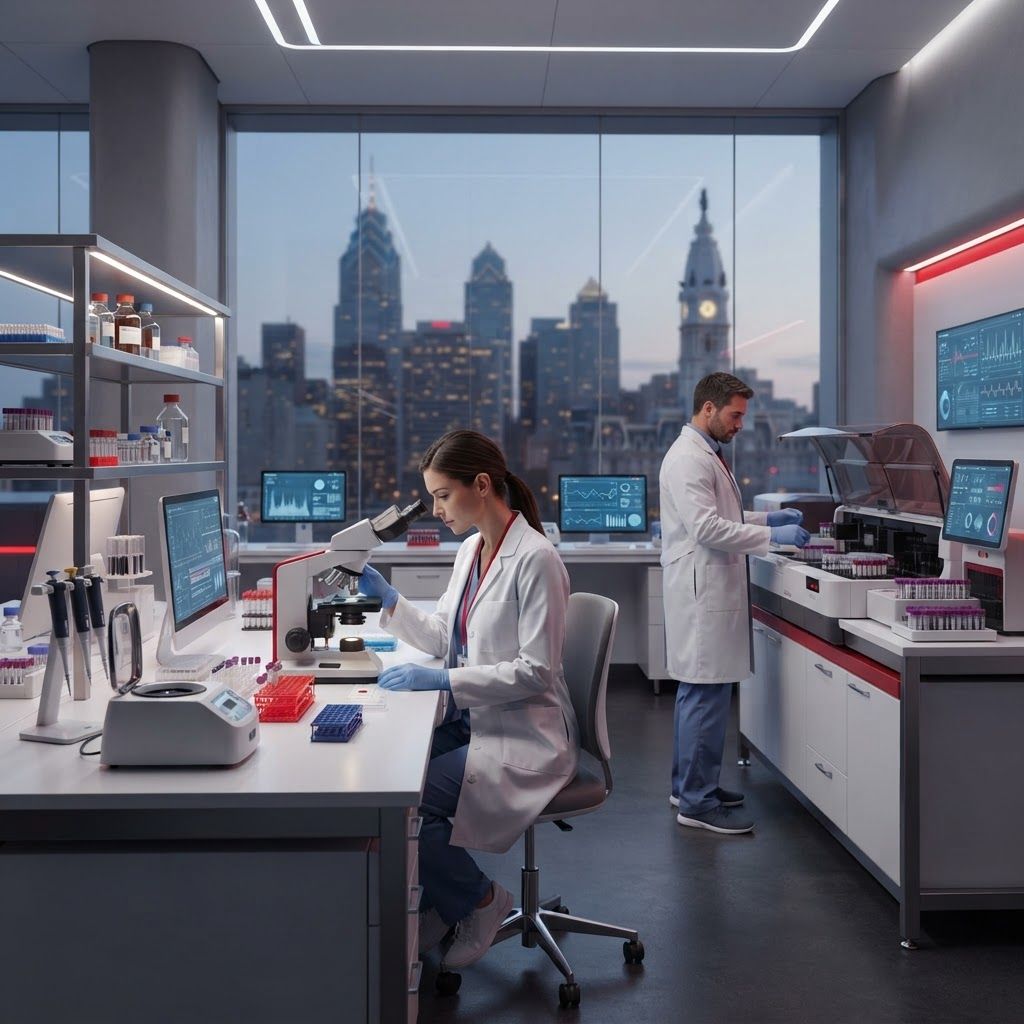
Choosing a Diagnostic Lab in Philadelphia
Accurate laboratory results influence everything from preventive care to complex treatment decisions. Philadelphia patients benefit from major academic health systems, neighborhood collection sites, and national laboratories with broad test menus. The best choice depends on the test ordered, insurance participation, turnaround expectations, and whether a specialist must interpret unusual findings. The following providers stand out for capability, reputation, or practical access across the region.
1. Penn Medicine Laboratories
Penn Medicine supports routine and highly specialized testing through one of the country’s leading academic medical systems. Its laboratories are especially valuable when results must coordinate with Penn physicians, oncology teams, transplant programs, or genetic specialists. Advanced pathology expertise and integration with complex clinical care distinguish the service, while multiple outpatient locations make common bloodwork more convenient.
2. Jefferson Clinical Laboratories
Thomas Jefferson University Hospital operates comprehensive clinical laboratories serving primary, emergency, and specialty care. The system’s central Philadelphia footprint is convenient for residents and commuters, and its academic environment supports sophisticated microbiology, molecular diagnostics, hematology, and surgical pathology. Patients already receiving Jefferson care benefit from streamlined record sharing and clinician access to results.
3. Children’s Hospital of Philadelphia Laboratories
Children’s Hospital of Philadelphia provides pediatric-focused diagnostics backed by deep subspecialty knowledge. Age-specific reference ranges, child-centered collection practices, and expertise in rare diseases make CHOP particularly important for families managing complicated conditions. Many services are tied to hospital care or specialist referrals, so families should confirm collection requirements before visiting.
4. Temple University Hospital Laboratories
Temple’s laboratory network supports a diverse North Philadelphia patient population and a wide range of specialty programs. Services include routine chemistry and blood counts as well as pathology, infectious disease testing, and other advanced diagnostics. Integration with Temple clinicians can simplify follow-up, especially for patients receiving ongoing care for chronic or complex conditions.
5. Quest Diagnostics
Quest Diagnostics is a practical option for routine physician-ordered testing, with numerous patient service centers across Philadelphia and nearby suburbs. Its broad insurance participation, appointment tools, extensive test catalog, and standardized processing appeal to patients seeking predictable access. Availability varies by location, and checking preparation instructions is important because some tests require fasting or timed collection.
6. Labcorp
Labcorp combines a national testing infrastructure with convenient regional collection sites. It performs common wellness panels, therapeutic monitoring, occupational tests, women’s health diagnostics, and many specialized assays. Digital result access is useful for patients who track longitudinal health information, although results should always be interpreted with the ordering clinician rather than viewed in isolation.
7. Main Line Health Laboratories
Main Line Health offers hospital-based and outpatient laboratory services throughout the western Philadelphia region. The network is attractive to patients who use Lankenau Medical Center, Bryn Mawr Hospital, Paoli Hospital, or Riddle Hospital. Coordinated records, community locations, and access to system specialists help bridge routine testing and higher-acuity care.
8. Einstein Medical Center Philadelphia Laboratory
Now part of Jefferson Health, Einstein’s laboratory services remain an important resource for North Philadelphia and surrounding communities. The hospital setting supports urgent, inpatient, and specialty diagnostics, while outpatient services serve patients managing ongoing conditions. Its connection to a broad clinical network is a meaningful advantage when abnormal findings require prompt escalation.
9. Fox Chase Cancer Center Pathology and Laboratory Medicine
Fox Chase is best known for cancer-focused diagnostics rather than everyday screening. Its pathologists and laboratory specialists evaluate tumors, biomarkers, blood disorders, and treatment-related changes. For oncology patients, specialized interpretation and close collaboration with multidisciplinary cancer teams can be as important as the test technology itself.
10. Philadelphia FIGHT Jonathan Lax Treatment Center Laboratory Services
Philadelphia FIGHT delivers community-centered care with particular strength in HIV care and services for medically underserved populations. Laboratory access is integrated into broader clinical programs, helping patients complete monitoring and follow-up within a supportive setting. The organization’s emphasis on dignity, continuity, and reduced barriers differentiates it from a conventional collection center.
What to Compare Before Booking
Confirm that both the facility and specific test are covered by insurance, since network status can differ. Ask whether an appointment is required, how to prepare, when results are expected, and who will explain them. For genetic, oncologic, pediatric, or rare-disease testing, prioritize specialty expertise and care-team integration. For routine panels, location, hours, wait times, and electronic result delivery may matter most.
Philadelphia Diagnostic Trends
Local laboratories are expanding molecular testing, digital pathology, automation, and personalized diagnostics. At the same time, health systems are improving neighborhood access and electronic coordination. No single laboratory is ideal for every patient, but Philadelphia’s combination of academic medicine and convenient national networks gives residents strong options across nearly every level of diagnostic need.
