
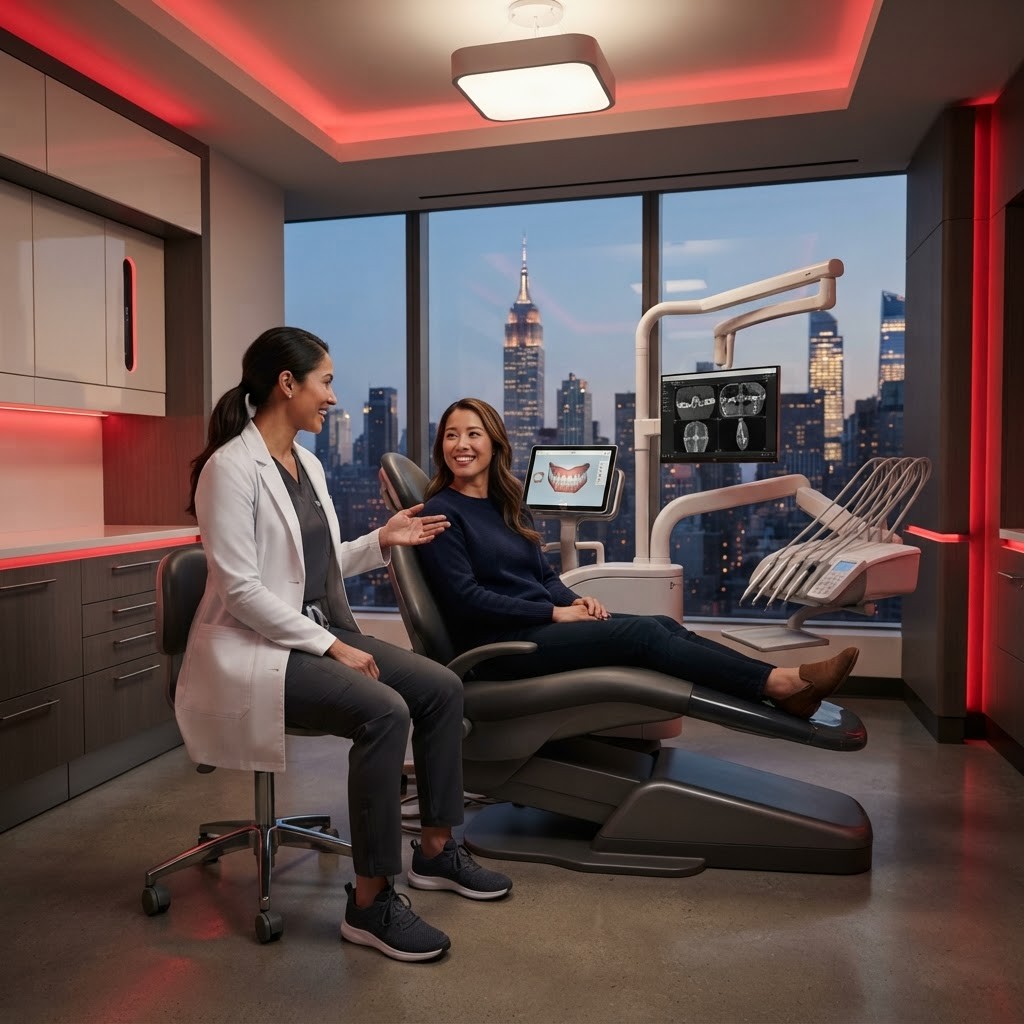
Choosing Dental Care in New York
A strong dental clinic combines preventive care, clear diagnosis, appropriate treatment, infection control, transparent pricing, and a plan for long-term oral health. New York patients can choose among academic centers, private group practices, community clinics, and specialty offices. Location is important, but clinical fit and continuity should carry greater weight than décor or marketing.
This list highlights established institutions and multi-provider practices with different strengths. It is informational, not dental advice or a guarantee of outcomes. Verify credentials, current services, insurance participation, and costs directly. Dental emergencies involving swelling, trauma, uncontrolled bleeding, fever, or difficulty breathing or swallowing require prompt professional evaluation.
1. NYU College of Dentistry
NYU College of Dentistry operates one of the country’s largest academic dental care environments. Patients may access general and specialty services delivered by supervised students, residents, and faculty, depending on the clinic. Academic care can be cost-conscious and comprehensive, though appointments may take longer. It is particularly useful for patients comfortable with a teaching setting.
2. Columbia University College of Dental Medicine
Columbia’s dental clinics provide general care and specialty treatment within an academic medical environment. Programs may include orthodontics, periodontics, endodontics, prosthodontics, pediatric dentistry, and oral surgery. Connection with broader medical expertise can help patients with complex health histories. Intake routes, fees, and provider levels differ by clinic.
3. New York City College of Technology Dental Hygiene Clinic
The City Tech Dental Hygiene Clinic offers supervised preventive services in an educational setting. Care may include cleanings, assessments, radiographs, and oral hygiene instruction within the program’s scope. Visits can be longer than at a private practice, but detailed preventive attention and accessible fees may appeal to suitable patients.
4. Tend
Tend brings a modern, hospitality-oriented approach to dentistry through multiple city studios. Services commonly include examinations, hygiene, restorative work, cosmetic care, and selected specialty treatment. Digital scheduling and consistent branding create a streamlined experience. Patients should still evaluate the individual clinician’s approach, treatment rationale, and long-term continuity.
5. dntl bar
Dntl bar operates multiple New York practices designed around convenient scheduling and contemporary general dentistry. Preventive, restorative, emergency, and cosmetic services may be available depending on location. The model suits busy residents who value digital access and neighborhood options. As with any group, confirm which dentist will provide care and how follow-up is coordinated.
6. Dental365
Dental365 is a regional network offering general, emergency, cosmetic, and specialty dental services at numerous metropolitan locations. Broad hours and multiple offices can be useful when a problem arises outside a traditional schedule. Patients should confirm whether their needed specialist is on site and request written cost estimates for extensive work.
7. Manhattan Dental Arts
Manhattan Dental Arts provides general, restorative, and cosmetic dentistry in a group-practice setting. Its service range can support patients seeking routine maintenance alongside implants, crowns, or appearance-focused treatment. For elective cosmetic work, patients should discuss alternatives, tooth preservation, maintenance needs, and realistic outcomes before committing.
8. Expert Dental
Expert Dental offers general and specialty services in Manhattan, with care spanning routine exams, restorative procedures, emergencies, and cosmetic options. Access to multiple disciplines can reduce outside referrals. A good consultation should include diagnostic evidence, options, risks, expected longevity, and a phased plan when several issues need attention.
9. Charles B. Wang Community Health Center Dental Services
Charles B. Wang Community Health Center includes dental care within a broader community health model. Culturally responsive services and language access can improve understanding and trust. Community clinics are particularly important for preventive access and coordinated care. Eligibility, appointments, and available procedures should be checked with the current program.
10. Ryan Health Dental Services
Ryan Health provides dental services as part of its network of community health centers. The integrated model can help patients coordinate oral health with primary and behavioral healthcare. Depending on site capacity, services may focus on preventive and general treatment with referral pathways for complex needs. Patients should ask about sliding-fee arrangements and accepted coverage.
Questions to Ask a Dentist
Ask what findings are urgent, what can be monitored, and which alternatives preserve the most healthy tooth structure. Request to see relevant images and understand the diagnosis. For crowns, implants, aligners, veneers, or extensive rehabilitation, discuss materials, stages, healing, maintenance, complications, total fees, and what happens if plans change.
Check licensure and specialty credentials, sterilization practices, accessibility, emergency coverage, and insurance details. Be cautious of pressure to begin irreversible elective work immediately without a clear explanation. The best New York dental clinic is not necessarily the largest or most luxurious; it is the practice where clinicians communicate honestly, prioritize prevention, document care carefully, and build a sustainable plan for lifelong oral health. Regular home care remains essential between appointments: follow individualized brushing and interdental-cleaning guidance, limit frequent sugar exposure, and report new pain, sensitivity, swelling, or a damaged restoration before a minor concern becomes harder to treat.
