
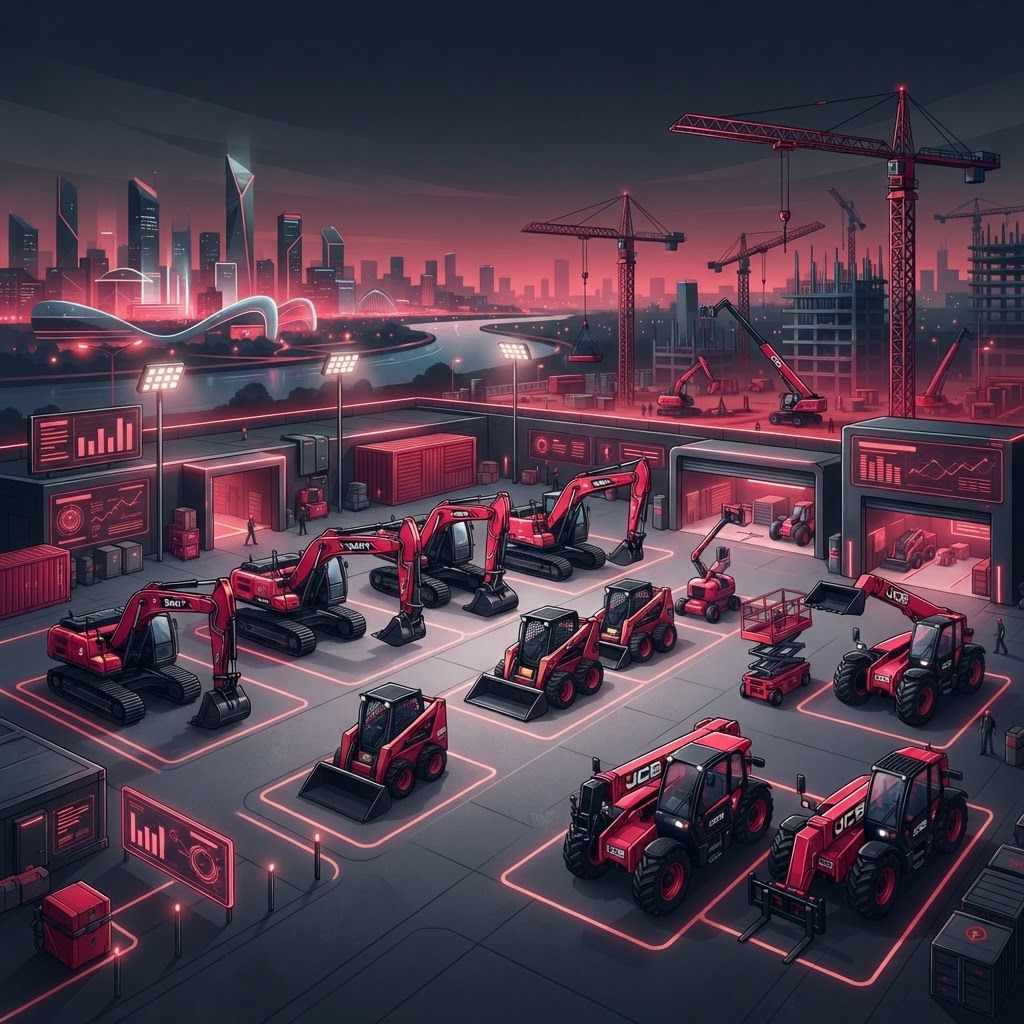
Louisville as a Construction and Logistics Hub
Louisville sits at the intersection of interstate freight routes, river commerce, and one of the busiest air cargo operations in the world. That combination has driven sustained demand for warehouse space, distribution facilities, healthcare expansion, and residential development throughout Jefferson County and surrounding communities. Contractors working in this environment need equipment on short notice, and few can justify owning every machine a project might require.
Renting has become a core strategy rather than a fallback. It converts capital expense into predictable project cost, transfers maintenance responsibility to the supplier, and gives crews access to newer machines with better fuel efficiency and updated safety systems. For specialty tasks such as trenching, concrete cutting, or high-reach work, renting is often the only sensible option.
Leading Equipment Rental Providers in the Area
Sunbelt Rentals operates multiple locations serving the metro and carries one of the broadest catalogs available locally, spanning earthmoving, aerial lifts, power generation, climate control, and pumping. Contractors value the depth of inventory during peak season when a single unavailable machine can stall an entire schedule.
United Rentals brings national purchasing power and a highly structured fleet management program, which generally means newer machines and reliable telematics data. Its specialty divisions cover trench safety, power and HVAC, and tool solutions, making it a practical single source for large general contractors managing multiple concurrent sites.
Brandeis Machinery and Supply Company has deep regional roots and serves both rental and dealer functions. Because the company supports major heavy equipment lines, its technicians are factory trained on the exact machines being rented, which shortens downtime when a hydraulic or electronic fault appears mid-project.
Whayne Walker CAT is the go-to source for heavy earthmoving in the region. Rental customers gain access to well-maintained dozers, excavators, and articulated trucks, along with parts availability and field service coverage that matters most on schedule-critical sitework.
H and E Equipment Services focuses heavily on aerial work platforms, telehandlers, and earthmoving, with a service model built around rapid response. It is a common choice for steel erection, roofing, and mechanical trades that live on boom lifts and rough terrain forklifts.
Herc Rentals combines a large general fleet with pro solutions groups covering power, climate, and remediation. Its presence is particularly useful for industrial maintenance shutdowns and disaster recovery work where temporary power and dehumidification must arrive quickly.
Ohio Valley Goodwill Equipment and similar regional independents fill an important niche for smaller contractors and serious homeowners, offering compact machines, mini excavators, skid steers, and towable attachments at accessible day rates with less administrative overhead.
Bobcat of Louisville specializes in compact equipment and attachments, which suits urban infill work, landscaping contractors, and interior demolition where machine footprint is the limiting constraint. Attachment breadth is a genuine differentiator, from augers and breakers to grapples and mulching heads.
Blue Grass Rental serves the light equipment and homeowner segment with tools, compaction equipment, saws, and lifts. Contractors doing punch list work or small remodels often prefer this tier because pickup is fast and paperwork is minimal.
Louisville Tractor and Rental rounds out the list with a mix of construction and outdoor power equipment, plus repair services. Its service department reputation makes it a useful partner for contractors who both rent and maintain their own small fleet.
Understanding Rental Rate Structures
Most providers publish daily, weekly, and monthly rates, and the monthly rate is often equivalent to roughly three weekly periods. Projects extending beyond two weeks should almost always be quoted monthly. Beyond the base rate, expect line items for delivery and pickup, environmental or fuel surcharges, and damage protection. Clarify whether the quoted rate assumes a standard single shift, because heavy multi-shift use may trigger additional charges tied to metered hours.
Fuel policy also matters. Some suppliers deliver full and expect full return, while others refuel and bill at a premium. On large earthmoving equipment that difference can be significant across a long rental period.
What Separates a Strong Rental Partner
Fleet age is the single most useful proxy for reliability. Newer machines have cleaner emissions systems, better operator ergonomics, and fewer unplanned failures. Ask directly about average fleet age and replacement cycles. Next, evaluate field service capability. A supplier with mobile technicians and regional parts inventory can often restore a machine the same day, while a thin service network may leave a crew idle.
Telematics access is increasingly valuable. Machine hour tracking, idle time reporting, and geofencing help project managers control costs and reduce theft, which remains a real concern on open sites. Suppliers that share this data through a customer portal give contractors better visibility into utilization and help right size future rentals.
Operator training and documentation should not be overlooked. Aerial lift and forklift work carries specific certification requirements, and reputable suppliers provide familiarization on delivery along with current inspection records. Confirm that annual inspections are documented, since compliance gaps become the renter problem during a site audit.
Practical Tips for Local Projects
Reserve early for spring and summer, when aerial lifts and compact excavators are hardest to secure across the metro. Verify site access before delivery, including gate widths, overhead lines, and ground bearing conditions after heavy Ohio Valley rainfall. Match machine size to the real constraint rather than the largest available option, because oversized equipment on a tight urban lot creates damage risk and slows production.
Finally, build a relationship with one or two primary suppliers. Consistent volume typically earns better rates, priority allocation during shortages, and more flexible substitution when a preferred model is unavailable. In a market as active as Louisville, that reliability is worth more than a marginal discount.
