
The Value of Equipment Rentals in a Building Boom
Denver's ongoing construction activity has made equipment rental companies indispensable to contractors, developers, and even ambitious homeowners. Purchasing heavy machinery outright requires enormous capital and ongoing maintenance, storage, and transport costs. Renting, by contrast, provides access to the right equipment for a specific job, along with the flexibility to scale up or down as projects demand. This model has become the backbone of efficient project management across the Front Range.
Rental providers offer far more than machines. The best companies deliver well-maintained fleets, knowledgeable staff who can recommend the right tool for a task, and dependable delivery and pickup that keep job sites on schedule. Whether a project calls for a compact excavator for a backyard renovation or a telehandler for commercial construction, rental firms bridge the gap between need and capability.
Leading Rental Companies in the Region
G4 Equipment and United Rentals both offer broad fleets that range from telehandlers and wheel loaders to earthmoving machinery and comprehensive site solutions, making them strong choices for large or complex projects. Power Equipment Company specializes in heavy construction, paving, and compaction equipment, serving contractors with demanding infrastructure needs. Bobcat of the Rockies focuses on compact track loaders, excavators, and related attachments, a popular category for versatile job-site work.
For smaller or specialized requirements, Denver Construction Rentals LLC, Bighorn Rentals, and Denver Equipment Rental provide accessible options such as scissor lifts, skid steers, and mini excavators, with an emphasis on fast delivery and local support. This range of providers ensures that businesses of every size, along with do-it-yourself homeowners, can find equipment matched to their project and budget.
Equipment Categories and Industry Trends
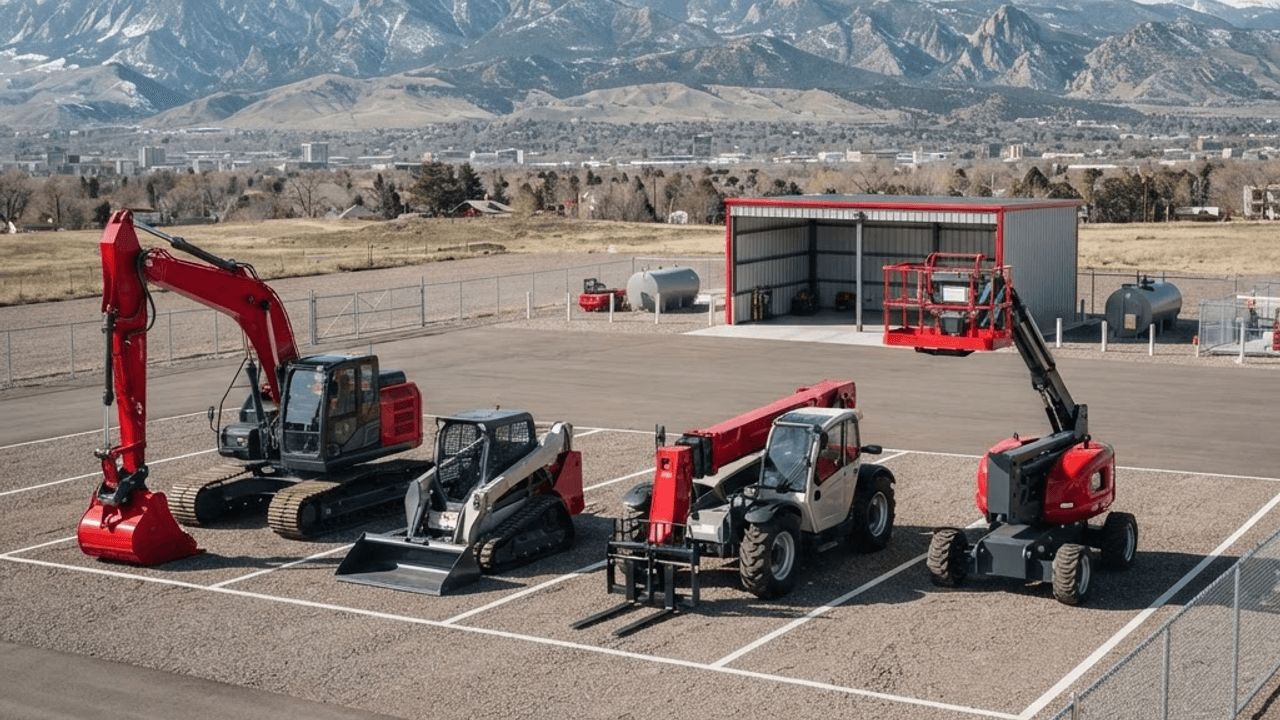
Rental fleets in Denver span nearly every category of construction machinery. Earthmoving equipment such as excavators, skid steers, and loaders handles grading and site preparation. Aerial equipment including scissor lifts and boom lifts supports work at height for painting, roofing, and installations. Material handling machines like telehandlers and forklifts move heavy loads efficiently, while compaction and paving equipment supports road and foundation work.
The industry is increasingly embracing technology and sustainability. Telematics allow rental companies to monitor equipment health and usage, improving reliability and reducing downtime. Electric and low-emission machines are entering fleets as the construction sector responds to environmental priorities and stricter regulations. Flexible rental terms, including daily, weekly, and monthly options, give clients the ability to align costs precisely with project timelines.
Ten Rental Sources to Research
Denver-area renters can compare G4 Equipment, United Rentals, Power Equipment Company, Bobcat of the Rockies, Denver Construction Rentals LLC, Bighorn Rentals, Denver Equipment Rental, Sunbelt Rentals, Wagner Rents, and EquipmentShare. The list spans national networks, regional heavy-equipment specialists, and locally focused businesses. A broad fleet and multiple branches can help on multi-site projects, while a smaller provider may offer highly responsive local delivery or specialized knowledge. Availability changes with construction cycles, so reserving critical equipment early is often as important as comparing the daily rate.
The lowest quoted rate may not represent the lowest total cost. Customers should ask about delivery, pickup, fuel, cleaning, environmental fees, damage waivers, taxes, overtime, and attachment charges. Rental periods should match the realistic work schedule, including weather and inspection delays. Contractors can reduce idle time by confirming site access, ground conditions, lift height, load capacity, attachment compatibility, and required operator qualifications before the machine arrives.
Safety and Job-Site Readiness
Every rental begins with selecting equipment suited to the task and environment. Operators should complete required training, read the manual, perform documented pre-use inspections, wear appropriate protective equipment, and respect rated capacities. Underground utilities must be located before excavation, and aerial equipment requires attention to ground stability, overhead hazards, wind limits, and fall-protection rules. A reputable rental partner explains controls and emergency procedures, provides current inspection information, and has a clear process for mechanical problems. Contractors should also plan secure overnight storage and controlled access, since theft, vandalism, and unauthorized operation can create costly delays and liability.
Weather and Logistics
Front Range wind, snow, heat, and sudden storms can affect safe operation and rental duration. Build weather contingencies into the schedule, verify delivery access, and arrange a stable unloading area before transport arrives.
Choosing the Right Rental Partner
Selecting an equipment rental company involves evaluating fleet quality, availability, and the responsiveness of delivery and support. Homeowners and contractors should confirm that equipment is well maintained and that the provider offers guidance on safe operation. Transparent pricing, clear rental agreements, and reliable customer service all contribute to a smooth experience. For unfamiliar equipment, choosing a company that provides operating instructions and safety information is especially valuable.
Denver's top construction equipment rental companies distinguish themselves through fleet breadth, service quality, and local expertise. By partnering with a dependable provider, contractors and homeowners can access the tools they need, control costs, and keep their projects moving forward efficiently.
