
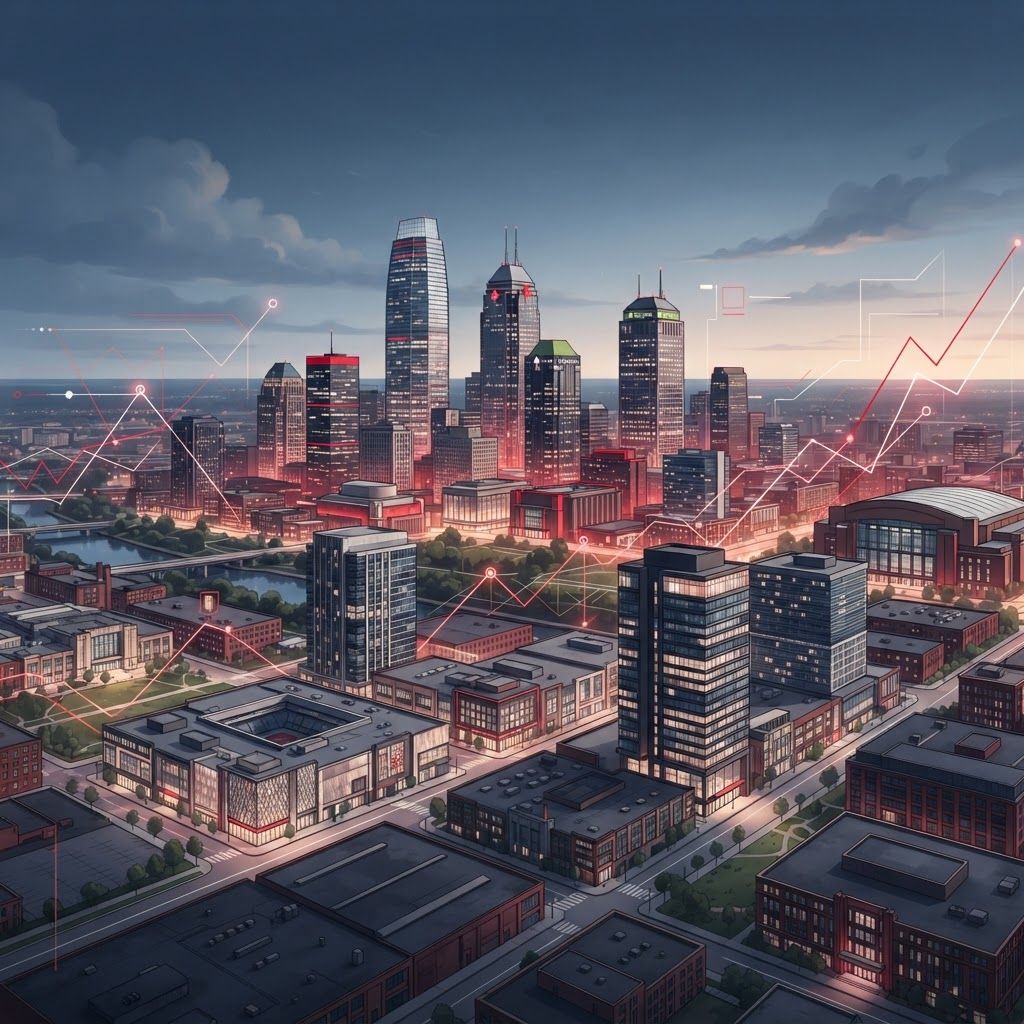
Why Indianapolis Is a Commercial Real Estate Powerhouse
Indianapolis sits at the crossroads of America, and that geography has shaped its commercial real estate market for generations. With interstate highways radiating in every direction, an international airport with one of the largest cargo operations in the country, and a business-friendly regulatory environment, the city has become a magnet for corporate headquarters, distribution centers, and life sciences campuses. The commercial real estate companies operating here have learned to serve a market that blends established Midwestern industries with fast-growing technology and healthcare sectors.
Over the past decade, downtown Indianapolis has seen a wave of investment, from mixed-use towers to adaptive reuse of historic warehouses. Meanwhile, suburban submarkets such as Carmel, Fishers, and the west side industrial corridor continue to expand. The best commercial firms understand these micro-markets intimately, helping investors, tenants, and developers navigate a landscape where opportunity is abundant but local knowledge is essential.
What Sets the Leading Firms Apart
The strongest commercial real estate companies in Indianapolis distinguish themselves through the depth of their brokerage teams, the sophistication of their market research, and their ability to manage complex transactions from start to finish. Whether a client is leasing a single office suite or acquiring a multi-building industrial portfolio, these firms provide end-to-end services including tenant representation, landlord representation, investment sales, property management, and project leasing.
Data and analytics have become central differentiators. Firms that invest in proprietary market intelligence can advise clients on rental rate trends, absorption rates, and emerging submarkets before those shifts become obvious. Combined with strong relationships among local developers and institutional investors, this insight allows top firms to unlock value that less-connected competitors simply cannot.
The Companies Defining the Market
Among the most respected names in the Indianapolis commercial arena are full-service global brokerages with deep local roots, including CBRE, JLL, Cushman & Wakefield, and Colliers, all of which maintain substantial teams in the metro. These firms handle a large share of the market's institutional-grade transactions and bring national capital relationships to local deals.
Alongside the global players, homegrown firms have earned strong reputations for their market specialization and client service. Companies such as Cassidy Turley's successors, Resource Commercial Real Estate, Hokanson Companies, and Zeller Realty Group are known for their responsiveness and their understanding of Indianapolis-specific dynamics. Industrial specialists like Duke Realty, long headquartered in the region, helped define the modern logistics real estate sector nationwide before their expansion, and their legacy continues to influence the local development culture.
Key Services and Specializations
The commercial real estate sector in Indianapolis spans several distinct property types, and the leading firms often build expertise around them. Office brokerage remains important in the central business district and northern suburbs, where flexible and amenity-rich workspace is in demand. Industrial and logistics real estate is arguably the market's strongest segment, fueled by e-commerce distribution and the city's transportation advantages. Retail brokerage focuses on neighborhood centers and mixed-use districts, while investment sales teams connect local assets with regional and national buyers.
Beyond transactions, many firms offer robust property and facilities management, project management for tenant improvements, and advisory services for corporate real estate strategy. This full-spectrum approach means clients can rely on a single trusted partner throughout the entire lifecycle of a property.
Trends Shaping the Future
Several trends are reshaping the Indianapolis commercial market. The continued growth of advanced manufacturing and life sciences is driving demand for specialized facilities. Downtown revitalization efforts and public infrastructure investments are encouraging developers to reimagine underused parcels. Sustainability and energy efficiency have moved from nice-to-have features to core tenant requirements, prompting firms to advise clients on green building certifications and operating cost reductions.
At the same time, hybrid work continues to influence office demand, pushing landlords and brokers toward more flexible lease structures and experience-driven amenities. The firms that thrive will be those that anticipate these shifts and guide clients accordingly.
Choosing the Right Partner
Selecting a commercial real estate company in Indianapolis comes down to matching a firm's strengths with your specific needs. Investors seeking institutional-grade assets may gravitate toward the global brokerages with deep capital markets teams, while a local business searching for the right office or warehouse might prefer a boutique firm with hyper-local expertise and personal attention. In every case, the best partner is one that combines market knowledge, transparent communication, and a genuine commitment to a client's long-term goals. In a market as competitive and fast-moving as Indianapolis, that combination is what separates a good deal from a great one.
Questions to Ask Before Engaging a Firm
Prospective clients should ask who will handle the assignment day to day, which comparable transactions support the firm's recommendations, and how results will be measured. It is also useful to request a clear explanation of fees, reporting frequency, potential conflicts, and the firm's experience with similar property types. Thoughtful answers reveal whether a company offers true strategic counsel or merely transaction support.
