
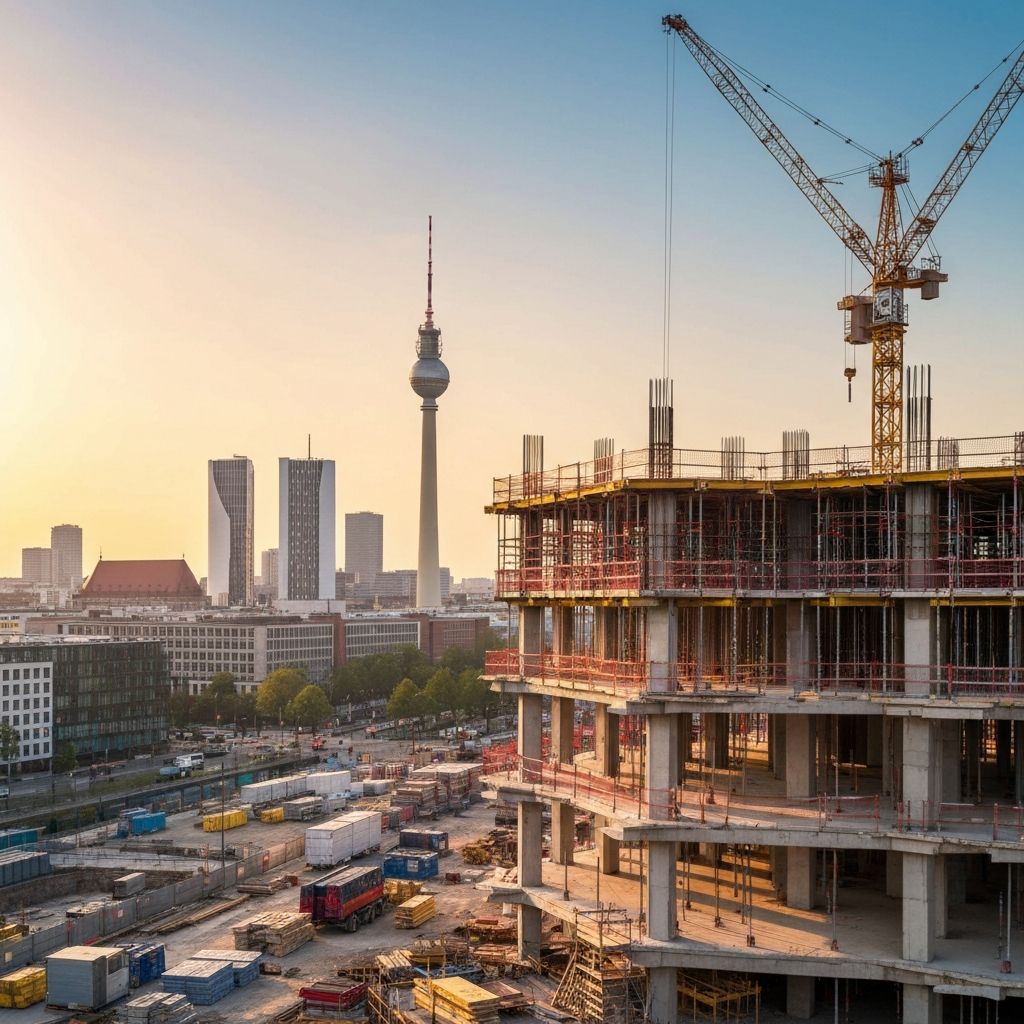
Commercial Construction in Germany
Germany's commercial construction sector is a cornerstone of Europe's strongest economy. From skyscrapers in Frankfurt's banking district to vast logistics hubs along the A2 corridor and high-end retail developments in Munich, commercial projects represent significant investment and long-term value. The country's leading commercial construction companies bring decades of experience in delivering complex builds while meeting stringent safety, sustainability, and quality regulations.
What Sets the Best Commercial Builders Apart
Top German commercial construction firms differentiate themselves through integrated planning, in-house design and engineering, BIM-driven workflows, and adherence to certifications such as DGNB Gold, LEED, and BREEAM. They balance aggressive timelines with cost control and bring deep expertise in turnkey delivery, allowing developers and investors to access predictable outcomes on highly complex projects.
1. Hochtief
Hochtief is a global heavyweight headquartered in Essen, recognized for delivering iconic commercial buildings across Germany. From high-rise office towers to airport terminals and conference centers, the firm combines technical expertise with strong project governance, making it a preferred partner for large-scale commercial developments.
2. STRABAG Real Estate & Building Construction
STRABAG's commercial division is among the most active in Germany, delivering offices, hotels, shopping centers, and mixed-use developments. Its integrated capabilities span planning, construction, and facility management, supporting clients through every phase of the project lifecycle.
3. Goldbeck
Goldbeck has become synonymous with efficient, prefabricated commercial buildings. The company is a top choice for logistics facilities, office complexes, and parking garages, combining serial construction methods with custom architectural finishes. Its speed-to-delivery model is especially appreciated by institutional investors.
4. Zech Group
Zech Group is a major player in hotel and office construction. The Bremen-based firm offers comprehensive turnkey services, combining construction, interior design, and facility management to deliver fully operational commercial assets ready for tenants on day one.
5. Wolff & Müller
Wolff & Müller is a Stuttgart-based company widely respected for premium commercial buildings, particularly in southern Germany. The firm emphasizes sustainable construction, with multiple DGNB-certified projects, and is known for strong subcontractor relationships and reliable scheduling.
6. Köster
Köster delivers commercial buildings across Germany with a strong focus on lean construction. The company combines flexible design with structured project execution and is regarded as an excellent partner for retail centers, office buildings, and industrial commercial properties.
7. LIST Bau
LIST Bau specializes in commercial real estate, including office complexes, logistics centers, and retail outlets. The firm's transparent budgeting, integrated planning, and strong cost control make it a popular partner for institutional clients and private developers alike.
8. Bilfinger
While Bilfinger is well known for industrial services, it also delivers complex commercial facilities, especially for clients in chemicals, pharmaceuticals, and energy. Its strength lies in technically demanding buildings that integrate sophisticated mechanical and electrical systems.
9. Max Bögl
Bavarian firm Max Bögl combines prefabricated construction expertise with traditional methods to deliver commercial projects of all sizes. The company is particularly strong in transportation-related commercial assets such as train stations, terminal buildings, and logistics complexes.
10. Implenia Deutschland
Implenia delivers complex commercial buildings, infrastructure, and mixed-use schemes across Germany. The Swiss-rooted firm brings international project experience and a strong sustainability focus, positioning it as a leading partner for high-profile urban developments.
Trends in German Commercial Construction
Commercial construction in Germany is being shaped by sustainability, hybrid work, and logistics expansion. Office buildings are being redesigned with flexible layouts, biophilic elements, and superior indoor air quality to attract tenants. Logistics centers are growing rapidly to support e-commerce and supply chain resilience, while retail construction is shifting toward experiential, mixed-use formats. Energy efficiency, photovoltaic integration, and climate adaptation measures are increasingly mandatory rather than optional features.
Choosing a Commercial Construction Partner
Developers should evaluate financial stability, BIM capability, past references, sustainability certifications, and contract flexibility. Turnkey delivery, guaranteed maximum price contracts, and integrated facility management are increasingly important. The right partner ensures not just a successful build but a high-performance commercial asset that meets the long-term needs of investors and tenants.
