
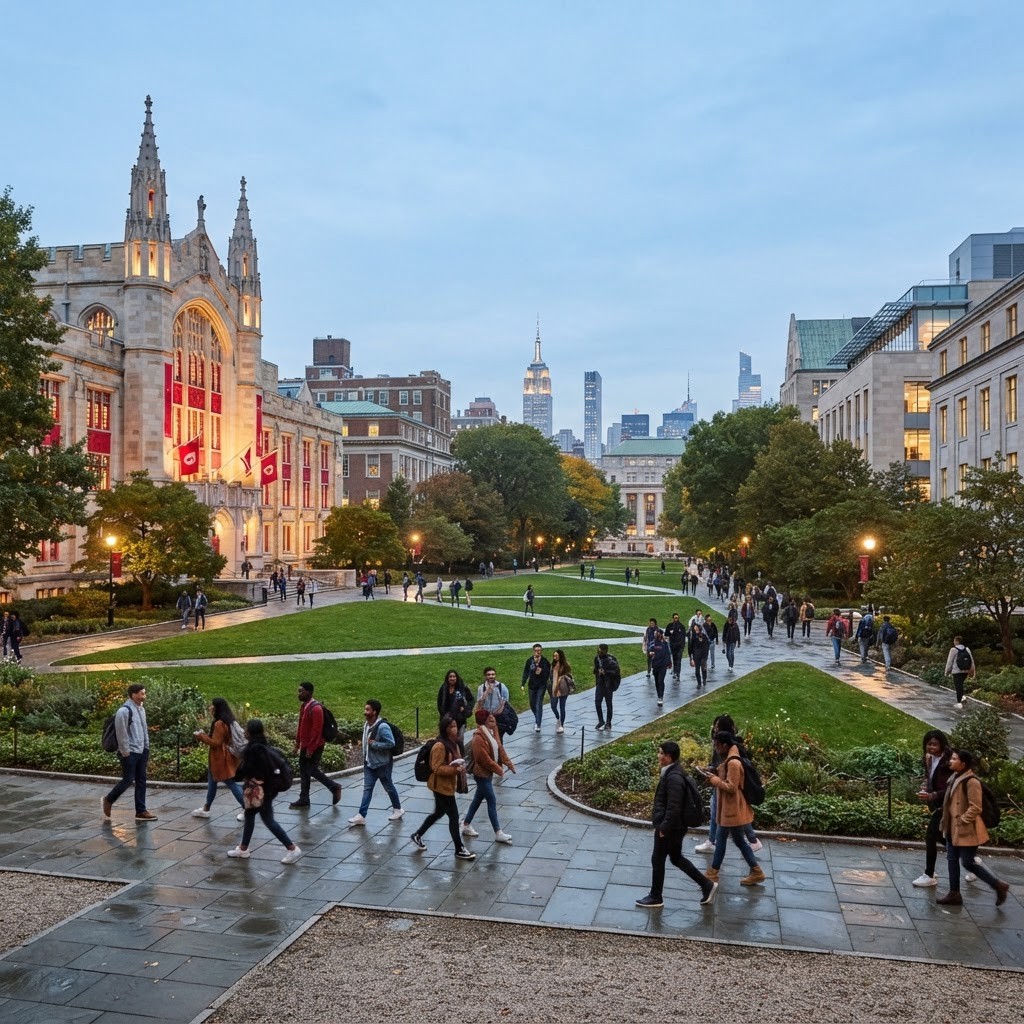
Choosing a College in New York
New York offers an unusually broad college landscape. Students can study on a close-knit residential campus in the Hudson Valley, pursue art and design in Manhattan, or combine technical training with access to one of the world’s largest professional markets. The best choice is not simply the school with the most familiar name. Academic fit, financial aid, campus environment, class size, career support, and distance from home all shape the value of a college experience.
The ten institutions below represent different versions of excellence. Some are primarily undergraduate liberal arts colleges, while others are specialized schools or undergraduate divisions within larger institutions. Prospective students should compare current programs, admissions policies, and aid packages directly before deciding.
1. Barnard College
Barnard College combines a women-centered liberal arts education with the resources of Columbia University. Its Morningside Heights location gives students access to New York City internships, cultural institutions, and an extensive academic community. Barnard is known for rigorous humanities, social sciences, sciences, and arts programs, plus a collaborative environment that encourages leadership and independent thought.
2. Hamilton College
Located in Clinton, Hamilton College is distinguished by its open curriculum and emphasis on clear writing and speaking. Students receive substantial freedom to shape an academic path while working closely with faculty. The residential setting, strong alumni network, and broad liberal arts foundation appeal to learners who want intellectual flexibility within a highly engaged campus community.
3. Vassar College
Vassar College in Poughkeepsie has a long reputation for academic creativity and strength across the arts, humanities, sciences, and social sciences. Its architecturally notable campus and extensive collections support learning beyond the classroom. Interdisciplinary study is a defining feature, making Vassar attractive to students whose interests cross conventional departmental boundaries.
4. Colgate University
Colgate University offers a liberal arts education in Hamilton, New York, with particularly visible strengths in economics, political science, environmental studies, and the natural sciences. A strong residential culture, active student organizations, and robust off-campus study opportunities create a well-rounded experience. Its alumni community is also an important resource for mentoring and career exploration.
5. United States Military Academy
The United States Military Academy at West Point provides a distinctive combination of undergraduate education, leadership development, physical training, and public service. Admission and attendance involve obligations unlike those at civilian colleges, so candidates must understand the commitment fully. For students drawn to military leadership, engineering, strategy, and service, West Point offers an exceptionally structured path.
6. Cooper Union
Cooper Union is a compact, highly specialized institution in Manhattan focused on art, architecture, and engineering. Its studios, critiques, laboratories, and project-based culture are demanding and professionally relevant. Students benefit from studying in a city filled with design firms, galleries, construction projects, and technology companies, though applicants should be prepared for intensive portfolio or technical expectations.
7. Skidmore College
Skidmore College in Saratoga Springs is recognized for connecting creative thought with disciplines ranging from business to science. Its flexible liberal arts model encourages students to combine interests rather than remain within a single track. The surrounding city adds a lively arts and cultural setting, while undergraduate research and faculty mentorship strengthen the academic experience.
8. Union College
Union College in Schenectady is notable for integrating liberal arts, engineering, and interdisciplinary study. Its trimester calendar creates a fast academic rhythm, while small classes and undergraduate research encourage close faculty interaction. The school can be a strong fit for students who want technical depth without giving up broad study in the humanities and social sciences.
9. Sarah Lawrence College
Sarah Lawrence College in Bronxville uses a highly individualized academic model built around seminars, conferences, and close work with professors. It is especially associated with writing, performing arts, humanities, and social inquiry. Students who thrive with discussion, self-direction, and narrative evaluation may find its approach more engaging than a conventional lecture-centered structure.
10. Fashion Institute of Technology
Fashion Institute of Technology, part of the State University of New York, specializes in fashion, design, communications, and business. Its Manhattan location places students near major employers and industry events. Applied coursework, portfolio development, and industry-informed instruction make it a practical choice for students seeking focused preparation for creative and commercial careers.
How to Compare Your Options
Start by reviewing the exact major, course sequence, and faculty resources available at each college. Visit if possible, but also examine class formats, housing, advising, accessibility services, internship support, and graduate outcomes. Net price matters more than the published tuition figure, so compare grants, scholarships, expected borrowing, and the full cost of living.
New York’s strongest colleges differ substantially in mission and atmosphere. A celebrated institution can still be the wrong fit, while a specialized or less obvious option may offer the ideal combination of mentorship, opportunity, and affordability. A thoughtful shortlist should balance ambition with personal priorities and include several realistic financial choices.
Before making a final decision, readers should confirm current details directly with the organization and compare several alternatives. Offerings, staff, policies, prices, and availability can change, particularly in a fast-moving market such as New York. Recent independent reviews can reveal useful patterns, but individual experiences vary. A careful choice combines documented facts, personal priorities, realistic costs, and direct questions. Taking time to evaluate those factors usually produces a better result than relying on reputation or advertising alone.
