
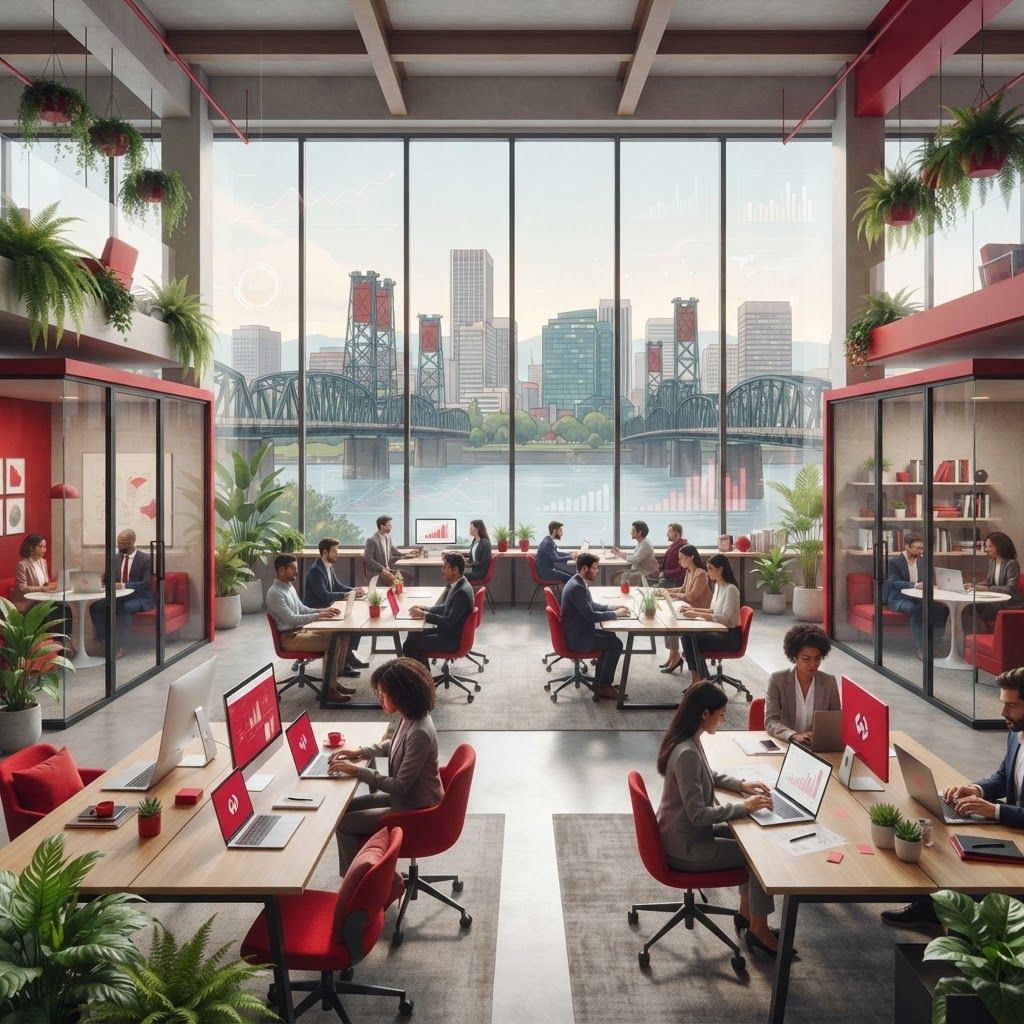
Why Portland Became a Co-working Powerhouse
Portland has always attracted independent thinkers, and that culture translated naturally into the shared workspace movement. The city's combination of relatively affordable commercial real estate, a dense population of freelancers, designers, developers, and small consultancies, and a strong preference for walkable neighborhoods created ideal conditions for flexible offices to thrive. Where other cities built co-working around corporate overflow demand, Portland built it around community.
The result is a market with unusual variety. Within a fifteen-minute bike ride you can find a converted warehouse full of furniture makers and software startups, a quiet professional suite catering to attorneys and accountants, and a members' club style space with a full coffee program. Since hybrid work became permanent for much of the region's workforce, demand has shifted toward memberships that offer both a reliable desk and genuine professional connection.
What to Look For Before You Commit
Location is the first filter. Downtown and the Pearl District offer transit access via MAX light rail and streetcar, while the Central Eastside, Buckman, and Kerns give you lower prices and easier bike parking. Northeast neighborhoods like Alberta and Woodlawn suit people who want to work near home. Next, consider the physical realities that quietly determine productivity: internet reliability, the number of bookable phone rooms, natural light, noise levels, and whether meeting room credits are included or billed separately.
Finally, evaluate culture. Some spaces are deliberately quiet and library-like. Others run weekly member lunches, lightning talks, and demo nights. Neither is better, but a mismatch will make you resent your membership within a month. Most operators offer day passes or trial weeks, and using them is the single most reliable way to choose well.
1. CENTRL Office
CENTRL Office is widely regarded as one of Portland's flagship co-working brands, with locations serving both the Pearl District and the eastside. Its appeal is the balance it strikes between design-forward interiors and genuinely professional infrastructure. Expect polished conference rooms, dependable enterprise-grade connectivity, private phone booths, and a membership base heavy on funded startups, remote employees of larger technology companies, and established creative agencies. Teams that expect to grow from three seats to fifteen tend to appreciate the flexibility.
2. WeWork
WeWork remains the most recognizable name in flexible workspace, and its Portland locations deliver the consistency that global brands are built on. The advantage is predictability: standardized amenities, well-equipped meeting rooms, extensive private office inventory, and access to locations in other cities under a single membership. For consultants who travel frequently or distributed teams that need matching setups across markets, that portability is a meaningful differentiator.
3. Industrious
Industrious has built its reputation on hospitality rather than density. Spaces feel calmer and more considered than the co-working average, with attentive on-site teams, quality daily refreshments, and an emphasis on acoustic comfort. The membership skews toward professional services firms, satellite offices, and senior remote workers who take video calls all day and are willing to pay for quiet, presentable surroundings.
4. Collective Agency
Collective Agency is one of Portland's most community-driven options, built on the idea that members should actually know one another. Rather than maximizing desk count, it curates a smaller roster of independent professionals, holds regular member gatherings, and encourages referrals within the group. Freelancers who find larger spaces isolating often describe it as the place where co-working finally clicked.
5. Cove
Cove focuses on flexible, affordable access for people who do not need a dedicated desk every day. Its model appeals to students, early-stage founders watching every dollar, and hybrid employees who need a professional environment two or three days a week. Straightforward pricing and unfussy, functional design are the core value proposition.
6. NedSpace
NedSpace is one of the longer-standing names in the local scene and has hosted a notable share of Portland's startup community over the years. It leans practical rather than luxurious, with solid meeting facilities and a mix of open desks and private offices. Founders often value the institutional memory here, since long-tenured members tend to be generous with introductions and advice.
7. Union Studio
Union Studio serves Portland's design, architecture, and independent creative community with an aesthetic that reflects it: exposed structure, abundant daylight, generous work surfaces, and room to spread out drawings and samples. It suits people whose work is visual and tactile rather than purely digital, and the member mix produces natural collaboration on client projects.
8. Spaces
Spaces, part of the IWG family of workspace brands, occupies the middle ground between a corporate business center and a creative studio. You get professional reception services, mail handling, well-appointed boardrooms, and a strong private-office selection, alongside a more relaxed common area. Small firms that need to host clients regularly often find this combination ideal.
9. Fireside Coworking
Fireside Coworking offers a neighborhood-scale alternative for people who would rather not commute into the core. The atmosphere is warm and low-key, memberships are approachable, and the member base tends to be writers, therapists, coaches, and solo consultants. It is a strong option for anyone whose main goal is simply getting out of a home office.
10. XPAND / Eastside Creative Studios
Rounding out the list are the Central Eastside's independent creative studios and shared production spaces, of which XPAND is a representative example. These operators frequently combine desk memberships with specialized resources such as photography backdrops, podcast and audio rooms, workshop areas, or event space. For content producers and makers, access to equipment can matter more than the desk itself.
Trends Shaping the Portland Market
Three shifts stand out. First, private and semi-private offices are outperforming open desks as members prioritize call privacy. Second, operators are investing heavily in meeting infrastructure, because the primary reason hybrid teams gather is collaboration rather than solo focus work. Third, neighborhood-based spaces are gaining ground against downtown-only models as people optimize for shorter commutes.
Making the Right Choice
Start by writing down how you actually work: how many days per week you need space, how many hours you spend on video calls, whether clients will visit, and whether you want community or quiet. Then tour three spaces across different neighborhoods and price tiers. Ask about contract length, notice periods, meeting room credits, guest policies, and after-hours access. In a market as diverse as Portland's, the right fit almost always exists, and paying attention to the details is what separates a membership you renew from one you abandon.
