
A City With Deep Apparel Roots
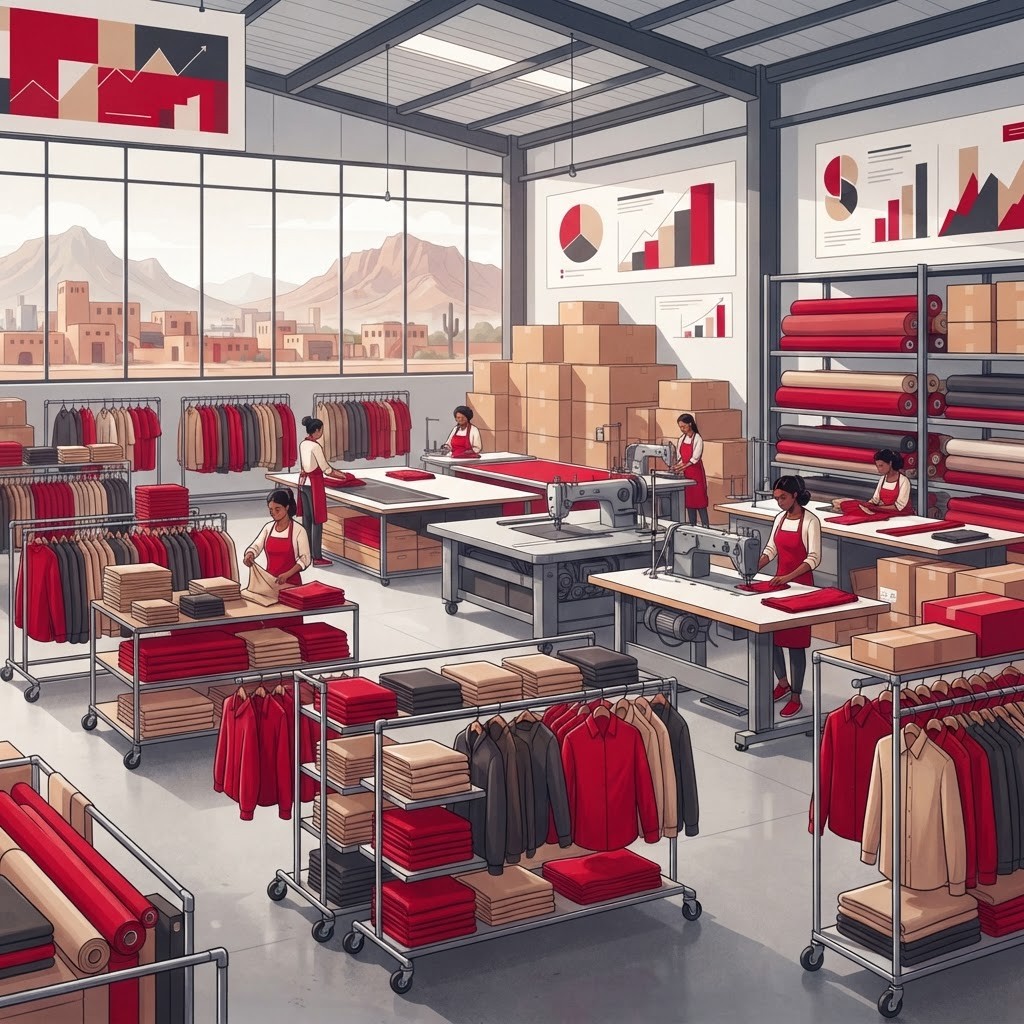
El Paso was once one of the largest jeans manufacturing centers in the world. Although production shifted over decades, the institutional knowledge, the workforce familiarity with garment construction, and the trade infrastructure never fully left. Today the city functions primarily as a distribution and sourcing hub, connecting Mexican and Asian production with retailers throughout Texas, New Mexico, and the broader Southwest.
The result is a wholesale apparel market with genuine variety. Buyers can find blank goods for decoration, western wear and boots reflecting regional taste, uniform and workwear programs serving logistics and healthcare employers, and fashion-forward boutique lines for a young, style-conscious population.
How to Evaluate a Clothing Wholesaler
Start with minimum order quantities and pack structure. A supplier requiring full size runs in prepacked cases works well for high-turn basics but can strangle a boutique's cash flow. Suppliers offering open-stock, mix-and-match ordering give small retailers flexibility at slightly higher unit cost, and that tradeoff is usually worth it early on.
Second, examine consistency. Sizing that drifts between production runs generates returns and destroys customer trust. Ask whether the wholesaler holds a fixed spec sheet, whether garments come from a single factory, and how they handle a run that misses tolerance.
Third, evaluate restock reliability. In apparel, a bestseller that cannot be reordered is a missed opportunity, not a success. Reliable wholesalers communicate cut dates, inventory positions, and realistic replenishment windows. Fourth, understand margin math. Compare landed cost including freight and duties against realistic retail pricing in your market, and confirm the wholesaler does not sell direct to consumers at prices that undercut you.
1. Sun City Apparel Wholesale
Sun City Apparel Wholesale is a broad-line distributor of everyday basics: tees, fleece, activewear, and knit tops across a wide size range. Its inventory model favors depth over novelty, which suits retailers and decorators who need dependable reorders rather than seasonal newness.
Its main differentiator is consistency. Because the company concentrates its sourcing on a limited set of vetted factories, color and fit remain stable across seasons, which matters enormously for corporate uniform and team apparel programs.
2. Rio Grande Denim Distributors
Rio Grande Denim Distributors honors the city's denim heritage with a catalog spanning classic five-pocket jeans, jackets, and workwear-inspired styles for men, women, and youth. The company works closely with mills and finishing facilities in the border region, giving it visibility into wash quality and fabric weight.
Buyers highlight its fit range. Offering multiple rise and leg blocks rather than a single silhouette lets retailers serve a genuinely diverse customer base instead of forcing one shape on everyone.
3. Franklin Uniform and Workwear Supply
Franklin Uniform and Workwear Supply serves institutional buyers: logistics operators, healthcare facilities, restaurants, schools, and industrial employers. Its catalog includes scrubs, chef coats, high-visibility apparel, flame-resistant garments, and durable work pants and shirts.
Its strength is program management. Rather than selling one-off cases, the company builds managed programs with size sets, embroidery, employee ordering, and scheduled replenishment, which removes an administrative burden from human resources teams.
4. Paso Del Norte Western Wear Wholesale
Paso Del Norte Western Wear Wholesale supplies boots, hats, belts, buckles, snap shirts, and western-cut jeans. Regional demand for authentic western apparel remains strong across both leisure and working ranch customers, and the company curates lines that satisfy both.
Its differentiator is authenticity and grading knowledge. Staff can explain leather grades, construction methods, and hat felt quality, allowing retailers to justify price tiers to customers rather than competing purely on discount.
5. Desert Bloom Boutique Wholesale
Desert Bloom Boutique Wholesale focuses on trend-driven women's fashion: dresses, blouses, coordinated sets, and accessories in small, frequently refreshed assortments. Low minimums allow independent boutiques to test styles without heavy commitment.
The company's value lies in curation speed. Small, fast assortments mean boutiques can present newness weekly, which drives repeat store visits in a market where social media discovery moves quickly.
6. Borderland Blanks and Print Supply
Borderland Blanks and Print Supply serves screen printers, embroiderers, and direct-to-garment shops with decoration-ready blanks, plus inks, transfers, and supplies. Its inventory prioritizes garments that hold print quality and survive repeated laundering.
Its differentiator is technical guidance on substrate selection. Recommending the right blend and knit for a given decoration method prevents the cracking, dye migration, and shrinkage failures that generate costly reprints.
7. Chihuahuan Children's Apparel Wholesale
Chihuahuan Children's Apparel Wholesale specializes in infant, toddler, and youth clothing, including school-appropriate basics, sleepwear, and seasonal sets. Safety and durability requirements in children's wear are distinct, and the company builds its assortment accordingly.
Buyers appreciate its compliance discipline. Attention to fastener security, drawcord standards, and flammability requirements protects retailers from liability and recall exposure.
8. Mesa Ridge Activewear Distributors
Mesa Ridge Activewear Distributors covers performance apparel: moisture-wicking tops, leggings, compression layers, and lightweight outerwear. In a climate with long, hot seasons and a strong outdoor culture, technical fabrics sell year-round rather than seasonally.
The company's strength is fabric transparency. Providing actual fabric weights, stretch percentages, and ultraviolet protection ratings allows retailers to make credible performance claims instead of vague marketing statements.
9. Lone Star Accessories and Footwear Wholesale
Lone Star Accessories and Footwear Wholesale rounds out retail assortments with handbags, jewelry, scarves, sunglasses, socks, and casual footwear. Accessories typically carry higher margins and lower size complexity, making them an efficient way for small retailers to lift overall profitability.
Its differentiator is assortment planning support. Advising on attachment-rate merchandising helps retailers place accessories where they lift basket size rather than sitting untouched on a back wall.
10. Sunland Overstock and Closeout Apparel
Sunland Overstock and Closeout Apparel deals in surplus, canceled orders, and end-of-season inventory sold by the lot. For discount retailers, flea market vendors, and value-focused shops, this channel enables aggressive pricing.
Its value is transparency about lot condition. Clear grading and honest manifests distinguish a reputable closeout dealer from one that hides damaged or unsellable goods in the middle of a pallet.
Trends in Apparel Wholesale
Nearshoring is the biggest structural story. Brands seeking shorter lead times and lower freight risk are shifting production from Asia toward Mexico and Central America, which strengthens El Paso's position as a crossing and distribution point. Speed-to-market now competes directly with unit cost as a sourcing priority.
Sustainability expectations are rising too. Buyers increasingly ask about fiber content, water usage in finishing, and labor conditions, and wholesalers that can answer credibly gain access to accounts that others cannot. Meanwhile, inclusive sizing has moved from differentiator to baseline expectation, and assortments that stop at traditional size ranges lose meaningful revenue.
Buying Strategy for Small Retailers
Test small, then scale what sells. Use low-minimum suppliers for experimentation and high-depth suppliers for proven core items. Track sell-through by style and size weekly rather than monthly, because in apparel a two-week delay in reordering can mean missing an entire trend window.
Negotiate on terms as well as price. Extended payment windows, freight allowances, and return privileges on defective goods often improve cash flow more than a small unit discount. And always request production samples before a first significant order; photographs conceal fabric hand, seam quality, and true color.
Final Thoughts
El Paso's apparel wholesale market blends heritage denim expertise, cross-border sourcing advantage, and a full spectrum of categories from workwear to boutique fashion. The ten companies profiled show how varied that landscape is and how different their strengths are. Match your business model to the right supplier type, verify quality and consistency early, and build relationships that support reordering the styles your customers actually want.
