
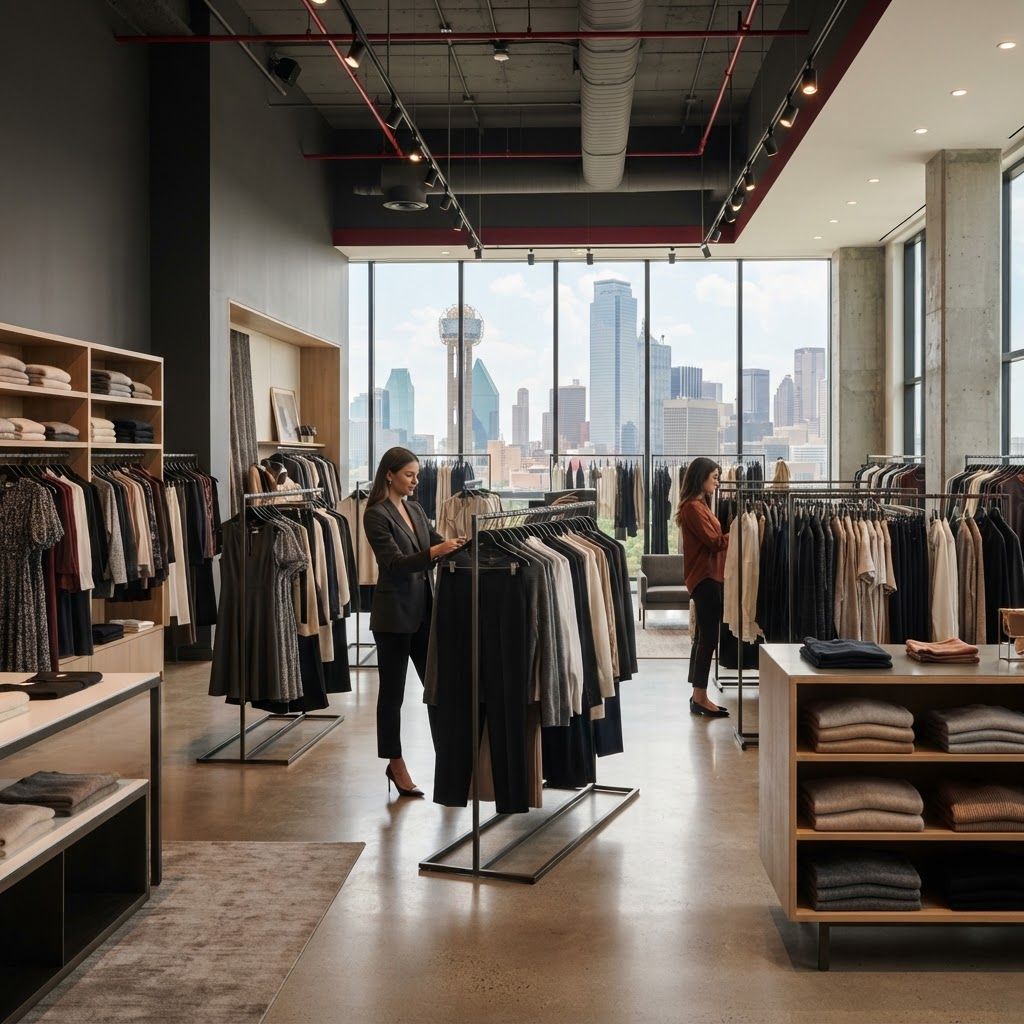
Dallas as a Fashion Wholesale Center
Dallas has long served as a commercial bridge between Texas retailers, national brands, and international apparel manufacturers. The Dallas Market Center anchors the local trade ecosystem, while nearby showrooms and distribution businesses give boutique owners access to contemporary, western, childrenswear, and special-occasion collections. Buyers benefit from the region's transportation network, large retail economy, and year-round market events.
The best supplier depends on more than price. Retailers should compare minimum orders, size runs, restock speed, fabric quality, return policies, and whether a wholesaler protects geographic territories. The following businesses are useful starting points for sourcing, but buyers should verify current ordering requirements and product availability directly with each company.
1. Dallas Market Center
Dallas Market Center is the city's defining wholesale marketplace rather than a single clothing label. Its fashion buildings bring together permanent showrooms and temporary exhibitors representing women's apparel, accessories, footwear, western fashion, and childrenswear. The variety is valuable for retailers that want to compare collections in person, build coordinated assortments, and discover emerging labels in one trip.
2. She and Sky
She and Sky is known among boutique buyers for accessible contemporary women's fashion. Its assortments commonly balance casual staples with trend-focused dresses, tops, outerwear, and matching sets. The brand suits stores seeking wearable silhouettes and frequent seasonal updates without moving into luxury price tiers.
3. Entro
Entro offers women's apparel with a polished boutique character, including dresses, blouses, knitwear, and versatile separates. Buyers often consider the line when they need collections that can move between work, weekend, and occasion dressing. Coordinated color stories can also make merchandising easier for smaller stores.
4. Cotton Bleu by Nu Label
Cotton Bleu by Nu Label emphasizes relaxed, feminine apparel with practical appeal. Its soft fabrics, casual shapes, and approachable styling can work well for lifestyle boutiques serving customers who value comfort. The collection is especially relevant to retailers building dependable everyday assortments alongside statement pieces.
5. Jodifl
Jodifl supplies fashion-forward women's clothing with strong seasonal variety. Dresses, printed tops, contemporary separates, and event-ready pieces are recurring strengths. Boutique buyers can use the brand to introduce visual energy to a sales floor while still carrying styles designed for broad day-to-day wear.
6. Listicle
Listicle is associated with casual, bohemian-inspired women's clothing and textured wardrobe pieces. Relaxed construction, garment details, and easy layering make the line appealing for boutiques with a creative or modern rustic identity. Buyers should evaluate fabric hand and fit across samples because these details often drive repeat purchases.
7. Umgee USA
Umgee USA has broad recognition in the boutique channel for relaxed apparel, inclusive styling, and expressive prints. The company's tops, dresses, tunics, and layered looks can support stores serving multiple age groups. Its recognizable aesthetic helps retailers maintain a consistent casual-fashion section across seasons.
8. Risen Jeans
Risen Jeans focuses on denim and complementary casual apparel. For retailers, a dependable denim supplier is important because fit, recovery, rise, and wash consistency influence customer loyalty. Risen can help boutiques create a denim core while rotating seasonal washes and silhouettes around it.
9. Savanna Jane
Savanna Jane is known for feminine, bohemian-influenced apparel featuring embroidery, prints, and relaxed forms. These details offer differentiation from basic commodity clothing. The line may suit Texas boutiques that blend contemporary fashion with artisan-inspired or southwestern sensibilities.
10. BuddyLove
Dallas-based BuddyLove brings a colorful, occasion-friendly point of view to dresses, resort pieces, and statement apparel. The brand is relevant for stores seeking recognizable personality and social-event merchandise. Its bold presentation can support seasonal capsules tied to vacations, celebrations, and warm-weather dressing.
How Dallas Retailers Should Choose
Start with a clear customer profile and an open-to-buy plan. Compare landed cost rather than unit price alone, accounting for freight, payment terms, markdown risk, and minimum quantities. Request samples when possible, inspect seams and fabric opacity, and confirm whether best sellers can be reordered. A balanced assortment normally combines dependable basics, profitable accessories, and a smaller number of trend-led pieces.
Dallas gives buyers an advantage because many lines can be evaluated at market instead of only through photographs. Use appointments to understand delivery windows and build supplier relationships, then track sell-through by style, color, and size. The strongest wholesaler is ultimately the one that delivers consistent quality, responsive service, and inventory aligned with the retailer's actual customer.
Practical Due Diligence Before Ordering
Before opening an account, ask each business for its current trade requirements, service area, minimum purchase, payment terms, lead times, and written return policy. Company offerings can change, so confirm that the products and support described here remain available. New buyers should begin with a measured order and assess accuracy, packaging, product consistency, and communication before making a larger commitment. References from comparable Dallas businesses can provide useful insight into real-world service.
Create a simple supplier scorecard and review it after every delivery. Useful measures include on-time performance, complete-order rate, defect frequency, response time, and the total cost after freight, handling, waste, and returns. Keep purchase orders, specifications, lot or model details, and approval records organized. Clear documentation makes discrepancies easier to resolve and helps multiple employees follow the same buying standards.
Finally, avoid depending entirely on one source for critical inventory. Dallas has strong logistics infrastructure, but severe weather, transportation interruptions, seasonal demand, and manufacturer shortages can still affect supply. Maintain a qualified secondary vendor and identify acceptable substitutes before they are urgently needed. Forecast from actual sales or usage data, review slow-moving stock, and share upcoming demand with suppliers. This disciplined approach turns a directory of possible vendors into a resilient purchasing strategy and helps a business build relationships based on quality, transparency, and dependable long-term value.
