
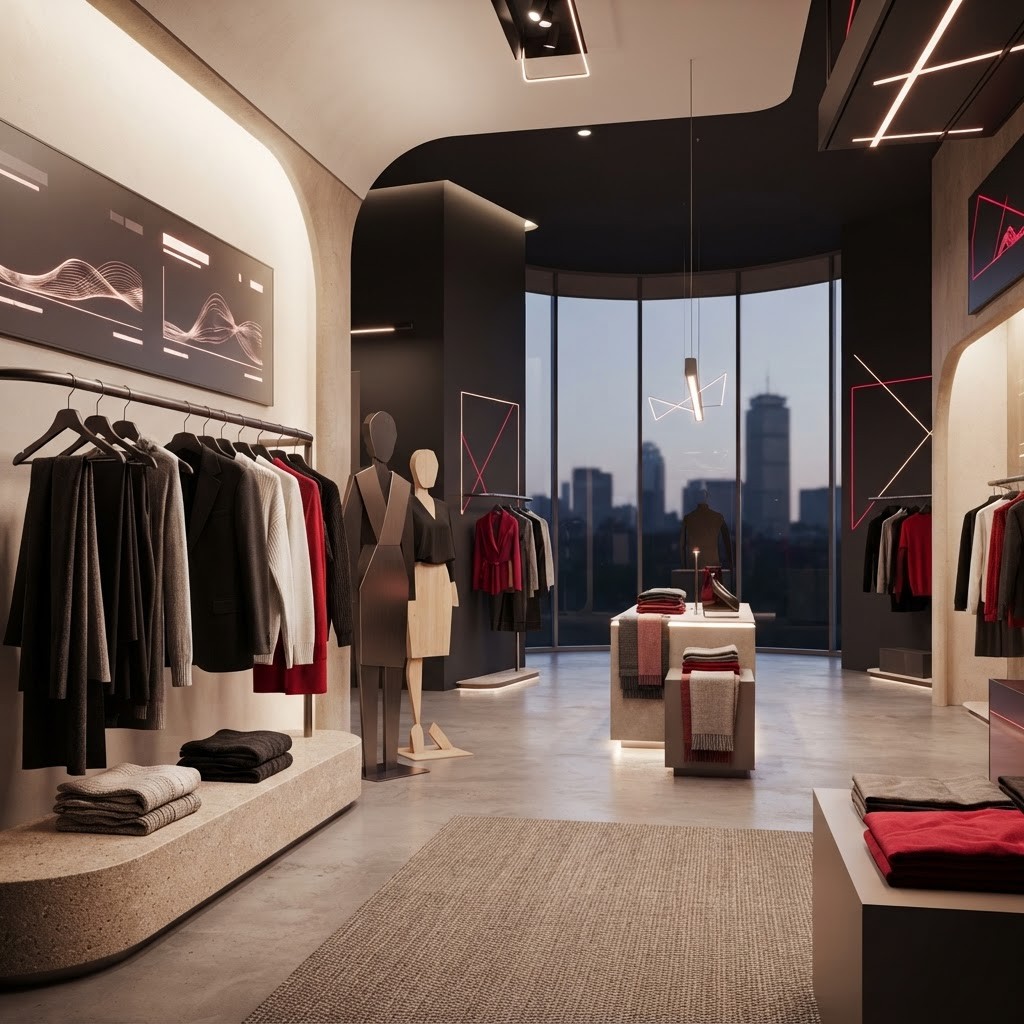
Why Boston Has One of the Most Distinctive Fashion Identities in America
Boston does not chase trends the way some cities do. Instead, it refines them. The city's fashion identity has been shaped by four centuries of trade, a dense concentration of universities, a genuine four-season climate, and a professional culture that values quality over flash. The result is a clothing market where durability, tailoring, and understated confidence carry more weight than seasonal novelty. Shoppers here tend to ask how long a garment will last before they ask whether it is fashionable, and local brands have built their reputations around answering that question well.
That mindset has created space for a remarkably wide range of labels. Heritage outfitters that have dressed generations of New England families operate alongside independent designers working out of studios in Fort Point and Somerville. Preppy classics share shelf space with technical outerwear built for February on the harbor. Understanding the top clothing brands in Boston means understanding this layered market, where tradition and reinvention coexist rather than compete.
1. Brooks Brothers
Few names are more closely associated with New England tailoring than Brooks Brothers. The label built its reputation on the button-down oxford shirt, natural-shoulder suiting, and a restrained approach to color that suits Boston's legal, financial, and academic circles. What keeps the brand relevant is its willingness to modernize fit while protecting its construction standards. Slimmer silhouettes, non-iron fabric treatments, and expanded knitwear ranges have brought younger professionals into a brand their parents already trusted. For anyone assembling a first serious work wardrobe in Boston, it remains a benchmark for fit and longevity.
2. Alden of New England
Though best known for footwear, Alden's influence on Boston menswear extends into the broader wardrobe conversation. The company's Massachusetts manufacturing roots and refusal to compromise on leather quality set a local standard that clothing brands are measured against. Its presence in the region has helped sustain a community of tailors, cobblers, and specialty retailers who cater to customers looking for pieces built to be repaired rather than replaced. That repair-first culture is one of the quieter reasons Boston's fashion market rewards quality construction.
3. Ministry of Supply
Founded by graduates working out of the Boston innovation ecosystem, Ministry of Supply reimagined professional clothing through the lens of performance engineering. Dress shirts that manage moisture, blazers with four-way stretch, and trousers made from recycled technical yarns speak directly to a city where commuters walk, bike, and ride the T in the same clothes they wear to client meetings. The brand's flagship presence on Newbury Street has become a case study in how a technically minded city produces technically minded fashion.
4. Life is Good
Started by two brothers selling shirts from a van in the Boston area, Life is Good grew into one of New England's most recognizable apparel exports. Its appeal rests on simple graphic optimism, soft cotton tees, and a philanthropic model that channels a share of profits toward children's causes. The brand demonstrates something important about the local market: Bostonians support companies whose values are legible, and a clear mission can be as powerful a differentiator as design.
5. New England Outerwear Specialists
Outerwear is not optional in this city, and a cluster of regional specialists has built serious reputations around it. These makers focus on insulated parkas, waxed cotton field jackets, and wind-resistant shells engineered for coastal wind chill rather than mild winters. Their competitive advantage is climate literacy. They understand the difference between January in Boston and January in a milder market, and they design seam placement, hood structure, and insulation weight accordingly. For residents, buying outerwear from a regional specialist is a practical decision as much as a stylistic one.
6. Independent Studios in Fort Point and the SoWa District
Boston's independent design community is concentrated in converted industrial buildings where rent still allows for pattern tables and sample racks. Designers in these districts produce small-run womenswear, gender-neutral basics, and made-to-measure tailoring with production runs measured in dozens rather than thousands. Shoppers gain access to genuinely limited pieces, direct conversations with makers, and alteration services that mass retail cannot match. Monthly open-studio markets have turned these neighborhoods into discovery engines for the local fashion economy.
7. Collegiate and Athletic Heritage Labels
With dozens of colleges and universities in the metropolitan area, collegiate apparel is a permanent commercial fixture. The strongest labels in this category have moved well beyond basic logo sweatshirts into heavyweight fleece, vintage-inspired washes, and premium cotton constructions that hold their shape after years of laundering. Their success reflects a broader trend in the market, where nostalgia and quality reinforce each other and customers pay for pieces that will still look right a decade later.
8. Sustainable and Circular Fashion Brands
Sustainability has moved from marketing language to operational reality in Boston retail. Local brands and consignment-focused businesses now compete on traceable materials, deadstock sourcing, take-back programs, and repair services. The city's dense student population and strong secondhand culture make resale unusually viable here, and several labels design specifically for a long second life, using durable stitching, timeless cuts, and natural fibers that age well.
9. Modern Womenswear Boutiques with House Labels
A number of Boston boutiques have evolved from curated multi-brand retailers into designers in their own right, launching house labels informed by years of direct customer feedback. These collections tend to emphasize workwear versatility, comfortable knit suiting, and transitional layering pieces suited to a climate that shifts across a single day. Because the design team also runs the sales floor, iteration is fast and fit tends to be unusually well tuned to the local customer.
10. Custom Tailoring Houses
Bespoke and made-to-measure tailoring remains a healthy segment in Boston, supported by professional demand and a long apprenticeship tradition. The city's tailoring houses offer full canvas construction, extensive fabric libraries, and multi-fitting processes for suits, coats, and shirting. For customers who struggle with off-the-rack proportions, these houses provide the most reliable path to a garment that fits properly, and many now offer entry-level made-to-measure programs that widen access considerably.
Trends Shaping Boston Apparel Retail
Several forces are reshaping the local clothing landscape. Performance fabrics are migrating into formalwear as hybrid work blurs dress codes. Direct-to-consumer brands are opening physical showrooms because fit confidence still requires a fitting room. Resale and repair services are becoming standard rather than niche. Meanwhile, seasonal capsule releases are replacing rigid spring and fall calendars, letting smaller labels respond to weather and demand in near real time.
How to Choose the Right Brand for Your Wardrobe
Start with climate and commute. If you spend twenty minutes outdoors each morning, outerwear and layering deserve the largest share of your budget. Next, consider construction details that predict longevity, including fabric weight, seam finishing, lining quality, and whether the garment can be altered. Finally, weigh service. Brands offering alterations, repairs, and honest sizing guidance deliver more long-term value than a lower sticker price. Boston rewards patient wardrobe building, and the brands above have all earned their reputations by making pieces worth keeping.
Final Thoughts
The strongest clothing brands in Boston succeed because they take the city seriously. They design for its weather, its work culture, its universities, and its preference for substance over spectacle. Whether you gravitate toward heritage tailoring, engineered performance wear, or small-batch independent design, the local market offers an unusually deep bench of options built to last well beyond a single season.
