
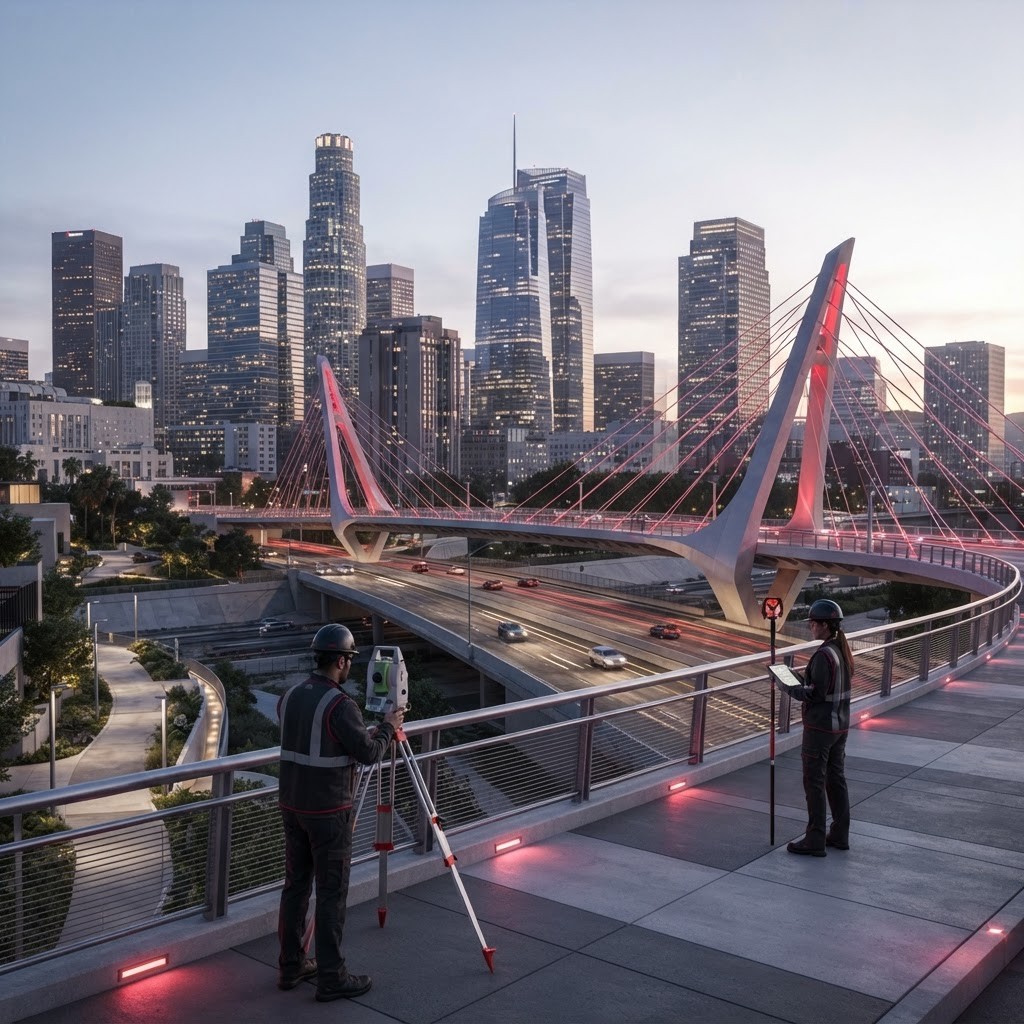
Choosing a Civil Engineering Partner in Los Angeles
Los Angeles presents an unusually demanding environment for civil engineering. Dense urban neighborhoods, seismic risk, limited rights of way, aging infrastructure, hillside terrain, drought, wildfire exposure, and a complex network of public agencies all influence project design. The strongest firms combine technical depth with local knowledge, clear coordination, and an ability to move projects through review without losing sight of budget or constructability. The following companies are widely recognized for substantial work in Southern California. They are presented as a practical shortlist rather than a rigid ranking, because the best choice depends on project type, scale, procurement method, and required specialty.
1. AECOM
AECOM has deep Los Angeles roots and broad expertise spanning transportation, water, environmental services, buildings, and program management. Its scale is especially useful on multidisciplinary public works and major infrastructure programs where civil design must align with planning, architecture, environmental review, and construction management. Owners often value the firm's ability to assemble large specialist teams and manage technically complicated stakeholder environments.
2. Psomas
Psomas is a prominent California firm known for civil engineering, surveying, land development, water resources, and transportation work. Its long regional history supports a practical understanding of municipal standards and Southern California development conditions. The firm is frequently considered for projects that require close coordination among grading, utilities, entitlements, mapping, and public improvements.
3. KPFF Consulting Engineers
KPFF maintains a strong Los Angeles presence and offers civil and structural engineering for campuses, mixed-use developments, cultural facilities, streetscapes, and complex urban sites. Its civil teams are known for site development, utility coordination, stormwater planning, and collaborative design. That integrated mindset can be valuable when architecture, landscape, and engineering must evolve together.
4. Kimley-Horn
Kimley-Horn serves the region with transportation planning, traffic engineering, roadway design, land development, parking, water resources, and transit expertise. The firm is often selected when mobility analysis and site engineering are closely connected. Its national resources and local teams support both private development and public-sector assignments, including fast-moving programs with multiple technical workstreams.
5. WSP
WSP brings international resources to Los Angeles transportation, rail, water, structures, and advisory projects. It is well suited to large programs that need specialized modeling, systems coordination, sustainability strategy, or program controls. The firm’s experience with major metropolitan infrastructure can help owners address resilience, decarbonization, and long-term asset performance alongside conventional design requirements.
6. Tetra Tech
Pasadena-based Tetra Tech is particularly strong in water, environmental engineering, disaster resilience, infrastructure, and technical consulting. In a region where water conservation, stormwater quality, groundwater, and climate adaptation are central concerns, its scientific and engineering capabilities are highly relevant. The firm supports projects from investigation and planning through design, permitting, and implementation.
7. Michael Baker International
Michael Baker International provides planning, civil engineering, transportation, water, aviation, and construction services throughout Southern California. Its multidisciplinary teams can address corridor improvements, municipal infrastructure, and public facilities while integrating environmental and community requirements. The firm's broad public-agency experience is a useful differentiator for projects with extensive review and documentation needs.
8. Stantec
Stantec combines civil engineering with architecture, environmental services, transportation, water, and community development. Los Angeles clients may find its integrated approach helpful on mixed-use districts, civic improvements, mobility projects, and resilient water systems. Its planning-to-delivery capabilities also support projects where early feasibility decisions have major consequences for later design and construction.
9. Arup
Arup is known for technically ambitious, design-led infrastructure and building projects. Its Los Angeles practice contributes civil, transportation, structural, sustainability, and resilience expertise. The firm is a strong candidate when owners seek advanced analysis, low-carbon strategies, complex coordination, or an engineering approach that closely supports architectural and urban-design goals.
10. Burns & McDonnell
Burns & McDonnell offers engineering, architecture, construction, and environmental services, with particular strength in aviation, utilities, water, energy, and design-build delivery. Its integrated model can reduce handoff risk on projects where designers and builders need to collaborate early. The firm is often relevant for technically intensive facilities and infrastructure with demanding operational requirements.
Important Evaluation Criteria
Begin by matching the firm’s recent Los Angeles experience to the exact assignment. Ask who will perform the work, not only which projects appear in corporate qualifications. Review familiarity with the relevant city department, county agency, utility, transit operator, or port authority. A capable team should explain permitting assumptions, utility conflicts, survey needs, stormwater obligations, geotechnical interfaces, seismic considerations, and likely schedule risks in plain language.
Also examine quality-control procedures, digital coordination practices, disadvantaged business participation goals, and construction-phase support. Building information modeling, geographic information systems, reality capture, and data-driven asset management are increasingly useful, but technology should improve decisions rather than add unnecessary complexity. For public-facing projects, community engagement and accessible communication matter almost as much as calculations.
Los Angeles Engineering Trends
Current priorities include transit-oriented development, complete streets, electrification, recycled water, green stormwater infrastructure, and adaptation to extreme heat and wildfire. Agencies and developers are also emphasizing embodied carbon, nature-based solutions, and infrastructure that can be maintained with limited operating resources. The best civil engineering partner will balance these goals with constructability and lifecycle cost.
Final Perspective
Los Angeles offers an exceptional range of engineering talent, from global program managers to California-focused specialists. A thoughtful selection process should compare relevant personnel, local approvals experience, technical methods, workload, and communication style. When those factors align with project needs, the result is more than a compliant design: it is infrastructure that performs reliably, supports its community, and remains adaptable in a changing city.
