
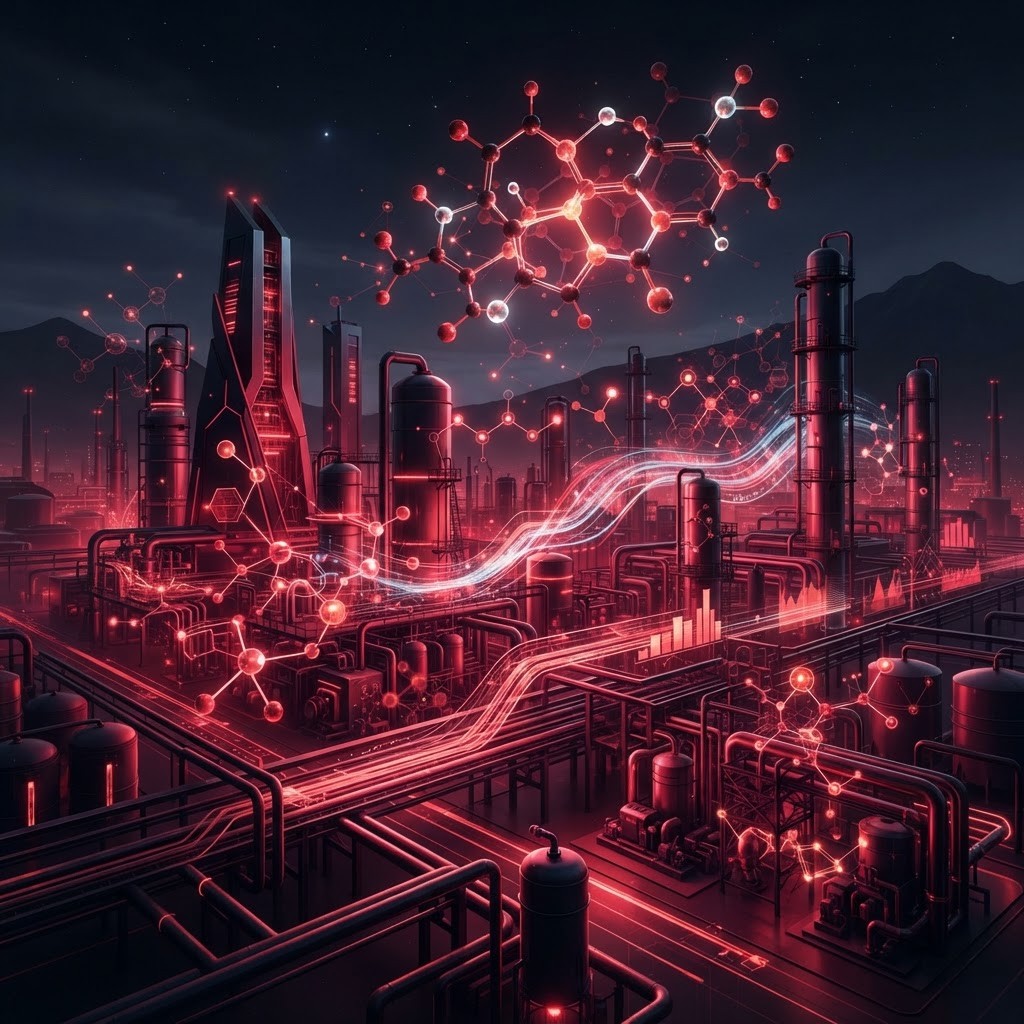
The Foundation of Turkmenistan's Chemical Industry
Turkmenistan's chemical industry is built on a foundation of abundant natural resources, particularly natural gas, sulfur, iodine, bromine, and mineral salts drawn from the Caspian region and the Karakum. These raw materials have enabled the country to develop a diverse chemical sector spanning fertilizers, petrochemicals, industrial gases, and specialty compounds. For a nation with a strong agricultural base, chemical production, especially fertilizers, plays a critical role in food security and export revenue.
State investment has been central to the sector's expansion. Large-scale plants have been commissioned to convert domestic gas into value-added chemical products, positioning Turkmenistan as a regional supplier and reducing dependence on imported inputs.
Why the Chemical Sector Matters
Chemicals underpin nearly every part of a modern economy. In Turkmenistan, they support cotton and grain farming through nitrogen and phosphate fertilizers, enable oil and gas processing, and feed downstream industries such as plastics, textiles, and construction materials. A strong domestic chemical base also strengthens national resilience by ensuring reliable access to essential inputs.
Leading Chemical Companies
Türkmenhimiýa serves as the central pillar of the national chemical industry, overseeing major production facilities and coordinating output across fertilizers and industrial chemicals. Its scale and integration make it the dominant force in the sector.
Marykarbamid is renowned for its large-scale urea and nitrogen fertilizer production, converting natural gas into essential agricultural inputs that support both domestic farming and exports.
Garabogazkarbamid operates one of the country's most modern fertilizer complexes, leveraging advanced ammonia and urea technology to deliver high-quality products at significant volumes.
Tejenkarbamid focuses on nitrogen-based fertilizers and has become an important supplier to agricultural regions, known for consistent product quality.
Garabogaz Sulfate Works harnesses the mineral-rich waters of the Garabogaz basin to produce sodium sulfate and related compounds used across multiple industries.
Balkanabat Iodine Plant is a specialist producer of iodine and bromine derived from underground brines, supplying pharmaceutical, chemical, and industrial customers.
Türkmen Petrochemicals concentrates on gas-derived petrochemical products, including polymers and intermediates that feed the plastics and manufacturing sectors.
Ahal Agrochemicals provides crop-protection products and blended fertilizers tailored to local soil and climate conditions, supporting improved yields.
Caspian Mineral Chemicals extracts and processes salts and minerals from the Caspian region, offering raw and refined chemical products for industrial use.
Daşoguz Chemical Enterprise rounds out the list with a range of industrial chemicals and cleaning compounds serving regional manufacturers and municipalities.
Industry Trends and Developments
The Turkmen chemical sector is increasingly focused on value addition, moving beyond raw material extraction toward finished, export-ready products. Gas-to-chemicals projects are a strategic priority, transforming the country's most abundant resource into fertilizers, polymers, and other high-value goods. Environmental management is also gaining attention, with newer facilities incorporating emission controls and more efficient processing technologies.
Export diversification is another key theme. By expanding trade relationships across Central Asia and beyond, Turkmen chemical producers aim to capture greater market share and stabilize revenue against commodity price fluctuations.
Benefits and Differentiators
The strongest chemical companies in Turkmenistan differentiate themselves through resource integration, producing chemicals directly from domestic feedstocks at competitive cost. Modern plant technology, reliable output, and proximity to raw materials give these firms a durable advantage. For agricultural customers, locally produced fertilizers offer cost savings and dependable supply, while industrial buyers benefit from shorter lead times and consistent quality.
Conclusion
Turkmenistan's chemical industry demonstrates how strategic use of natural resources can build a robust, diversified sector. From fertilizer powerhouses to specialty mineral processors, the companies profiled here play a vital role in agriculture, industry, and the national economy. As investment in value-added production continues, Turkmenistan's chemical companies are set to strengthen their regional standing and support long-term development.
